115. RFJC – FIBRONEER-IPF

Luke Hedrick, Dave Furfaro, and recurrent RFJC guest Robert Wharton are joined again today by Nicole Ng to discuss the FIBRONEER-IPF trial investigating Nerandomilast in patients with IPF. This trial was published in NEJM in 2025 and looked at Neradomilast vs placebo for treating patients with IPF, on or off background anti-fibrotic therapy. This agents is now FDA approved for pulmonary fibrosis, and understanding the trial results is essential for any pulmonary physician treating patients with IPF or progressive pulmonary fibrosis.
 

 Today’s episode discusses the FIBRONEER-IPF trial published in NEJM in 2025.

Richeldi L, Azuma A, Cottin V, Kreuter M, Maher TM, Martinez FJ, Oldham JM, Valenzuela C, Clerisme-Beaty E, Gordat M, Wachtlin D, Liu Y, Schlecker C, Stowasser S, Zoz DF, Wijsenbeek MS; FIBRONEER-IPF Trial Investigators. Nerandomilast in Patients with Idiopathic Pulmonary Fibrosis. N Engl J Med. 2025 Jun 12;392(22):2193-2202. doi: 10.1056/NEJMoa2414108. Epub 2025 May 18. PMID: 40387033.

https://www.nejm.org/doi/abs/10.1056/NEJMoa2414108

Luke Hedrick is an Associate Editor at Pulm PEEPs and runs the Rapid Fire Journal Club Series. He is a senior PCCM fellow at Emory, and will be starting as a pulmonary attending at Duke University next year.

Robert Wharton is a recurring guest on Pulm PEEPs as a part of our Rapid Fire Journal Club Series. He completed his internal medicine residency at Mt. Sinai in New York City, and is currently a pulmonary and critical care fellow at Johns Hopkins.

Dr. Nicole Ng is an Assistant Profess of Medicine at Mount Sinai Hospital, and is the Associate Director of the Interstitial Lung Disease Program for the Mount Sinai National Jewish Health Respiratory Institute.

Why this trial mattered

  • IPF therapies remain limited: nintedanib and pirfenidone slow (but do not stop) decline and often cause GI side effects.
  • Nerandomilast is a newer agent (a preferential PDE4B inhibitor) with antifibrotic + immunomodulatory effects.
  • Phase 2 data (NEJM 2022) looked very promising (suggesting near-“halt” of FVC decline), so this phase 3 trial was a big test of that signal.

Trial design essentials

  • Industry-sponsored, randomized, double-blind, placebo-controlled, large multinational study (332 sites, 36 countries).
  • Population: IPF diagnosed via guideline-aligned criteria with central imaging review and multidisciplinary diagnostic confirmation.
  • Intervention: nerandomilast 18 mg BID, 9 mg BID, or placebo; stratified by background antifibrotic use.
  • Primary endpoint: change in FVC at 52 weeks, analyzed with a mixed model for repeated measures.
  • Key secondary endpoint: time to first acute exacerbation, respiratory hospitalization, or death (composite).

Who was enrolled

  • Typical IPF trial demographics: ~80% male, mean age ~70, many former smokers.
  • Many were already on background therapy (~45% nintedanib, ~30–33% pirfenidone).
  • Notable exclusions included significant liver disease, advanced CKD, recent major cardiovascular events, and psychiatric risk (suicidality/severe depression), reflecting class concerns seen with other PDE4 inhibitors.

Efficacy: what the primary endpoint showed

  • Nerandomilast produced a statistically significant but modest reduction in annual FVC decline vs placebo (roughly 60–70 mL difference).
  • Importantly, it did not halt FVC decline the way the phase 2 data suggested; patients still progressed.

Important nuance: interaction with pirfenidone

  • Patients on pirfenidone had ~50% lower nerandomilast trough levels.
  • Clinically: 9 mg BID looked ineffective with pirfenidone, so 18 mg BID is needed if used together.
  • In those not on background therapy or on nintedanib, 9 mg and 18 mg looked similar—suggesting the apparent “dose-response” might be partly driven by the pirfenidone drug interaction

Secondary and patient-centered outcomes were neutral

  • No demonstrated benefit in the composite outcome (exacerbation/resp hospitalization/death) or its components.
  • Quality of life measures were neutral and declined in all groups, emphasizing that slowing FVC alone may not translate into felt improvement without a disease-reversing therapy.
  • The discussants noted this may reflect limited power/duration for these outcomes and mentioned signals from other datasets/pooling that might suggest mortality benefit—but in this specific trial, the key secondary endpoint was not positive.

Safety and tolerability

  • Diarrhea was the main adverse event:
    • Higher overall with the 18 mg dose, and highest when combined with nintedanib (up to ~62%).
    • Mostly mild/manageable; discontinuation due to diarrhea was relatively uncommon (but higher in those on nintedanib).
  • Reassuringly, there was no signal for increased depression/suicidality/vasculitis despite psychiatric exclusions and theoretical class risk.

How to interpret “modest FVC benefit” clinically

  • The group framed nerandomilast as another tool that adds incremental slowing of progression.
  • They emphasized that comparing absolute FVC differences across trials (ASCEND/INPULSIS vs this trial) is tricky because populations and “natural history” in placebo arms have changed over time (earlier diagnosis, improved supportive care, etc.).
  • They highlighted channeling bias: patients already on antifibrotics may be sicker (longer disease duration, lower PFTs, more oxygen), complicating subgroup comparisons.

Practical takeaways for real-world use

  • All three antifibrotics are “fair game”; choice should be shared decision-making based on goals, tolerability, dosing preferences, and logistics.
  • Reasons they favored nerandomilast in practice:
    • No routine lab monitoring (major convenience advantage vs traditional antifibrotics).
    • Generally better GI tolerability than nintedanib.
    • BID dosing (vs pirfenidone TID).
  • Approach to combination therapy:
    • They generally favor add-on rather than immediate combination to reduce confusion about side effects—while acknowledging it may slow reaching “maximal therapy.”
  • Dosing guidance emphasized:
    • Start 18 mg BID for IPF, especially if combined with pirfenidone (since dose reduction may make it ineffective).
    • 9 mg BID may be considered if dose reduction is needed and the patient is not on pirfenidone (e.g., monotherapy or with nintedanib).

113. RFJC – PREDMETH

Today, Dave Furfaro, Luke Hedrick, and Robert Wharton discuss the PREDMETH trial published in The New England Journal of Medicine in 2025. This was a non-inferiority trial comparing prednisone to methotrexate for upfront therapy in treatment-naive sarcoidosis patients. Listen in for a break down of the trial, analysis, and clinically applicable pearls.

Todays’ episode discusses the PREDMETH trial published in NEJM in 2025.

Kahlmann V, Janssen Bonás M, Moor CC, Grutters JC, Mostard RLM, van Rijswijk HNAJ, van der Maten J, Marges ER, Moonen LAA, Overbeek MJ, Koopman B, Loth DW, Nossent EJ, Wagenaar M, Kramer H, Wielders PLML, Bonta PI, Walen S, Bogaarts BAHA, Kerstens R, Overgaauw M, Veltkamp M, Wijsenbeek MS; PREDMETH Collaborators. First-Line Treatment of Pulmonary Sarcoidosis with Prednisone or Methotrexate. N Engl J Med. 2025 Jul 17;393(3):231-242. doi: 10.1056/NEJMoa2501443. Epub 2025 May 18. PMID: 40387020.

https://www.nejm.org/doi/full/10.1056/NEJMoa2501443

Luke Hedrick is an Associate Editor at Pulm PEEPs and runs the Rapid Fire Journal Club Series. He is a senior PCCM fellow at Emory, and will be starting as a pulmonary attending at Duke University next year.

Robert Wharton is a recurring guest on Pulm PEEPs as a part of our Rapid Fire Journal Club Series. He completed his internal medicine residency at Mt. Sinai in New York City, and is currently a first year pulmonary and critical care fellow at Johns Hopkins.

Clinical context

  • Prednisone remains the traditional first-line treatment for pulmonary sarcoidosis when treatment is indicated, with evidence for short-term improvements in symptoms, radiographic findings, and pulmonary function—but with substantial, familiar steroid toxicities (weight gain, insomnia, HTN/DM, infection risk, etc.).
  • Despite widespread use, glucocorticoids haven’t been robustly tested head-to-head against many alternatives as initial therapy, and evidence for preventing long-term decline (especially in severe disease) is limited.
  • Immunosuppressants (like methotrexate) are often used as steroid-sparing agents, but guideline recommendations are generally conditional/low-quality evidence, and practice varies.

Why PREDMETH matters

  • It addresses a real-world question: Can methotrexate be an initial alternative to prednisone in pulmonary sarcoidosis, rather than being reserved only for steroid-sparing later?
  • It also probes a common clinical belief: MTX has slower onset than prednisone (often assumed, not well-proven).

Trial design (what to know)

  • Open-label, randomized, noninferiority trial across 17 hospitals in the Netherlands.
  • Included patients with pulmonary sarcoidosis who had a clear pulmonary indication to start systemic therapy (moderate/severe symptoms plus objective risk features like reduced FVC/DLCO or documented decline, plus parenchymal abnormalities).
  • Excluded: non–treatment-naïve patients and those whose primary indication was extrapulmonary disease.
  • Treat-to-tolerability with escalation: both drugs started low and were slowly increased; switch/add-on allowed for inadequate efficacy or unacceptable side effects.
  • Primary endpoint: change in FVC (with the usual caveat that FVC is “objective-ish,” but effort-dependent and not always patient-centered).
  • Noninferiority margin: 5% FVC, justified as within biologic/measurement variation and “not clinically relevant.”
  • Outcomes assessed at weeks 4, 16, 24; powered for ~110 patients to detect the NI margin.

Patient population (who this applies to)

  • Mostly middle-aged (~40s) with mild-to-moderate physiologic impairment on average (FVC ~77% predicted; DLCO ~70% predicted).
  • Netherlands-based cohort with limited Black representation (~7%), which matters for generalizability.
  • Would have been helpful to know more about comorbidities (e.g., diabetes), which can strongly influence prednisone risk.

Main findings (what happened)

  • Methotrexate was noninferior to prednisone at week 24 for FVC:
    • Between-group difference in least-squares mean change at week 24: −1.17 percentage points (favoring prednisone) with CI −4.27 to +1.93, staying within the 5% NI margin.
  • Timing mattered:
    • Prednisone showed earlier benefit (notably by week 4) in FVC and across quality-of-life measures.
    • By week 24, those early differences largely washed out—possibly because MTX “catches up,” and/or because crossover increased over time.
    • In their reporting, MTX didn’t meet noninferiority for FVC until week 24, supporting the practical message that prednisone works faster.

Crossover and analysis nuance (important for interpretation)

  • Crossover was fairly high, which complicates noninferiority interpretation:
    • MTX arm: some switched to prednisone for adverse events and others had prednisone added for disease progression/persistent symptoms.
    • Prednisone arm: some had MTX added.
  • In noninferiority trials, heavy crossover can bias intention-to-treat analyses toward finding “no difference” (making noninferiority easier to claim). Per-protocol analyses avoid some of that but introduce other biases. They reported both.

Safety signals (what to remember clinically)

  • Adverse events were very common in both arms (almost everyone), mostly mild.
  • Side-effect patterns fit expectations:
    • Prednisone: more insomnia (and classic steroid issues).
    • MTX: more headache/cough/rash, and notably liver enzyme elevations (about 1 in 4), with a small number discontinuing.
  • Serious adverse events were rare; numbers were too small to confidently separate “signal vs noise,” but overall known risk profiles apply.

Limitations (why you shouldn’t over-read it)

  • Open-label design, and FVC—while objective-ish—is still effort-dependent and can be influenced by expectation/behavior.
  • Small trial, limiting subgroup conclusions (e.g., severity strata, different phenotypes).
  • Generalizability issues (Netherlands demographics; US populations have higher rates of obesity/metabolic syndrome, which may tilt the steroid risk-benefit equation).
  • Crossover reduces precision and interpretability of between-group differences over time.

Practice implications (the “so what”)

  • For many patients with pulmonary sarcoidosis needing systemic therapy, MTX is a reasonable initial alternative to prednisone when thinking long-term tolerability and steroid avoidance.
  • Prednisone likely provides faster symptom/QoL relief in the first weeks—so it may be preferable when rapid improvement is important.
  • The trial strengthens the case for a patient-centered discussion: short-term relief vs side-effect tradeoffs, and the possibility of early combination therapy in more severe cases (suggested, not proven).

97. Rapid Fire Journal Club – MIST 2

In this episode, we add another article to our Rapid Fire Journal Club. Luke Hedrick and Dave Furfaro discuss the MIST 2 trial published in NEJM in 2011 evaluating enzymatic therapy for complex parapneumonic effusions and empyemas.


Article and Reference

We are talking today about the MIST 2 trial evaluating the use of intrapleural tPa and DNase for intrapleural infections.

Rahman NM, Maskell NA, West A, Teoh R, Arnold A, Mackinlay C, Peckham D, Davies CW, Ali N, Kinnear W, Bentley A, Kahan BC, Wrightson JM, Davies HE, Hooper CE, Lee YC, Hedley EL, Crosthwaite N, Choo L, Helm EJ, Gleeson FV, Nunn AJ, Davies RJ. Intrapleural use of tissue plasminogen activator and DNase in pleural infection. N Engl J Med. 2011 Aug 11;365(6):518-26. doi: 10.1056/NEJMoa1012740. PMID: 21830966.

Key Learning Points

  •  
  •  
    • Background:
      • Infections in the pleural space are common and morbid, often requiring surgical intervention. Unfortunately, antibiotics and chest tube drainage often fail. The MIST1 trial (NEJM, 2005) of intrapleural streptokinase showed no benefit. MIST2 studied intrapleural tPA and DNase to ease drainage by breaking down septations and thinning pleural fluid.
    • Study Design (design, primary outcome, participants, etc)
      • Design:
        • Double-blind, double-dummy, 2×2 factorial RCT at 11 UK hospitals from 12/2005 to 11/2008
          • By double dummy, we mean that there was a sham placebo for each of the study drugs
      • Primary Outcome
        • Change in the percent of the hemithorax taken up by effusion on CXR at day 7 compared to day 1
        • Key secondary outcomes:
          • Referral for surgery
          • Hospital LOS
          • All cause 3 month and 12 month mortality
          • AEs
      • Participants
        • Inclusion:
          • Clinical evidence of infection (assessed by recruiting MD; EG, fever, CRP, WBC) and
          • Pleural fluid with any of:
            • Grossly purulent
            • Positive pleural fluid culture or gram stain
            • pH < 7.2
        • Exclusion: aiming to exclude patients with increased bleeding risk or who can’t re-expand the lung after drainage
          • Age < 18
          • Previous intrapleural fibrinolytics, DNase, or both for empyema
          • Allergy to tPA or DNase
          • Coincidental stroke (hemorrhage risk)
          • Major hemorrhage or trauma
          • Major surgery in the last 5 days
          • Previous pneumonectomy on the infected side
          • Pregnancy, lactation
          • Expected survival < 3 months from something other than what caused the pleural problem
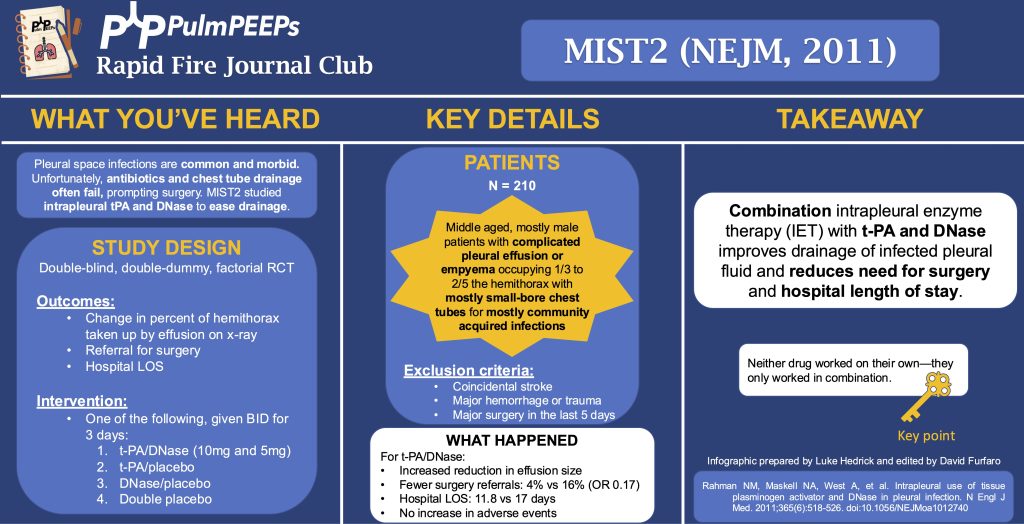
        • Summary: Middle-aged, mostly male patients with complicated pleural effusion or empyema occupying 1/3 to 2/5 hemithorax with mostly small-bore CDs for mostly community-acquired infections

Small-bore here meant < 15 Fr

  • Intervention/Limitations
    • N = 210 (193 analyzed) randomized approximately 1:1 to one of the following 4 arms:
      1. tPA/Dnase (10mg and 5mg)
      2. tPA and placebo
      3. DNase and placebo
      4. Double placebo
      • Medications were given BID for 3 days with clamping of the CD for 1 hour after each dose (to keep the drug in the pleural space)
  • Outcomes/Safety
    • Power: with N = 210 (actual analysis = 193), 80% power to detect 1 in 5 more patients with a 50% reduction in pleural opacity on CXR
    • We’ll discuss the outcomes of tPA/DNase in combination because there was a highly significant interaction between the two (P = 0.002) for the primary outcome
    • Efficacy:
      • Primary (pleural effusion size reduction): -29.5% hemithorax vs baseline and -7.9% effusion size vs placebo (P = 0.005)
        • Neither drug worked on their own
      • Secondary:
        • Referral for surgery: 4% vs 16% (OR 0.17, P = 0.03)
        • Hospital LOS (excluding 391d outlier in placebo group): mean 11.8 vs 17 days (P = 0.006)
        • Mortality: no difference
    • Safety:
      • No difference in AE between groups
      • 6 serious events across all groups, mostly related to bleeding (intra-pleural, GI, hemoptysis); other AE were made up of pain with drug administration, transient AMS, rash
  • Takeaway
    • Combination intrapleural enzyme therapy (IET) with tPA and DNase improves drainage of infected pleural fluid, and reduces need for surgery and hospital LOS

Infographic


89. Idiopathic Pulmonary Fibrosis Treatment: RFJC – INPULSIS

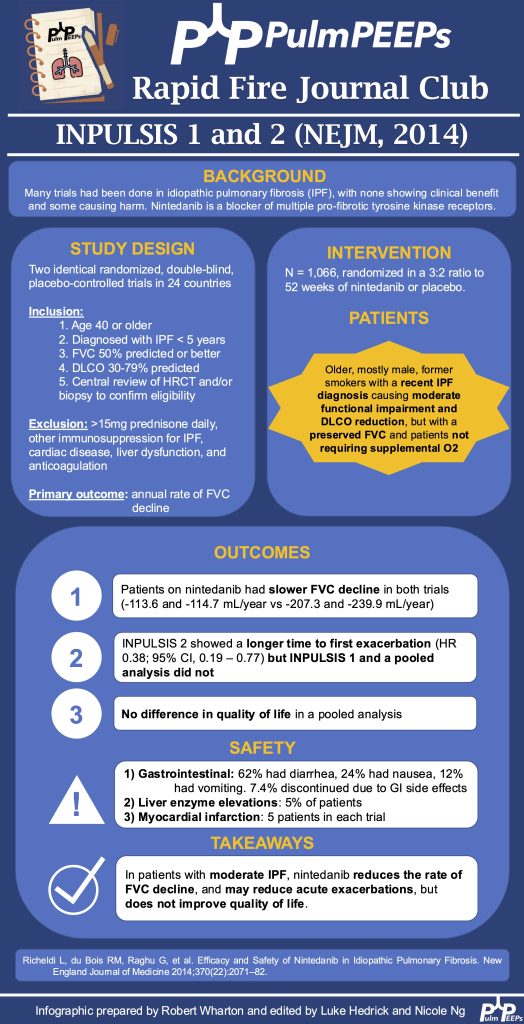
Our episode today is diving into a broader initiative to discuss the management of interstitial lung disease. In this episode we will be talking about the treatment of Idiopathic Pulmonary Fibrosis through the lens of a journal club discussion of the NEJM 2014 INPULSIS trial. Today’s episode is hosted by Pulm PEEPs Associate Editor Luke Hedrick.

Robert Wharton is a recurring guest on Pulm PEEPs as a part of our Rapid Fire Journal Club Series. He completed his internal medicine residency at Mt. Sinai in New York City, and is currently a first year pulmonary and critical care fellow at Johns Hopkins.

Dr. Nicole Ng is an Assistant Profess of Medicine at Mount Sinai Hospital, and is the Associate Director of the Interstitial Lung Disease Program for the Mount Sinai National Jewish Health Respiratory Institute.

Today the discussion of IPF treatment centers around the 2014 NEJM publication of the INPULSIS trials investigating the efficacy of Nintedanib for the treatment of IPF.

Richeldi L, du Bois RM, Raghu G, Azuma A, Brown KK, Costabel U, Cottin V, Flaherty KR, Hansell DM, Inoue Y, Kim DS, Kolb M, Nicholson AG, Noble PW, Selman M, Taniguchi H, Brun M, Le Maulf F, Girard M, Stowasser S, Schlenker-Herceg R, Disse B, Collard HR; INPULSIS Trial Investigators. Efficacy and safety of nintedanib in idiopathic pulmonary fibrosis. N Engl J Med. 2014 May 29;370(22):2071-82. doi: 10.1056/NEJMoa1402584. Epub 2014 May 18. Erratum in: N Engl J Med. 2015 Aug 20;373(8):782. doi: 10.1056/NEJMx150012. PMID: 24836310.

Infographic

Background and Challenges in ILD Treatment: Interstitial lung diseases (ILDs), particularly idiopathic pulmonary fibrosis (IPF), had historically poor treatment outcomes, with numerous therapies showing either no benefit or even harm. Prior to 2014, effective treatments were extremely limited, and lung transplantation was the primary management option.

INPULSIS I and II Trials: These 2014 trials examined nintedanib, an antifibrotic drug initially tested for cancer, in patients with moderate IPF. The studies were well-structured, involving strict criteria to ensure accurate diagnoses and excluding younger patients or those with more advanced disease.

Nintedanib’s Mechanism and Design of the Trials: Nintedanib acts by blocking multiple tyrosine kinases that mediate fibrotic growth factors. Patients were monitored over a year, with primary endpoints focusing on forced vital capacity (FVC) decline—a common surrogate measure for disease progression in ILD trials due to its correlation with survival.

Outcomes: Both trials showed that nintedanib significantly reduced the rate of FVC decline compared to placebo, suggesting that it slowed disease progression. Secondary endpoints included reduced acute exacerbations (significant only in one trial) and minor improvements in quality of life, though these weren’t statistically or clinically significant.

Adverse Effects: Nintedanib’s side effects included gastrointestinal issues (diarrhea, nausea, vomiting) and, less commonly, liver enzyme elevations and cardiovascular events. While post-marketing data suggested some improvements in tolerability, clinicians still monitor for these side effects closely.

Application in Clinical Practice: The trials support nintedanib as an option for slowing IPF progression, though no cure or disease reversal is achieved. Clinicians weigh the choice between nintedanib and pirfenidone (another antifibrotic) based on each drug’s side effect profile and individual patient needs.

Future Directions: The trials paved the way for further research into multi-therapy approaches for ILD, targeting multiple disease pathways, similar to strategies in asthma or COPD. Upcoming therapies and trials aim to provide more targeted and effective options for IPF and other ILDs.

83. RFJC 13 – ARDS Series – DEXA-ARDS

In the penultimate episode in our ARDS Rapid Fire Journal Club Summer Series we are talking about the DEXA-ARDS trial (published in Lancet Respiratory Medicine in 2020). This trial evaluated the impact of dexamethasone in the treatment of ARDS.


Article and Reference

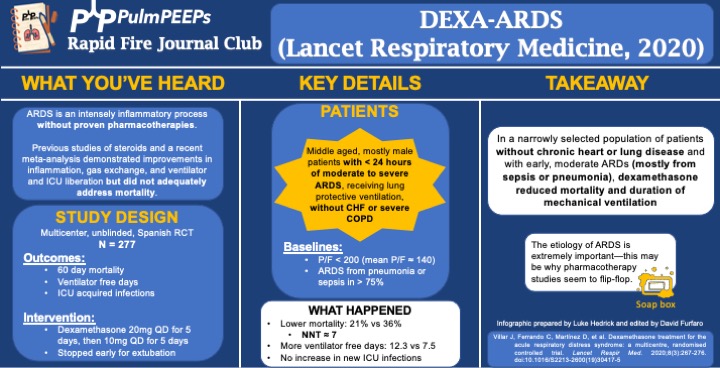
Today we’re discussing the DEXA-ARDS trial published in Lancet Respiratory Medicine in 2020. This trial evaluated the impact of dexamethasone on mortality and duration of mechanical ventilation for patients with ARDS.

Villar J, Ferrando C, Martínez D, Ambrós A, Muñoz T, Soler JA, Aguilar G, Alba F, González-Higueras E, Conesa LA, Martín-Rodríguez C, Díaz-Domínguez FJ, Serna-Grande P, Rivas R, Ferreres J, Belda J, Capilla L, Tallet A, Añón JM, Fernández RL, González-Martín JM; dexamethasone in ARDS network. Dexamethasone treatment for the acute respiratory distress syndrome: a multicentre, randomised controlled trial. Lancet Respir Med. 2020 Mar;8(3):267-276. doi: 10.1016/S2213-2600(19)30417-5. Epub 2020 Feb 7. PMID: 32043986.


Infographic


Article Notes

  • DEXA-ARDS; Lancet Respiratory Medicine, 2020
    • DOI:10.1016/S2213-2600(19)30417-5
    • Link: https://doi.org/10.1016/s2213-2600(19)30417-5
    • Background: ARDS is an intense inflammatory process without proven, specific pharmacotherapies. Previous work and a recent meta-analysis demonstrated improvements in inflammation, gas exchange, and ventilator and ICU liberation but did not adequately address mortality.
    • Study Design (design, primary outcome, participants, etc)
      • Design: investigator-initiated, multicenter, unblinded, randomized controlled trial in 17 academic ICUs in Spain, conducted from 3/2013 to 12/2018
      • Primary Outcome
        • VFD at 28d
        • Secondary:
          • 60d mortality
          • Actual duration of ventilation in ICU survivors
          • ICU acquired infections
      • Participants
        • Inclusion ARDS with P/F < 200 for < 24hr on LTVV
        • Exclusion:
          • Already receiving steroids or immunosuppression
          • CHF
          • Severe COPD
          • DNR
        • Summary: Middle aged, mostly male patients with < 24hr of moderate to severe ARDS receiving LPV without chronic heart or lung disease
          • Like many ARDS trials, just over 3/4 of patients’ ARDS was caused by PNA or sepsis. Mean P/F was ~140
    • Intervention/Limitations
      • N = 277, stratified by center and then randomized
      • Intervention: dexamethasone 20mg qd for 5d followed by 10mg qd for 5d
        • Stopped early for extubation before day 10
        • First dose given no more than 30 hours after P/F < 200
      • Control: no placebo, just SOC
      • All patients received LTVV
    • Outcomes/Safety
      • Power: with N = 314 (actual N = 277), 80% power to detect 2 additional VFD and 15% mortality reduction
        • As an aside, this seems to be a theme in ICU trials: massively ambitious proposed benefits during power calculations and then under-enrolling for that power calculation ultimately resulting with a point estimate that favors the intervention but is not statistically significant.
      • Efficacy:
        • 60d mortality: 21% vs 36%, P = 0.0047
          • NNT of just < 7!
        • VFD at 28d: 12.3 vs 7.5, P < 0.0001
        • Actual duration of ventilation in ICU survivors: 14.2d vs 19.5d (P = 0.0009)
      • Safety:
        • Hyperglycemia: 76% vs 70%, P = 0.33
          • Always interesting in steroid trials when no change in glucose control is seen. This isn’t the most EBM thing I’ll ever say, but frankly I disregard this and assume steroids will cause hyperglycemia regardless of the trial results.
        • ICU acquired infections: 24% vs 25%, P = 0.75
    • Takeaway
      • In a narrowly selected population of patients without chronic heart or severe lung disease and with early, moderate ARDS (mostly from sepsis or pneumonia), dexamethasone reduced mortality and duration of mechanical ventilation.
        • If time, insert soap-box about etiology of ARDS being very important (EG, flu, fungal, parasitic, mycobacterial infections)


79. RFJC 10 – ARDS Series – FACTT

In this podcast episode, we continue our summer series reviewing landmark ARDS studies. Today, Dave and Luke discuss the FACTT trial, which investigated fluid management strategies in ARDS. This was published in the NEJM in 2006.

Article and Reference

We’re talking about the FACTT trial today which was a “Comparison of Two Fluid-Management Strategies in Acute Lung Injury”

Reference: National Heart, Lung, and Blood Institute Acute Respiratory Distress Syndrome (ARDS) Clinical Trials Network; Wiedemann HP, Wheeler AP, Bernard GR, Thompson BT, Hayden D, deBoisblanc B, Connors AF Jr, Hite RD, Harabin AL. Comparison of two fluid-management strategies in acute lung injury. N Engl J Med. 2006 Jun 15;354(24):2564-75. doi: 10.1056/NEJMoa062200. Epub 2006 May 21. PMID: 16714767.

Infographic

Summary of discussion:

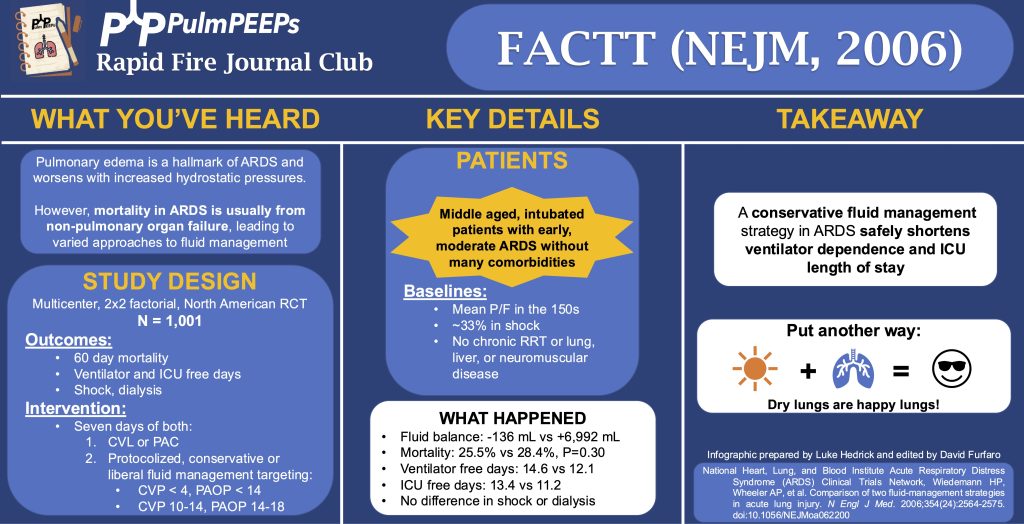
Background: The FACT trial aimed to address fluid balance in ARDS, given the complexity of managing pulmonary edema and systemic organ failure. The challenge has been finding the right balance between managing fluid to optimize cardiac function and avoiding exacerbation of pulmonary edema.

Study Design:

  • Randomized Controlled Trial: Conducted at 20 North American medical centers from 2000 to 2005.
  • Participants: Included intubated ARDS patients who required or were planned to receive a central venous catheter. Excluded patients with chronic diseases, recent MI, or irreversible conditions. Shock was not an exclusion criterion.
  • Interventions: Patients were randomly assigned to either a liberal or conservative fluid management strategy, and also received either a PA catheter or a central line.

Fluid Management Protocol:

  • Liberal Strategy: Aimed for higher filling pressures (CVP of 10-14 or wedge pressure of 14-18).
  • Conservative Strategy: Aimed for lower filling pressures (CVP less than 4 or wedge pressure under 14).
  • Fluid Balance: The liberal group had a net positive fluid balance of around 7 liters, while the conservative group had a net negative balance of about 130 cc.

    Results:

    • Mortality: No statistically significant difference in 60-day mortality between the liberal and conservative groups (25.5% vs. 28.4%, respectively).
    • Ventilator and ICU-Free Days: The conservative strategy resulted in more ventilator-free and ICU-free days.
    • Shock and Dialysis: There was no difference in shock rates, but the conservative group had a trend toward fewer dialysis requirements (10% vs. 14%, p=0.06).

    Conclusion: The trial indicated that a conservative fluid management strategy in ARDS patients can reduce ventilator dependence and ICU length of stay without worsening shock or end-organ function. It underscores the benefit of managing fluid conservatively to protect lung function, even though it didn’t significantly reduce mortality.

      Overall, the FACT trial supports the practice of conservative fluid management in ARDS, advocating that “dry lungs are happy lungs” for improving patient outcomes.

      77. RFJC 9 – ARDS Series – ARMA

      This episode is launching our 2024 Rapid Fire Journal Club summer series on ARDS! This summer we will be talking about landmark ARDS trials that have defined the literature and shaped patient care. Journal clubs often focus on new trials, and so learners may have a less thorough understanding of the baseline literature that defines many of our ICU practices. The goal of this series is to provide a quick, but in-depth look at these papers so that learners understand the modern landscape of ARDS.

      Today, we’re kicking this initiative off by looking at the ARMA or ARDSNet Trial published in the NEJM in 2000. Enjoy!

      Article and Reference

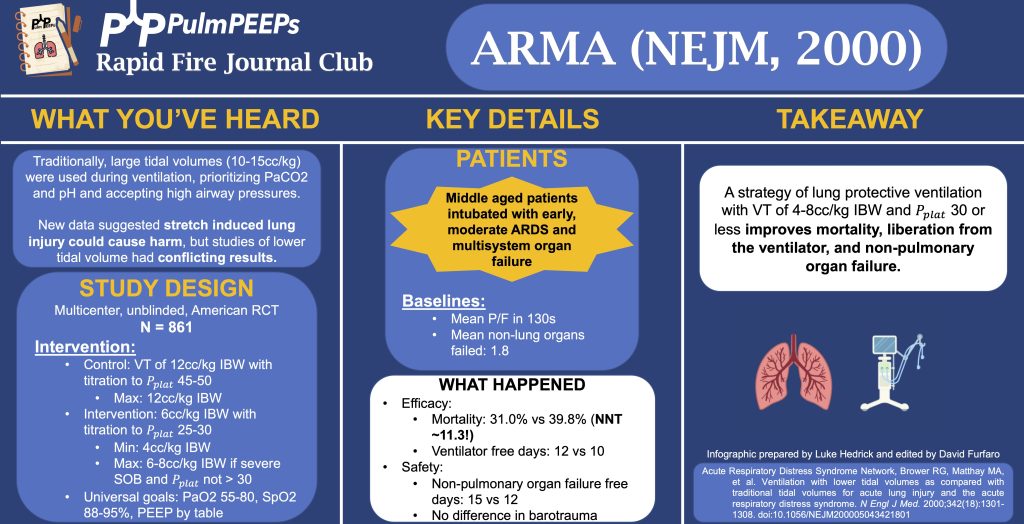
      We’re talking about the ARMA trial today which examined “Ventilation with Lower Tidal Volumes as Compared with Traditional Tidal Volumes for Acute Lung Injury and the Acute Respiratory Distress Syndrome.”

      Reference: Acute Respiratory Distress Syndrome Network; Brower RG, Matthay MA, Morris A, Schoenfeld D, Thompson BT, Wheeler A. Ventilation with lower tidal volumes as compared with traditional tidal volumes for acute lung injury and the acute respiratory distress syndrome. N Engl J Med. 2000 May 4;342(18):1301-8. doi: 10.1056/NEJM200005043421801. PMID: 10793162.

      Infographic

      Correction:

      We mention a step-wise titration of tidal volume in the control group to achieve Pplats of 45-50. To clarify, there was no adjustment of Vt in the traditional Vt group unless Pplat > 50. If Vt had been decreased in the traditional Vt group because Pplat was > 50, it would not be subsequently increased back to 12 unless Pplat < 45 (to avoid a cycle of corrections and re-adjustments). Similarly in the lower Vt group, there was no adjustment (“titration”) of Vt unless Pplat > 30, and there was a similar protocol in place not to increase the Vt again unless the Pplat was < 25.

      75. Rapid Fire Journal Club 8 – STELLAR

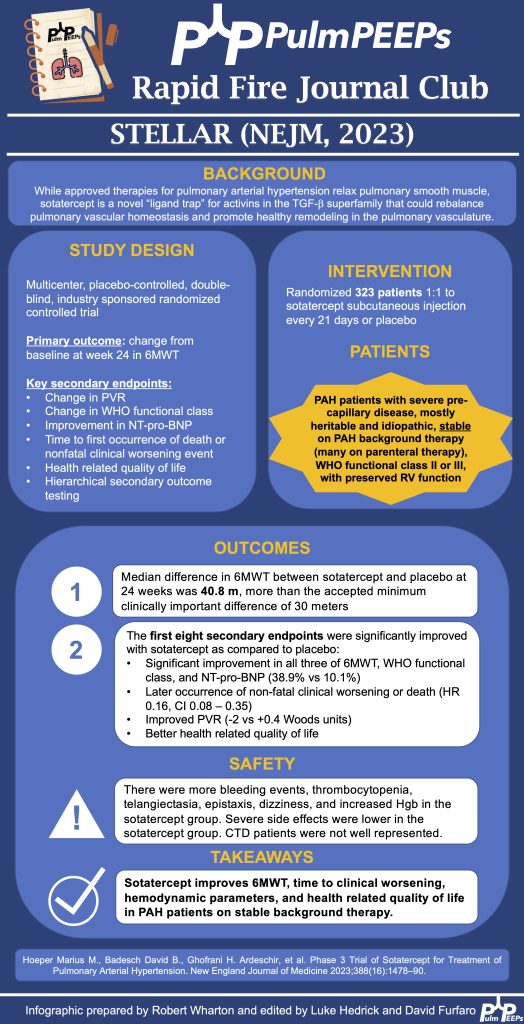
      We’re back with our Rapid Fire Journal Club, and talking about the NEJM 2023 STELLAR Trial of Sotatercept in Pulmonary Arterial Hypertension. This is a landmark trial that is actively changing the face of PAH treatment today. Listen to hear the details of the trial and how its findings can be utilized to help patients.

      Article and Reference

      We’re looking at the STELLAR Trial today which is a Phase 3 trial of Sotatercept in Pulmonary Arterial Hypertension.

      Reference: Hoeper MM, Badesch DB, Ghofrani HA, Gibbs JSR, Gomberg-Maitland M, McLaughlin VV, Preston IR, Souza R, Waxman AB, Grünig E, Kopeć G, Meyer G, Olsson KM, Rosenkranz S, Xu Y, Miller B, Fowler M, Butler J, Koglin J, de Oliveira Pena J, Humbert M; STELLAR Trial Investigators. Phase 3 Trial of Sotatercept for Treatment of Pulmonary Arterial Hypertension. N Engl J Med. 2023 Apr 20;388(16):1478-1490. doi: 10.1056/NEJMoa2213558. Epub 2023 Mar 6. PMID: 36877098.

      Infographic

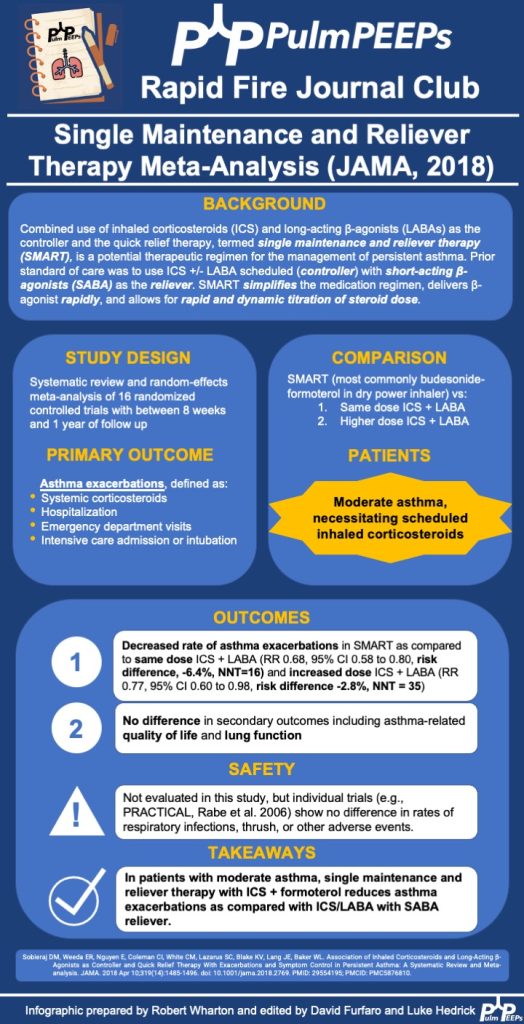
      69. Rapid Fire Journal Club 7 – SMART Meta-Analysis

      Today on Rapid Fire Journal Club we’re reviewing a new article type and discussing a meta-analysis of Single Maintenance and Reliever Therapy (SMART) for asthma.

      Article and Reference

      Today we’re taking a deeper diver into SMART treatment for asthma to continue our discussion of inhalers.

      Reference: Sobieraj DM, Weeda ER, Nguyen E, Coleman CI, White CM, Lazarus SC, Blake KV, Lang JE, Baker WL. Association of Inhaled Corticosteroids and Long-Acting β-Agonists as Controller and Quick Relief Therapy With Exacerbations and Symptom Control in Persistent Asthma: A Systematic Review and Meta-analysis. JAMA. 2018 Apr 10;319(14):1485-1496. doi: 10.1001/jama.2018.2769. PMID: 29554195; PMCID: PMC5876810.

      Infographic

      65. Rapid Fire Journal Club 6 – SARCORT Trial

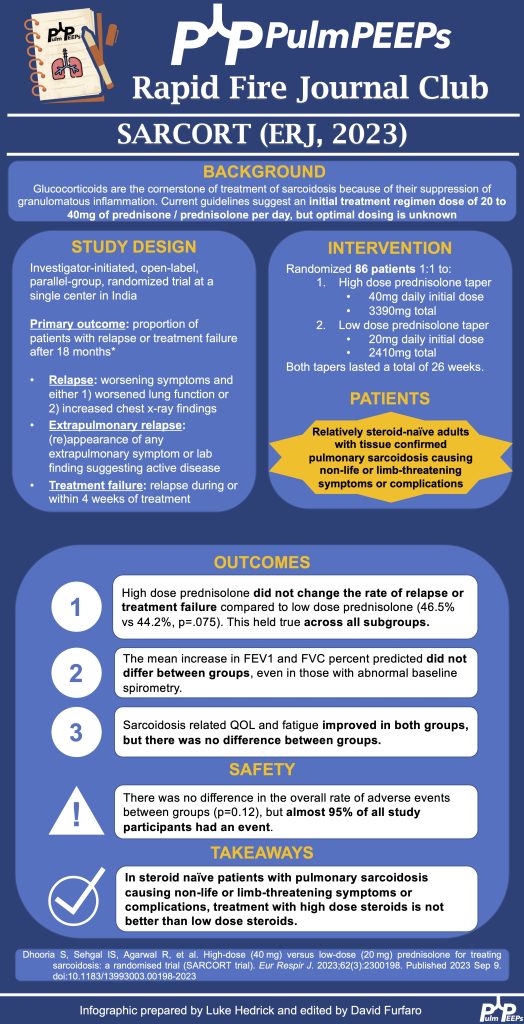
      Today we’re continuing our Rapid Fire Journal Club series. We’ve mainly been discussing landmark trials, but today we’re delving into a new study with interesting findings that are applicable to a common presentation in pulmonary medicine: treatment naive sarcoidosis. We’re discussing the SARCORT trial published in the European Respiratory Journal in 2023. This study evaluated a high vs low dose steroid trial in patients with sarcoidosis. Pulm PEEPs Associate Editor Luke Hedrick walks us through the study.

      Article and Reference

      Today we’re discussing the 2023 SARCORT Trial published in the European Respiratory Journal.

      Reference: Dhooria S, Sehgal IS, Agarwal R, Muthu V, Prasad KT, Dogra P, Debi U, Garg M, Bal A, Gupta N, Aggarwal AN. High-dose (40 mg) versus low-dose (20 mg) prednisolone for treating sarcoidosis: a randomised trial (SARCORT trial). Eur Respir J. 2023 Sep 9;62(3):2300198. doi: 10.1183/13993003.00198-2023. PMID: 37690784.

      Infographic

      This can be downloaded on our website and will be shared on Twitter and Instagram.