109. Guidelines Series: GINA Guidelines – Special Considerations in Asthma Care

In this episode, we’re concluding our review of the Global Initiative for Asthma (GINA) guidelines on asthma today with a cased based episode on special considerations in asthma care. We’ve covered asthma diagnosis and phenotyping, the approach to therapy inhaler and oral medical therapy, and biologic therapy. On today’s episode we’re talking about complex cases that are at the edges of the guidelines, or may be in future guidelines. To help us with this exciting topic we’re joined by an expert in the field. Enjoy! 

Dr. Meredith McCormack is a Professor of Medicine at Johns Hopkins, where she leads multiple NIH funded endeavors at understanding lung health and disease. She is the Division Director for Pulmonary and Critical Care Medicine, while also directing the Asthma Precision Medicine Center of Excellence, and the BREATHE Center, which focuses on understanding the effects of the environment on lung health and disease through research and community engagement.  She is an internationally recognized expert in asthma management and is a dedicated member of the faculty who is committed to the trainees.

Rupali Sood  grew up in Las Vegas, Nevada and made her way over to Baltimore for medical school at Johns Hopkins. She then completed her internal medicine residency training at Massachusetts General Hospital before returning back to Johns Hopkins, where she is currently a second year pulmonary and critical care medicine fellow alongside Tom. Rupali’s interests include interstitial lung disease, particularly as related to oncologic drugs. And she also loves bedside medical education.

Tom Di Vitantonio  is originally from New Jersey and attended medical school at Rutgers, New Jersey Medical School in Newark. He then completed his internal medicine residency at Weill Cornell, where he also served as a chief resident. He currently is a second year pulmonary and critical care medicine fellow at Johns Hopkins, and he’s passionate about caring for critically ill patients, how we approach the management of pulmonary embolism, and also about medical education of trainees to help them be more confident and patient centered in the care they have going forward.

Episode themes

  • Built on GINA 2024: final capstone focusing on evolving topics + case-based application.

  • Three focal areas: (1) obesity/metabolic health (GLP-1s, metformin), (2) dual biologics vs switching, (3) de-escalating inhalers while on biologics.

  • Emphasis throughout on personalized care, shared decision-making, and multidisciplinary collaboration.
  • Obesity & metabolic health in asthma
  • Obesity affects mechanics, inflammation, and treatment response; tackling metabolic dysfunction can improve asthma control.

  • GLP-1 receptor agonists may provide additive benefit beyond weight loss for some patients (early clinical signals; trials ongoing).

  • Metformin is being studied as a potential adjunct targeting metabolic-inflammatory pathways.

  • Practical approach: screen/counsel on weight, activity, and metabolic disease; partner with primary care/endocrine/sleep clinics; consider GLP-1/other agents when indicated for comorbidities, with potential asthma “bonus.”

  • Biologics: switching vs dual therapy
  • Consider switching/adding when control is not achieved or sustained on a biologic despite adherence.

  • Upstream vs downstream targets:

    • Upstream: anti-TSLP (e.g., tezepelumab) may help when multiple pathways/biomarkers (e.g., high IgE + eos) suggest broader blockade.Downstream: IL-5/IL-4/13/IgE agents selected to match phenotype/endotypes.

  • Comorbidities can drive choice:

    • Nasal polyps or upper airway syndromes: there are biologic options that improve upper airway symptoms in addition to asthmaAtopic dermatitis: agents with dual indications can be life-changing.

  • Logistics matter: injection burden/needle phobia and dosing cadence (e.g., every 2 vs 4–8 weeks) can determine real-world success.
  • De-escalating inhalers on biologics
  • Don’t step down immediately. Ask patients to maintain their full regimen for ~3 months after starting a biologic to gauge true benefit.Set expectations early and share a step-down plan to prevent unsupervised discontinuation.Typical order (individualize):
    1. Remove non-essential add-ons first (e.g., antihistamines, leukotriene modifiers).Reduce ICS dose gradually (high → medium → low).Keep ICS/LABA combination among the last therapies to taper

  • Targets while stepping down: “normal” lung function when feasible, minimal/no day or night symptoms, full activity, no exacerbations.

  • When patients don’t respond to biologics
  • Re-check the fundamentals:
    • Adherence/technique for inhalers and biologic.Biomarkers behaving as expected (e.g., eosinophils falling on anti-IL-5).Revisit the diagnosis and contributors/mimics (e.g., vocal cord dysfunction, upper-airway disease).
    • Consider moving upstream (e.g., to TSLP) if a downstream agent underperforms.

    Communication & practical pearls

    • Use visual aids to verify what patients actually take and how (e.g., Asthma & Allergy Network inhaler pictogram).
    • Needle issues are common; home vs clinic administration and family support can make or break adherence.
    • Biologics are transformative for the right patient—consider them early in steroid-dependent or poorly controlled severe asthma.
    • Think longitudinally: plan for monitoring, comorbidity management, and timely adjustments.


    34. Fellows’ Case Files: The Ohio State University College of Medicine

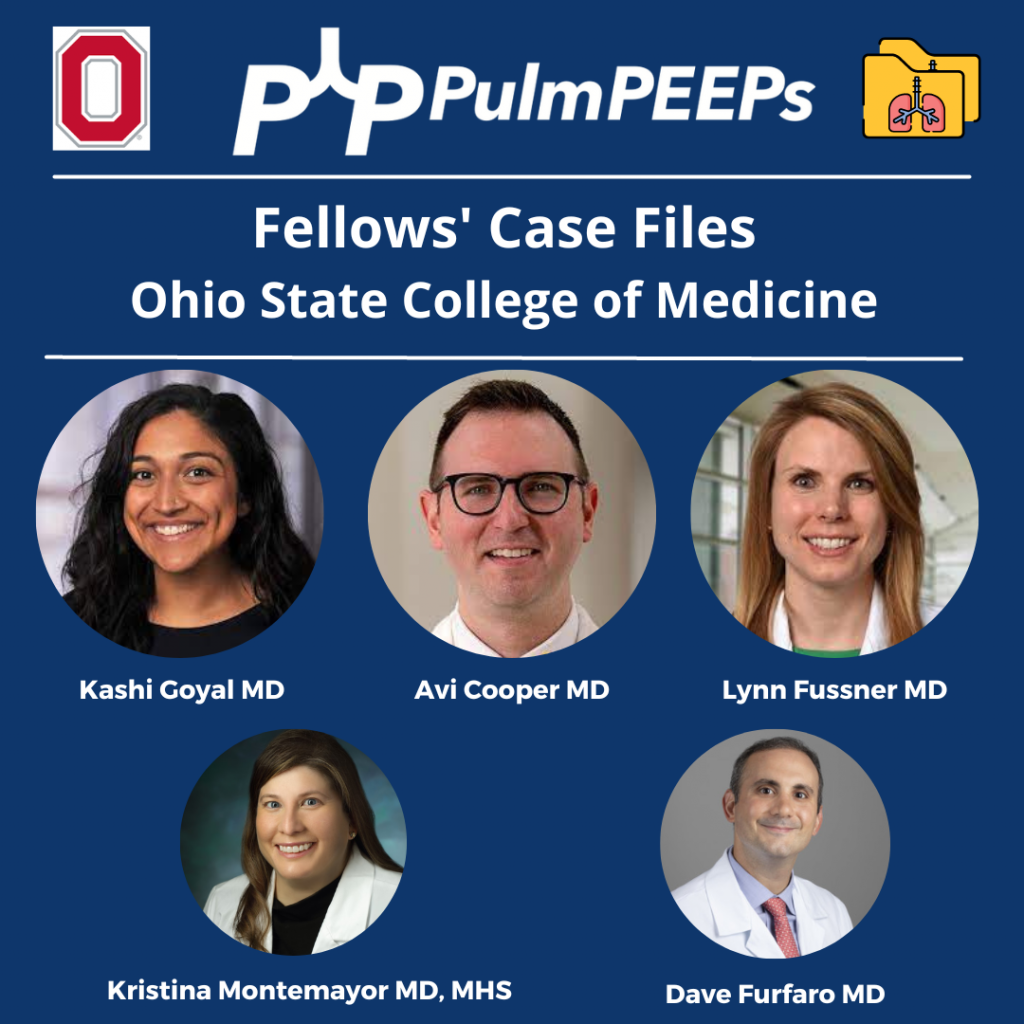
    Welcome back to Pulm PEEPs Fellows’ Case Files series. We are traveling to the midwest to visit The Ohio State University College of Medicine and hear about another great pulmonary case.

    Meet Our Guests

    Kashi Goyal is a second-year Pulmonary and Critical Care Fellow at The Ohio State University Wexner Medical Center. She obtained her MD at OSU, and then completed her Internal Medicine residency at Beth Israel Deaconess Medical Center. She worked as a hospitalist and educator before going back to fellowship and remains passionate about medical education.

    Lynn Fussner is an Associate Professor of Internal Medicine at OSU and has been there since completing her fellowship and Post-doctorate at Mayo Clinic. In addition to her clinical work in the multidisciplinary vasculitis clinic, she is a translational researcher with a focus on inflammatory pulmonary disorders and vasculitis.

    Avi Cooper is an Assistant Professor of Medicine at Ohio State University College of Medicine and the Program Director of the Pulmonary and Critical Care Fellowship. He is an Associate Editor at the Journal of Graduate Medical Education. Last but not least, he co-hosts the Curious Clinician Podcast, one of the most popular medical education podcasts.

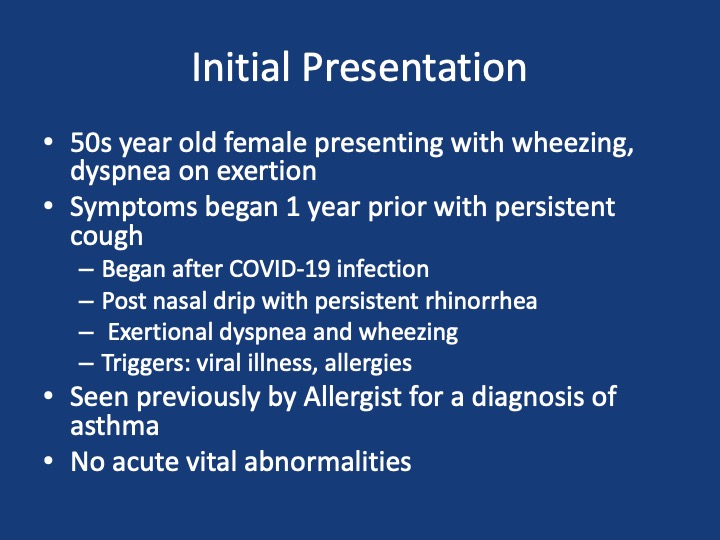
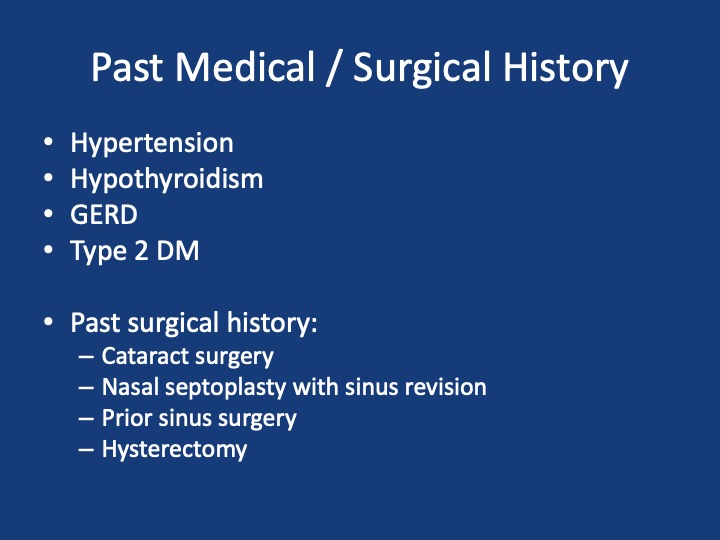
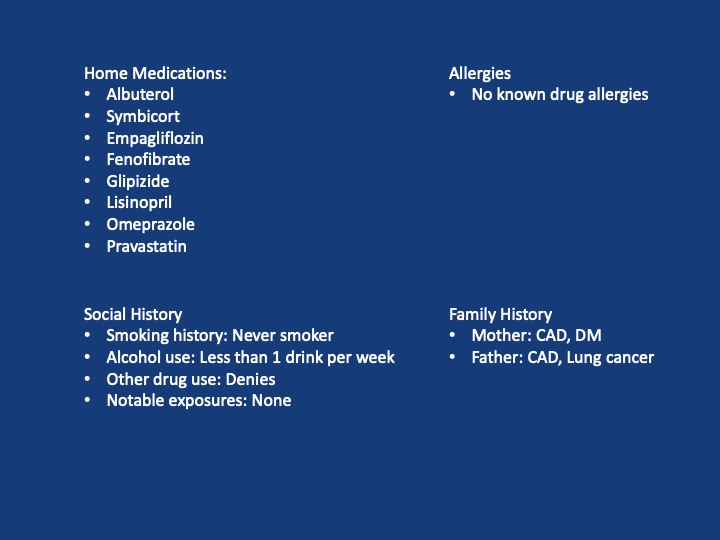
    Patient Presentation

    Key Learning Points

    **Spoilers Ahead** If you want to think through the case on your own we advise listening to the episode first before looking at these points.

    • The three most common causes of cough in adults in the USA are cough variant asthma, GERD, and post-nasal drip
    • A post-viral cough can last for 8-12 weeks and still be within normal
    • Sinus symptoms in a chronic cough can just be sinusitis and post-nasal drip, but should consider eosinophilic granulomatosis with polyangiitis (EGPA), aspirin exacerbated respiratory disease (AERD), cystic fibrosis, or ciliary dyskinesia.
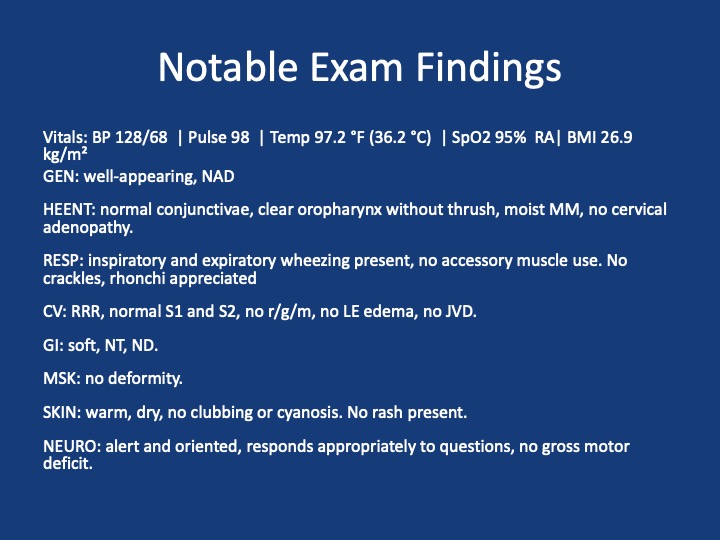
    • Examination of a wheeze
      • Fixed sound vs variable
      • Pitch: larger central airways vs lower peripheral airways
      • Is it throughout the cycle or at a certain phase?
      • Ask the patient to cough before listening and ask them to breathe out through their mouth
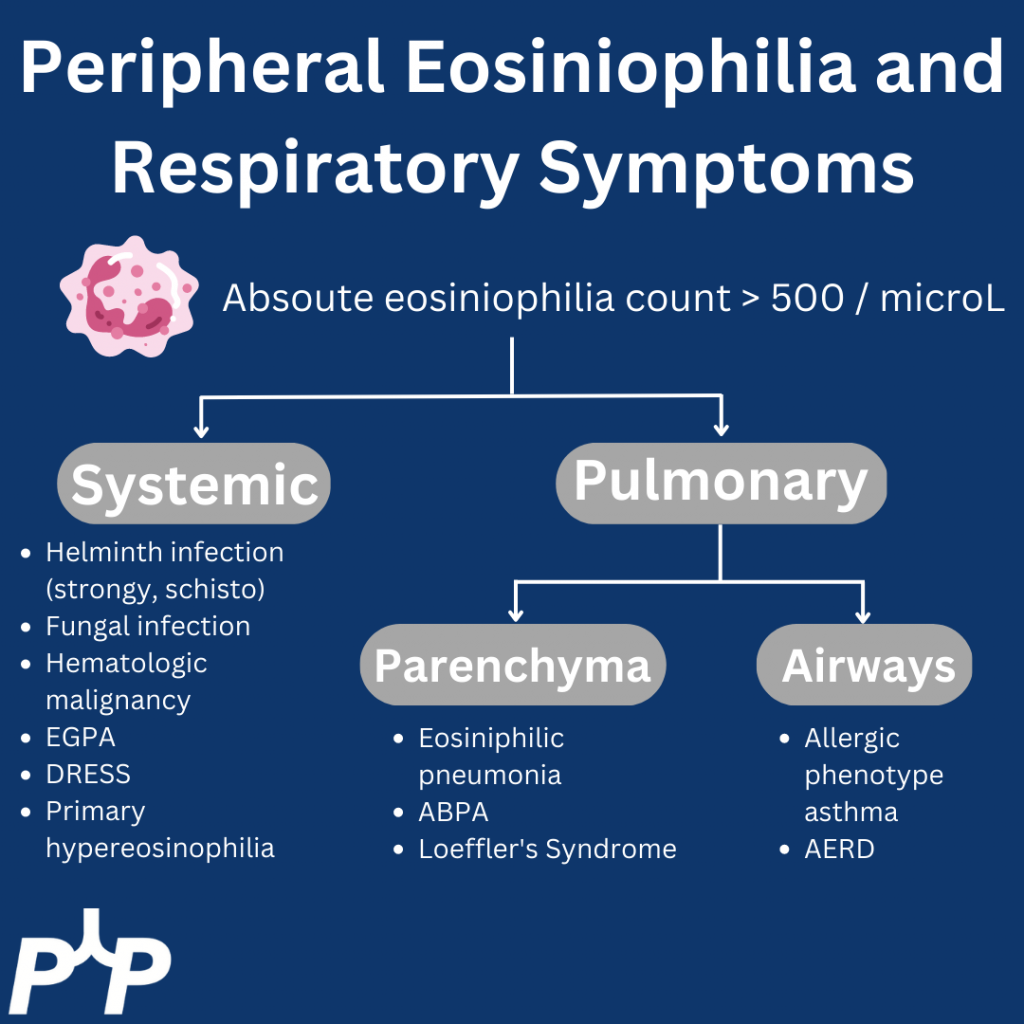
    • Approach to eosinophilia in a patient with cough and dyspnea
      •  Multi-system involvement vs lungs
        • Multi-system involvement
          • Vasculitis
          • Parasitic infection
          • Hematologic malignancy
          • Medication side effect
          • Primary hypereosinophilic syndromes
        • Within the lungs:
          • Parenchymal disease
            • Loeffler’s syndrome
            • Eosinophilic pneumonia
          • Airway disease
            • Asthma
            • ABPA
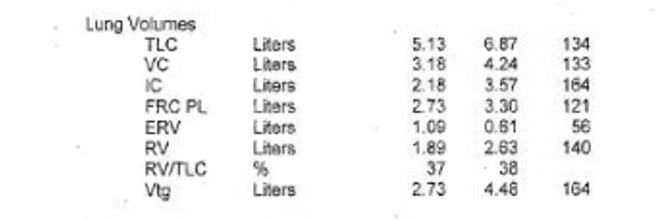
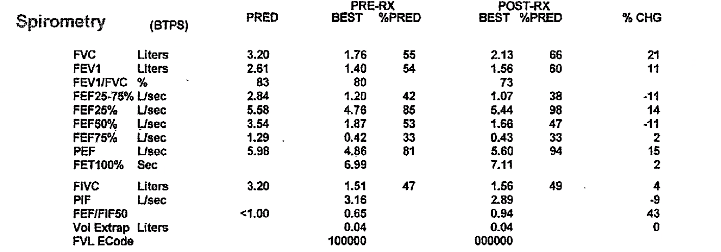
    • If you have a high suspicion for airways disease, PFTs should be requested with bronchodilator testing regardless of the degree of obstruction on baseline spirometry
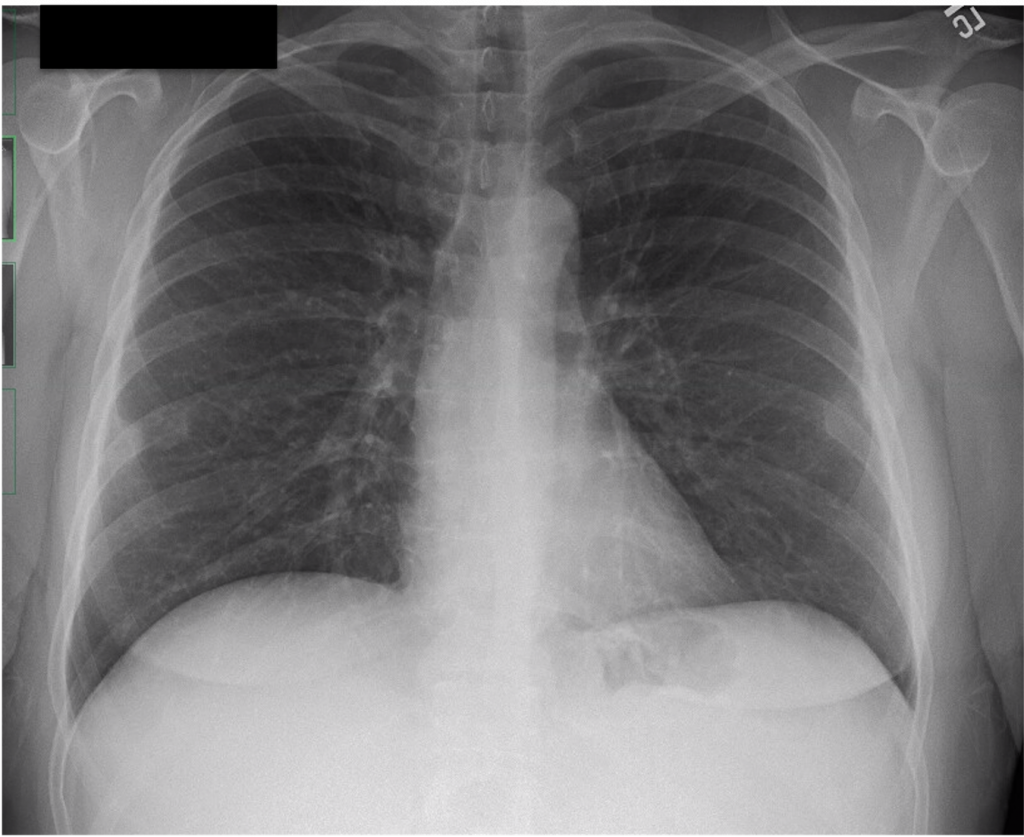
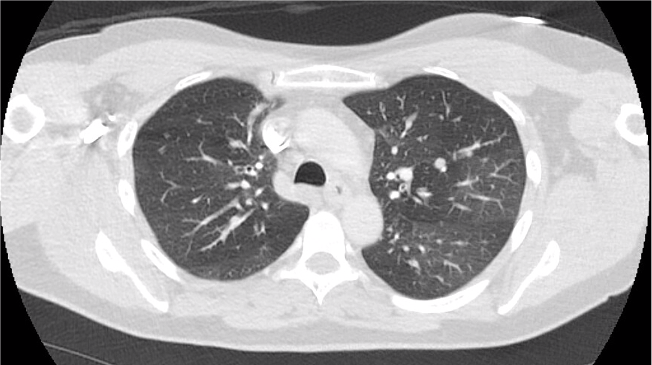
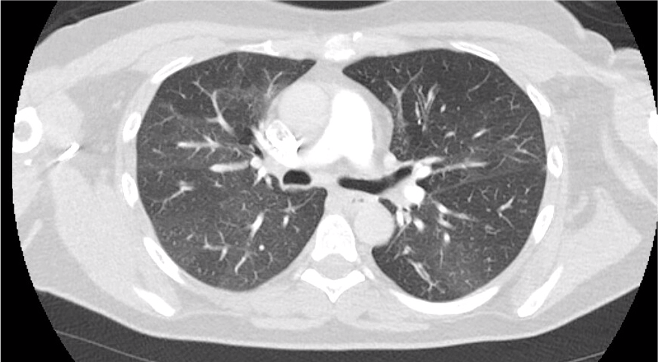
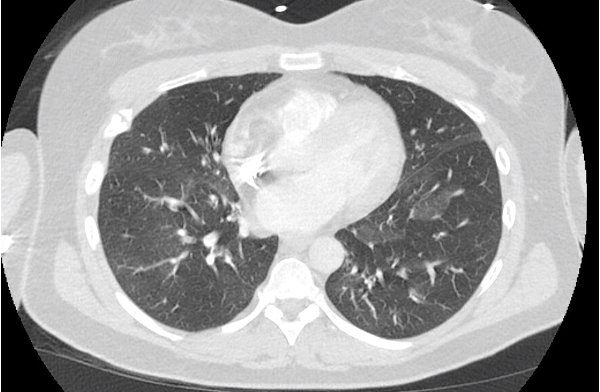
    • Asthma alone should not cause ground glass opacities, so if see these in a patient with asthma we think about:
      • Infection, especially atypical infections
      • EGPA
      • Vasculitis with DAH
      • ABPA
      • Hypogammaglobulinemia or other immunodeficiency
    • EGPA diagnosis
      • ANCA testing is only positive in 60% of patients with EGPA so a negative test doesn’t rule it out by any means
      • It is easiest to make a diagnosis when there is a clear small vessel manifestation
        • Alveolar hemorrhage
        • Mononeuritis multiplex
        • Glomerulonephritis
      • Many patients with asthma, nasal polyposis, and high peripheral eosinophilia have EGPA but don’t have a clear small vessel feature of vasculitis or a positive ANCA
        • These patients typically have eosiniophilia a lot higher than when thinking about allergic phenotype asthma alone. As a rule of thumb, at least an absolute eosinophil count > 1000

    References and Further Reading

    1. Carr TF, Zeki AA, Kraft M. Eosinophilic and Noneosinophilic Asthma. Am J Respir Crit Care Med. 2018;197(1):22-37. doi:10.1164/rccm.201611-2232PP
    2. Cottin V. Eosinophilic Lung Diseases. Clin Chest Med. 2016;37(3):535-556. doi:10.1016/j.ccm.2016.04.015
    3. Grayson PC, Ponte C, Suppiah R, et al. 2022 American College of Rheumatology/European Alliance of Associations for Rheumatology Classification Criteria for Eosinophilic Granulomatosis with Polyangiitis. Ann Rheum Dis. 2022;81(3):309-314. doi:10.1136/annrheumdis-2021-221794
    4. Wechsler ME, Akuthota P, Jayne D, et al. Mepolizumab or Placebo for Eosinophilic Granulomatosis with Polyangiitis. New England Journal of Medicine. 2017;376(20):1921-1932. doi:10.1056/NEJMoa1702079