122. Pulm PEEPs Pearls: Steroids in Sepsis

Today we have another Pulm PEEPs Pearls episode about a core critical care topic. Furf and Monty will be giving a high level overview of the use of steroids in sepsis including a review of the relevant literature and recent guidelines, and pragmatic bedside points.

This episode was prepared with research by Pulm PEEPs Associate Editor George Doumat.

Dustin Latimer, another Pulm PEEPs Associate Editor, assisted with audio and video editing.

Why Steroids in Sepsis?

Steroids do not treat the infection — antimicrobials are always first and remain the cornerstone. The goal is addressing critical illness–related corticosteroid insufficiency (CIRCI), where cortisol production cannot keep up with the overwhelming inflammatory demand of septic shock.

Hydrocortisone helps in two main ways:

  • Blunts the dysregulated inflammatory response — tempers the excessive vasodilation and febrile response that drive harm beyond the infection itself.
  • Restores vascular sensitivity to catecholamines — sepsis downregulates adrenergic receptors; steroids turn that responsiveness back on.

Clinical takeaway: The first thing you notice is vasopressor weaning (or a bend in the escalation curve) — not a rapid improvement in fever or white count.

Caveat: These trials predate modern sepsis phenotyping. None distinguish hyperinflammatory vs. hypoinflammatory responders — they treat all comers.

The Evidence: Four Landmark Trials

Every IM resident and critical care fellow will eventually journal-club these four. The most consistent signal across all of them is faster shock reversal and reduced vasopressor use; the mortality question remains unsettled.

Trial (Year)NRegimenKey Finding
Annane (2002)~300Hydrocortisone + fludrocortisoneMortality benefit in ACTH non-responders; criticized methodology and messy cortisol-response testing; not cleanly replicated.
CORTICUS (2008)~500Hydrocortisone aloneFaster shock reversal but no mortality benefit, regardless of cortisol responsiveness. Raised (later allayed) superinfection concern. Cornerstone for abandoning routine cort-stim testing.
ADRENAL (2018)~3,800Hydrocortisone aloneFaster vasopressor weaning; no 90-day mortality benefit.
APROCCHSS (2018)~1,200Hydrocortisone + fludrocortisoneMortality benefit at 90 days.

Bottom line: Faster shock reversal is consistent. Mortality benefit appears in 2 of 4 trials (both used fludrocortisone) but not the others. A 2026 meta-analysis showed benefit for hydrocortisone + fludrocortisone vs. placebo, but

not for hydrocortisone + fludrocortisone vs. hydrocortisone alone — suggesting hydrocortisone drives the main effect.

Who Gets Steroids, and When?

  • 2021 Surviving Sepsis: Consider steroids for norepinephrine or epinephrine ≥ 0.25 mcg/kg/min for ≥ 4 hours despite adequate resuscitation — a reasonable bedside trigger.
  • Early 2026 update: Moved away from a specific numeric trigger — consider steroids when a septic patient is not responding well to vasopressors or has escalating requirements. Make a clinical decision. (Quality of evidence: low to moderate.)
  • Go faster than the threshold when: Known/suspected adrenal insufficiency or home steroids, or florid pressor-requiring shock on arrival.

A practical escalation sequence: escalating norepinephrine → add vasopressin (per VASST) → then add steroids if requirements keep climbing.

Do NOT wait for an ACTH stimulation test. It does not reliably predict who responds and only delays treatment. Sepsis is an elevated-cortisol state but can dissociate ACTH and cortisol, and cortisol-binding globulin is depleted — the test is too messy to guide care.

What to Give: The Regimen

  • Standard dose: Hydrocortisone 200 mg/day, typically 50 mg IV Q6H. (Original trials often used continuous infusions, rarely used in the U.S.) Some start with a 100 mg bolus to gain control.
  • Higher dose: If chronically on steroids / adrenally insufficient, consider ~300 mg/day (e.g., 100 mg Q8H).
  • Fludrocortisone: Unsettled. The two mortality-benefit trials added it (50 mcg PO/NG/OG daily), but hydrocortisone already has mineralocorticoid activity and meta-analyses don’t show added benefit over hydrocortisone alone. Most clinicians omit it — adding it is reasonable and safe, just be honest about the uncertainty.

Duration & Tapering

  • Typical course: ~7 days is most common. Trial practices varied (ADRENAL ~7 days; VANISH used a taper after 6 days; some continue until pressors are off).
  • No taper needed. You do not need to taper for adrenal insufficiency after a short course — just stop. If pressors dramatically rebound, you can restart, but most patients have gained the benefit they’ll get by day 7.

Pitfalls & Safety

  • Hyperglycemia: Expected and must be managed (monitor closely; insulin drip if needed). No signal for major DKA / severe complications in the trials.
  • Superinfection / fungal infection: The most-quoted concern, but the overall literature does not show a convincing, statistically significant increase. Be disciplined about stopping on schedule.
  • Muscle weakness: Steroids can worsen critical illness myopathy; a short 7-day course likely has limited effect, but be aware.
  • Other: GI bleeding (follow general PPI prophylaxis guidance) and sodium disturbances (watch for hyper-/hyponatremia).

Two things we know: (1) steroids shorten duration of vasopressor support, and (2) they are relatively safe in sepsis. Whether they improve mortality — and in whom — remains open.

The Five Pulm PEEPs Pearls

  1. Mechanism: Steroids restore catecholamine vascular sensitivity and blunt dysregulated inflammation. The clinical target is vasopressor weaning, not infection treatment.
  2. Evidence: Faster shock reversal is the most consistent finding. Mortality benefit is seen in 2 of 4 trials but not the others — still controversial. Some patients likely benefit; we don’t yet know who.
  3. Trigger: A practical 2021 threshold is levo/epi ≥ 0.25 mcg/kg/min for ≥ 4 hours. Newer guidance drops the strict number — make a clinical decision based on poor pressor response or escalation.
  4. Dose: Hydrocortisone 200 mg/day (e.g., 50 mg Q6H). Adding fludrocortisone mirrors two trials, but meta-analyses find no benefit over hydrocortisone alone.
  5. Safety: Steroids appear safe in sepsis. Monitor and treat hyperglycemia; no marked increase in superinfection.

Annane, Djillali et al. “Effect of treatment with low doses of hydrocortisone and fludrocortisone on mortality in patients with septic shock.” JAMA vol. 288,7 (2002): 862-71. doi:10.1001/jama.288.7.862

Sprung, Charles L et al. “Hydrocortisone therapy for patients with septic shock.” The New England journal of medicine vol. 358,2 (2008): 111-24. doi:10.1056/NEJMoa071366

Venkatesh, Balasubramanian et al. “Adjunctive Glucocorticoid Therapy in Patients with Septic Shock.” The New England journal of medicine vol. 378,9 (2018): 797-808. doi:10.1056/NEJMoa1705835

Annane, Djillali et al. “Hydrocortisone plus Fludrocortisone for Adults with Septic Shock.” The New England journal of medicine vol. 378,9 (2018): 809-818. doi:10.1056/NEJMoa1705716

Sun, Alin et al. “Correction: Hydrocortisone combined with fludrocortisone for treatment of adults with septic shock: an updated meta-analysis and systematic review.” Frontiers in medicine vol. 13 1811616. 2 Mar. 2026, doi:10.3389/fmed.2026.1811616

Prescott, Hallie C et al. “Executive Summary: Surviving Sepsis Campaign: International Guidelines for Management of Sepsis and Septic Shock 2026.” Critical care medicine vol. 54,4 (2026): 715-724. doi:10.1097/CCM.0000000000007089

111. Pulm PEEPs Pearls: Methylene Blue

Furf and Monty are back today with another Pulm PEEPs Pearls episode, and discussing the use of methylene blue for patients with septic shock. They review the clinical scenarios when this comes up, the mechanism, some key data, and some take aways, all in 15 minutes! Let us know any other topics you’d like covered on the show and make sure to like, give us 5 stars, and subscribe wherever you’re listening to this podcast.

This episode was prepared in conjunction with George Doumat MD. Goerge is an internal medicine resident at UT Southwestern and joined us for a Pulm PEEPs – BMJ Thorax journal club episode. He is now acting as a Pulm PEEPs Editor for the Pulm PEEPs Pearls series.

  1. Clinical context: when does methylene blue even come up?
  • This is not a first-line sepsis drug.
  • It’s considered in catecholamine-refractory vasoplegic septic shock, typically when:
    • Norepinephrine is at high dose
    • Vasopressin is on board
    • Often a 3rd or 4th vasopressor is being used (e.g., phenylephrine, angiotensin II)
  • The phenotype is strongly vasodilatory/vasoplegic (warm, distributive shock) rather than primarily cardiogenic.
  1. Mechanism of action (why it might help)
  • Methylene blue:
    • Inhibits inducible nitric oxide synthase and guanylate cyclase.
    • Blunts excess nitric oxide and cyclic GMP–mediated vasodilation, which are key in vasoplegic sepsis.
  • Practical translation:
    • It restores vascular tone and can make the vasculature more responsive to catecholamines.
  • It’s also used in post-CPB vasoplegia (e.g., after cardiac surgery, especially in patients on ACE inhibitors) and has migrated from that world into ICU sepsis practice.
  1. Typical dosing strategy (as described in the episode)
  • Common approach:
    • 1–3 mg/kg IV bolus, then
    • Reassess hemodynamics (MAP, dynamic perfusion markers).
    • If there’s a response, consider a continuous infusion or repeat bolus.
  • Key nuance: unlike other pressors that start as drips, methylene blue is often trialed as a bolus first to see if it’s doing anything.
  1. What does the evidence suggest?

Most data are from small, single-center, heterogeneous studies, so evidence quality is low. Meta-analyses and systematic reviews (through ~2024–25) suggest:

  • Hemodynamics
    • Can increase MAP (roughly 1–10 mmHg across studies).
    • May shorten total vasopressor duration (one meta-analysis ~30 hours less, though this is not definitive).
  • Secondary physiologic effects
    • Some small improvements in PaO₂/FiO₂ (P/F) ratio in certain studies.
  • Clinical outcomes
    • Possible reduction in hospital length of stay (≈ up to 2 days in some pooled analyses).
    • Some signal toward lower short-term mortality, but:
      • Studies are small
      • Heterogeneous
      • Evidence is very low certainty
  • Bottom line:
    • There’s a repeatable signal that methylene blue:
      • Raises MAP
      • Helps reduce catecholamine requirements
    • But hard clinical outcomes (mortality, LOS, ventilator days) remain uncertain.
  1. Safety profile & important adverse effects

Things to watch for:

  • Methemoglobinemia
  • Serotonin syndrome
    • Especially in patients on SSRIs, though in life-threatening refractory shock the hosts still lean toward using it with caution.
  • Pulse oximeter artifact
    • Can distort SpO₂ readings.
  • Urine discoloration
    • Blue/green urine—benign but striking.

Notably:

  • Methylene blue is both a treatment for and a potential cause of methemoglobinemia, depending on context and dosing.
  1. Guidelines & where it fits in practice
  • Surviving Sepsis Campaign 2021:
    • Does not recommend methylene blue for routine use in septic shock.
  • No major critical care society includes it in standard septic shock bundles or protocols.
  • The hosts frame methylene blue as:
    • A rescue therapy, not guideline therapy.
    • Something to consider only in refractory vasoplegic shock, ideally with:
      • Multidisciplinary discussion (intensivist, pharmacist, etc.).
      • Clear documentation that this is off-guideline, salvage use.
  1. Practical bedside framing (“2 a.m. in the ICU”)

They emphasize three pillars of practice:

  1. Physiology – mechanism makes sense (NO / cGMP / vasodilation).
  2. Empiric evidence – small studies and meta-analyses show a signal but low-quality data.
  3. Bedside reality – at 2 a.m., with a patient in multi-pressor, refractory vasoplegic shock, you sometimes reach for imperfect tools.

So, the practical take:

  • You should NOT:
    • Use methylene blue early.
    • Treat it as part of standard sepsis care.
  • You may consider it when:
    • Shock is clearly vasoplegic and refractory.
    • Norepi + vasopressin + at least one more vasopressor are maxed.
    • Team agrees this is salvage therapy and understands the limited evidence and side effects.

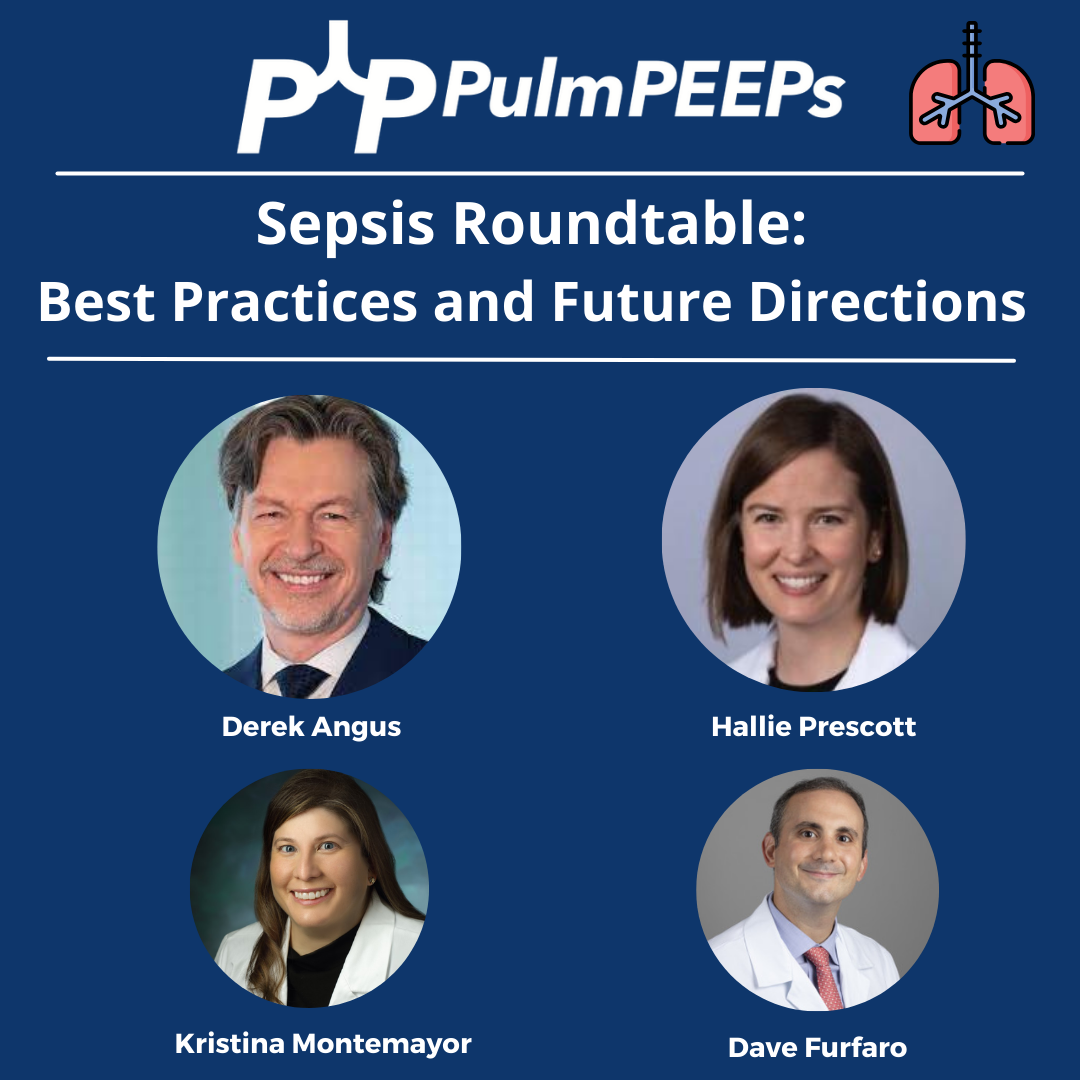
62. Sepsis Roundtable: Best Practices and Future Directions

We’re starting off 2024 with a bang!! Today we’re hosting another expert Roundtable discussion and we’re joined by internationally recognized experts in the field. We’ll tackle everything from teaching about sepsis, to how to incorporate guidelines into education and practice, to future research directions in the field. This is a can’t-miss discussion. Let us know what you think and other sepsis questions you have!

Meet Our Guests

Dr. Derek Angus is a Professor at the University of Pittsburgh where he holds the Mitchell P. Fink Endowed Chair in Critical Care Medicine and is the Chair of the Department of Critical Care Medicine. He is a world-renowned researcher in a range of critical care topics including sepsis, has hundreds of publications, and has led numerous NIH-funded studies.

Dr. Hallie Prescott is an Associate Professor in Pulmonary and Critical Care Medicine at the University of Michigan. She is the Co-Chair of the Surviving Sepsis Campaign Guidelines and is also an internationally recognized expert due to her research in improving sepsis outcomes. She has been recognized by both medical journals and professional societies for her outstanding contributions to the field.

Summary of Episode Discussion Topics

1. Sepsis Guidelines and Education

  • Surviving Sepsis Guidelines: Stressed as essential reading for professionals in pulmonary and critical care. They provide a structured approach to sepsis management.
  • Teaching Approaches: Transition from during-rounds teaching to focused, separate teaching sessions for trainees. Emphasizes the need to go beyond guidelines to include discussions on seminal articles, management strategies, and areas lacking robust data.

2. Clinical Skills and Decision Making in Sepsis Care

  • Early Recognition and Polypharmacy: Highlighted the need for timely sepsis identification and caution against excessive polypharmacy.
  • Mental Models in Care: Encourages building comprehensive mental models for understanding sepsis, stressing the importance of not just treating symptoms but understanding underlying causes.

3. Implementation of Sepsis Guidelines

  • Guideline Application in Bedside Care: Discusses the challenge of applying guidelines while considering patient-specific factors.
  • Fluid Resuscitation Practices: Identifies fluid resuscitation as a key area for improvement, with a shift towards more conservative approaches.
  • Overcoming Institutional Barriers: Addresses the fear of causing harm as a significant barrier to guideline implementation and emphasizes the need for balanced decision-making.

4. Advances in Sepsis Care and Prevention

  • Pre-Hospital Sepsis Management: Explores the role of early intervention in community settings and the potential of wearables for early detection.
  • Paramedic Role in Early Antibiotic Administration: Underlines the importance of starting antibiotics in the ambulance for suspected sepsis cases.

5. Recovery and Post-Discharge Care

  • Post-Discharge Initiatives: Focuses on improving handoffs from ICU to ward and from hospital to home. Highlights the importance of medication reconciliation and clear communication with primary care.
  • Challenges in Continuity of Care: Discusses the need for clear documentation and communication during patient transitions to ensure continuity of care.

6. Future Directions in Sepsis Treatment and Research

  • Phenotyping for Targeted Treatment: The potential of identifying patient subgroups through phenotyping for more effective, tailored treatments.
  • Adaptive Trial Designs: Advocates for large-scale adaptive platform trials that can test multiple interventions across diverse patient populations.

7. Personal Involvements and Perspectives

  • Experts’ Current Work: The panelists share their ongoing projects and research in sepsis care, reflecting a commitment to advancing the field through comprehensive and adaptive approaches.

References and Further Reading

  1. Evans L, Rhodes A, Alhazzani W, Antonelli M, Coopersmith CM, French C, Machado FR, Mcintyre L, Ostermann M, Prescott HC, Schorr C, Simpson S, Wiersinga WJ, Alshamsi F, Angus DC, Arabi Y, Azevedo L, Beale R, Beilman G, Belley-Cote E, Burry L, Cecconi M, Centofanti J, Coz Yataco A, De Waele J, Dellinger RP, Doi K, Du B, Estenssoro E, Ferrer R, Gomersall C, Hodgson C, Hylander Møller M, Iwashyna T, Jacob S, Kleinpell R, Klompas M, Koh Y, Kumar A, Kwizera A, Lobo S, Masur H, McGloughlin S, Mehta S, Mehta Y, Mer M, Nunnally M, Oczkowski S, Osborn T, Papathanassoglou E, Perner A, Puskarich M, Roberts J, Schweickert W, Seckel M, Sevransky J, Sprung CL, Welte T, Zimmerman J, Levy M. Surviving Sepsis Campaign: International Guidelines for Management of Sepsis and Septic Shock 2021. Crit Care Med. 2021 Nov 1;49(11):e1063-e1143. doi: 10.1097/CCM.0000000000005337. PMID: 34605781.
  2. Rudd KE, Kissoon N, Limmathurotsakul D, Bory S, Mutahunga B, Seymour CW, Angus DC, West TE. The global burden of sepsis: barriers and potential solutions. Crit Care. 2018 Sep 23;22(1):232. doi: 10.1186/s13054-018-2157-z. PMID: 30243300; PMCID: PMC6151187.
  3. Talisa VB, Yende S, Seymour CW, Angus DC. Arguing for Adaptive Clinical Trials in Sepsis. Front Immunol. 2018 Jun 28;9:1502. doi: 10.3389/fimmu.2018.01502. PMID: 30002660; PMCID: PMC6031704.
  4. Prescott HC, Angus DC. Enhancing Recovery From Sepsis: A Review. JAMA. 2018 Jan 2;319(1):62-75. doi: 10.1001/jama.2017.17687. PMID: 29297082; PMCID: PMC5839473.
  5. https://mi-hms.org/quality-initiatives/sepsis-initiative
  6. Kowalkowski M, Chou SH, McWilliams A, Lashley C, Murphy S, Rossman W, Papali A, Heffner A, Russo M, Burke L, Gibbs M, Taylor SP; Atrium Health ACORN Investigators. Structured, proactive care coordination versus usual care for Improving Morbidity during Post-Acute Care Transitions for Sepsis (IMPACTS): a pragmatic, randomized controlled trial. Trials. 2019 Nov 29;20(1):660. doi: 10.1186/s13063-019-3792-7. PMID: 31783900; PMCID: PMC6884908.
  7. Schmidt K, Worrack S, Von Korff M, Davydow D, Brunkhorst F, Ehlert U, Pausch C, Mehlhorn J, Schneider N, Scherag A, Freytag A, Reinhart K, Wensing M, Gensichen J; SMOOTH Study Group. Effect of a Primary Care Management Intervention on Mental Health-Related Quality of Life Among Survivors of Sepsis: A Randomized Clinical Trial. JAMA. 2016 Jun 28;315(24):2703-11. doi: 10.1001/jama.2016.7207. PMID: 27367877; PMCID: PMC5122319.

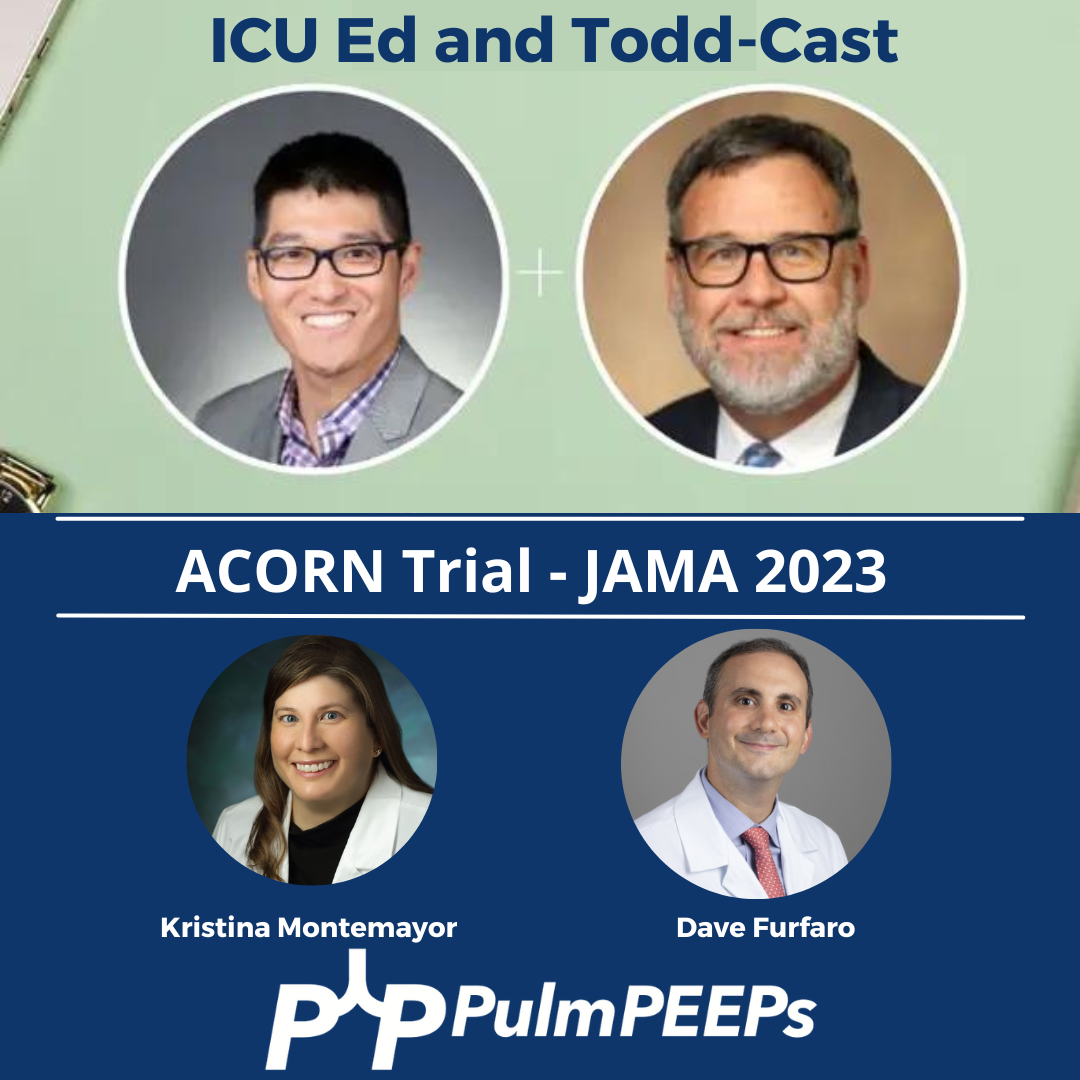
61. PulmPEEPs and ICU Ed and Todd-Cast: ACORN Trial

This week we are excited to bring you our podcast cross-over event as we are joined by Eddie Qian and Todd Rice, the co-founders of the ICU Ed and Todd-Cast. Listen today as we discuss the recent ACORN trial evaluating the use of Cefepime versus Pipercillin-Tazobactam in adults hospitalized with acute infection.

References: Qian ET, Casey JD, Wright A, Wang L, Shotwell MS, Siemann JK, Dear ML, Stollings JL, Lloyd BD, Marvi TK, Seitz KP, Nelson GE, Wright PW, Siew ED, Dennis BM, Wrenn JO, Andereck JW, Han JH, Self WH, Semler MW, Rice TW; Vanderbilt Center for Learning Healthcare and the Pragmatic Critical Care Research Group. Cefepime vs Piperacillin-Tazobactam in Adults Hospitalized With Acute Infection: The ACORN Randomized Clinical Trial. JAMA. 2023 Oct 24;330(16):1557-1567.