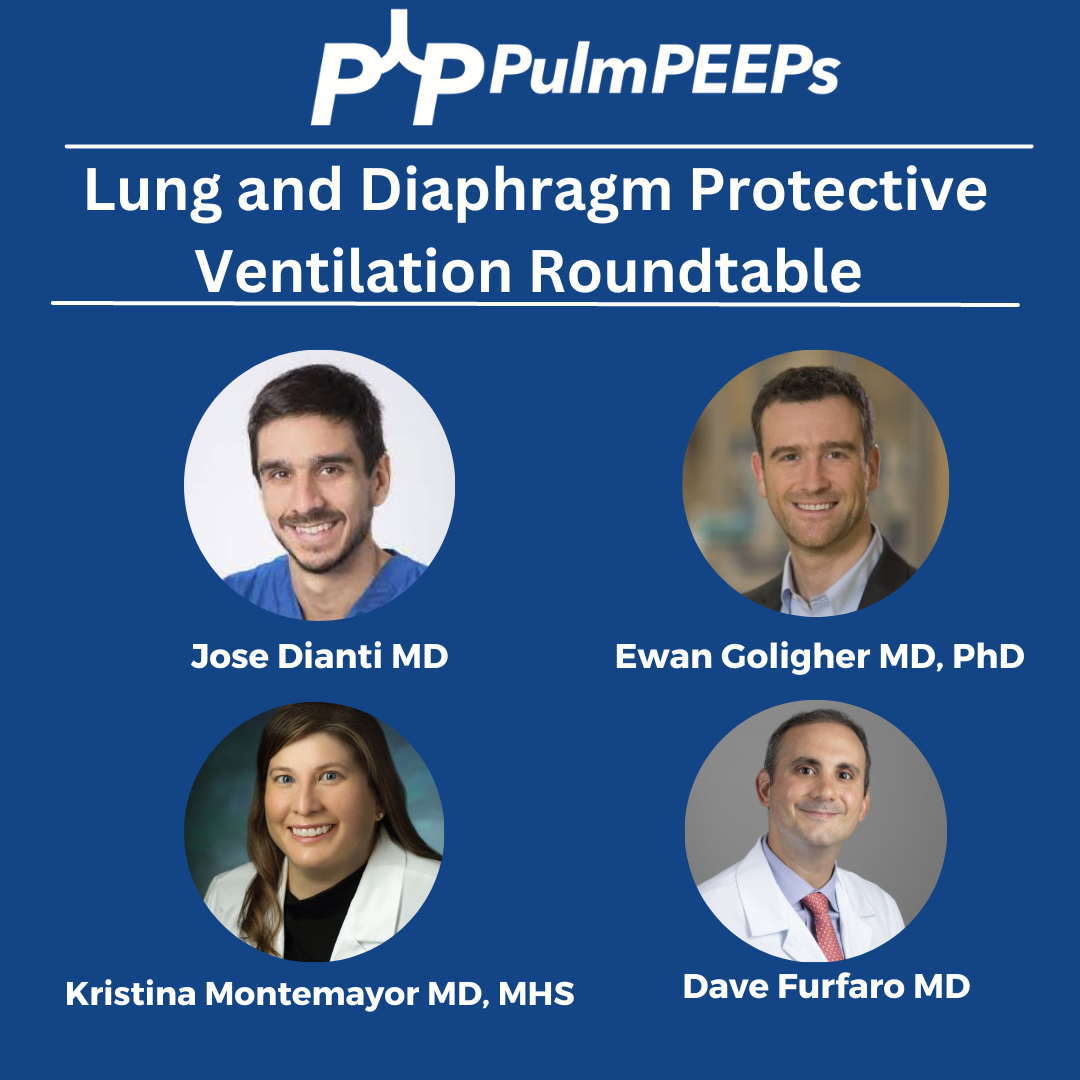
Today the PulmPEEPs are discussing Lung and Diaphragm Protective Ventilation with two experts in the field. We are joined by Dr. Jose Dianti and Dr. Ewan Goligher.
Meet Our Guests
Dr. Jose Dianti is a clinical and research fellow at the University of Toronto and University Health Network. He completed his residency in Critical Care and worked as a critical care attending previously at the Hospital Italiano in Buenos Aires, Argentina. He is particularly interested in ventilator induced lung injury and personalized ventilation strategies. Dr. Ewan Goligher is an Assistant Professor at the University of Toronto and University Health Network, and is a world renowned researcher in the mechanisms of ventilator induced lung and diaphragm injury.
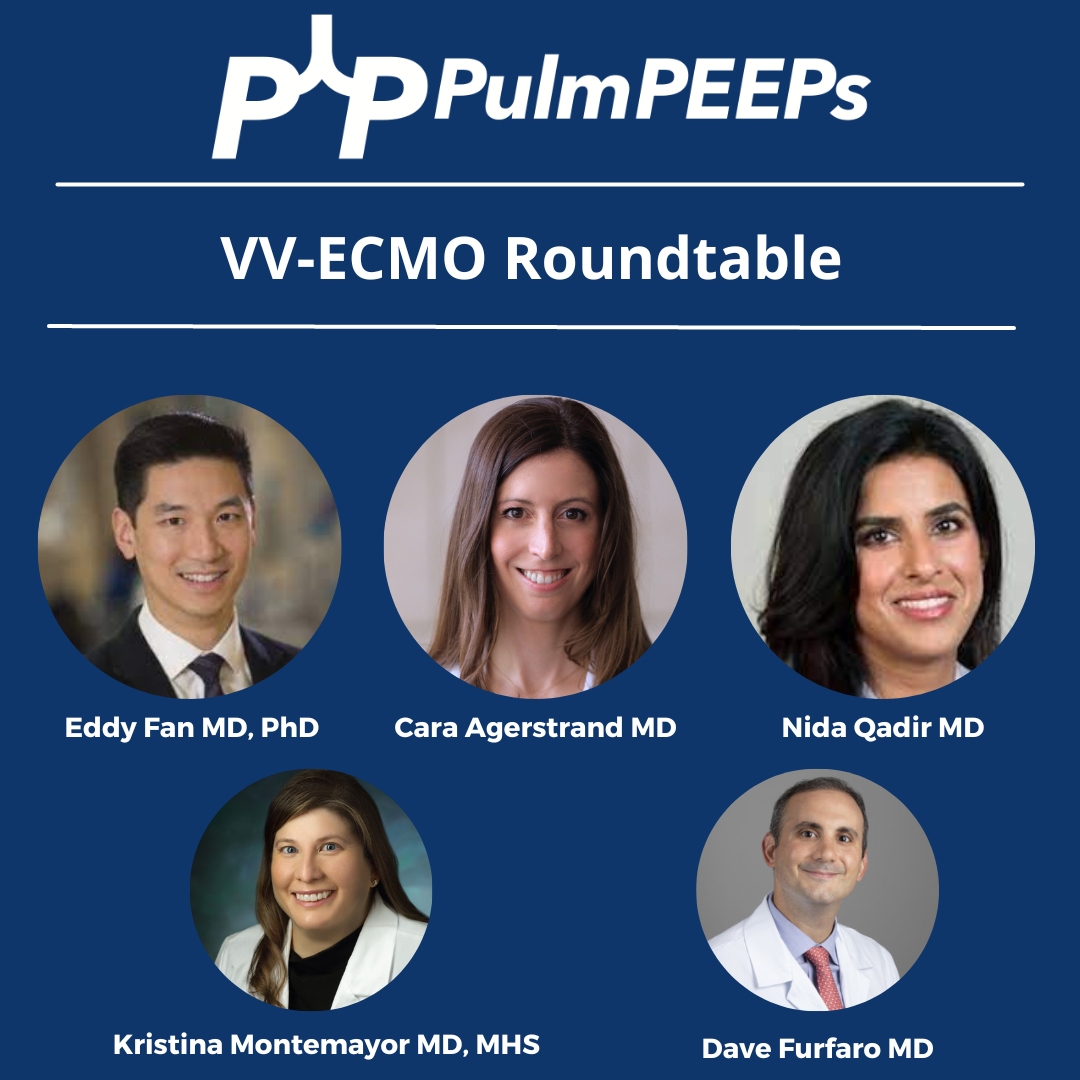
For the first Pulm PEEPs episode of 2023, we are starting off with a bang and a Roundtable discussion about venovenous extracorporeal membrane oxygenation (VV-ECMO). VV-ECMO has been increasing in use in the intensive care unit for patients with severe respiratory failure, especially during the COVID-19 pandemic. We are joined by experts in the field, Cara Agerstrand, Eddy Fan, and Nida Qadir, to discuss the basics of how ECMO works, physiologic goals, when to use ECMO for patients with ARDS, and much more. Let us know your thoughts and stay tuned for more great content in 2023.
Meet Our Guests
Cara Agerstrand is an Associate Professor of Medicine at Columbia University Irving Medical Center / NewYork-Presbyterian Hospital, where she is also the Director of the Medical ECMO Program. She is an international renown ECMO expert and is the current Conference Chair for the Extracorporeal Life Support Organization (or ELSO). Finally, she is a lauded educator and has received the American College of Chest Physicians Distinguished Educator Award.
Eddy Fan is an Associate Professor at the University of Toronto, and the University Health Network / Mount Sinai Hospital. He is also the Director of Critical Research and the Medical Director of the Extracorporeal Life Support Program. He has literally 100s of publications about ARDS, ECMO, and critical care, chairs the ELSO Research Committee, and spearheads multiple international collaborative studies.
Nida Qadir is an Associate Professor at the University of California Los Angeles and is an Associate Director of the MICU, as well as the co-director of the Post-ICU Recovery Clinic. Nida is also on the Critical Care Editorial Board for CHEST and is a highly regarded pulmonary and critical care educator.
Key Learning Points
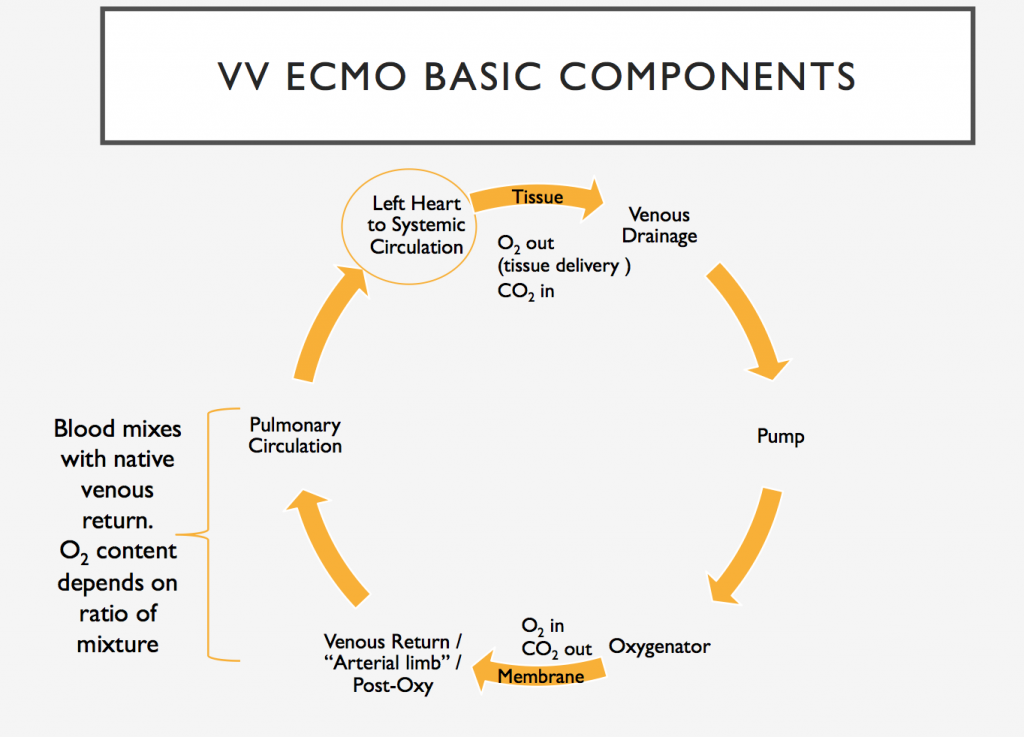
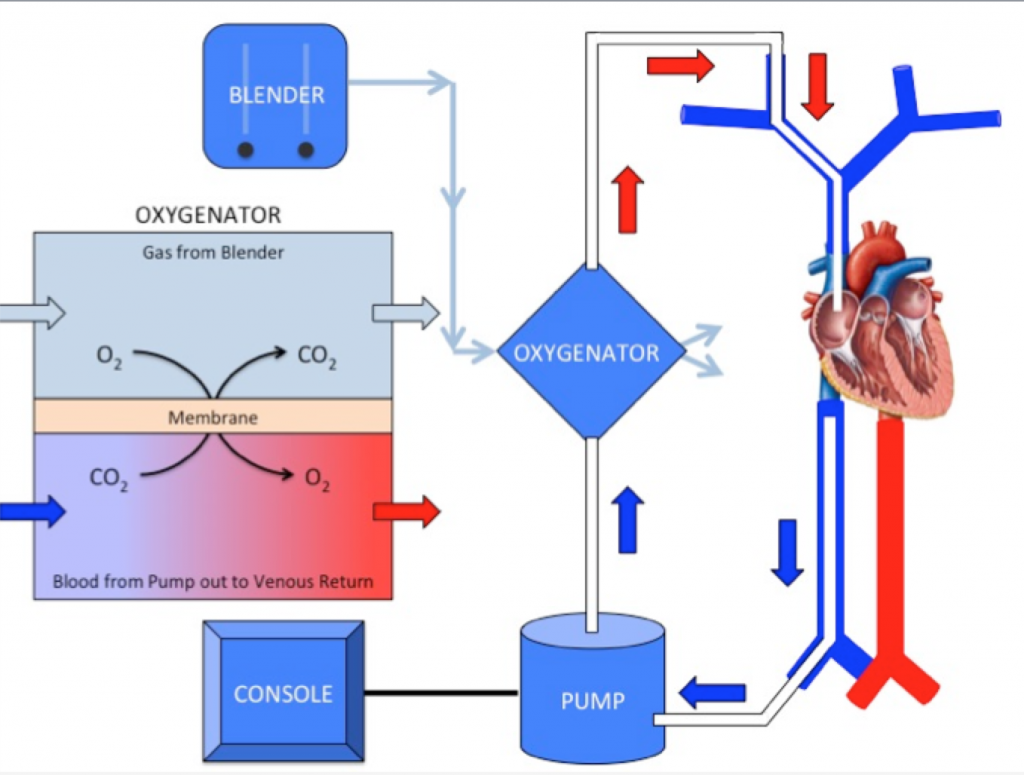
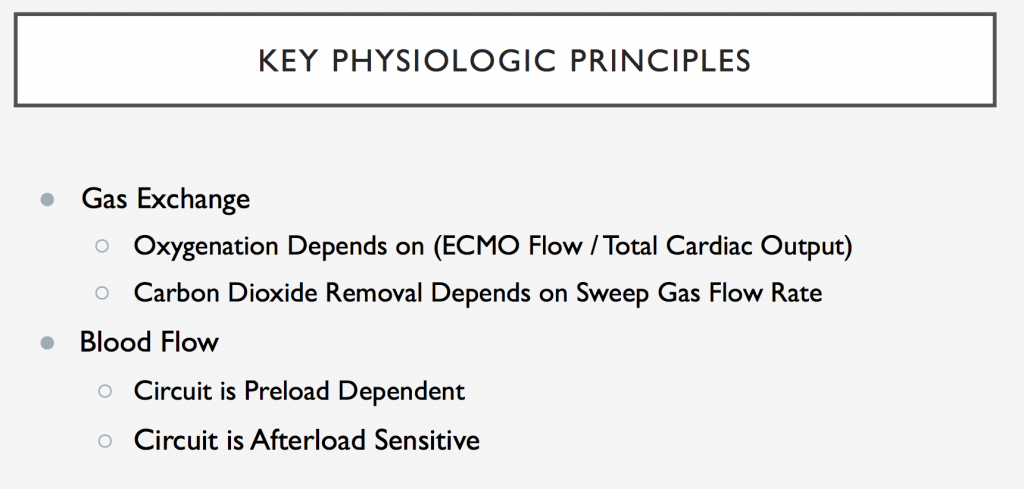
VV- ECMO Basic Components and Core Physiology
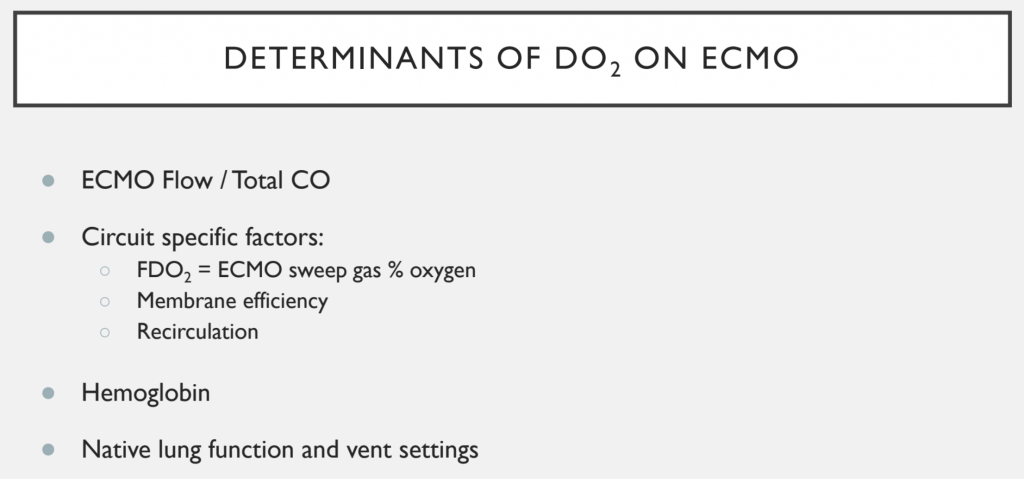
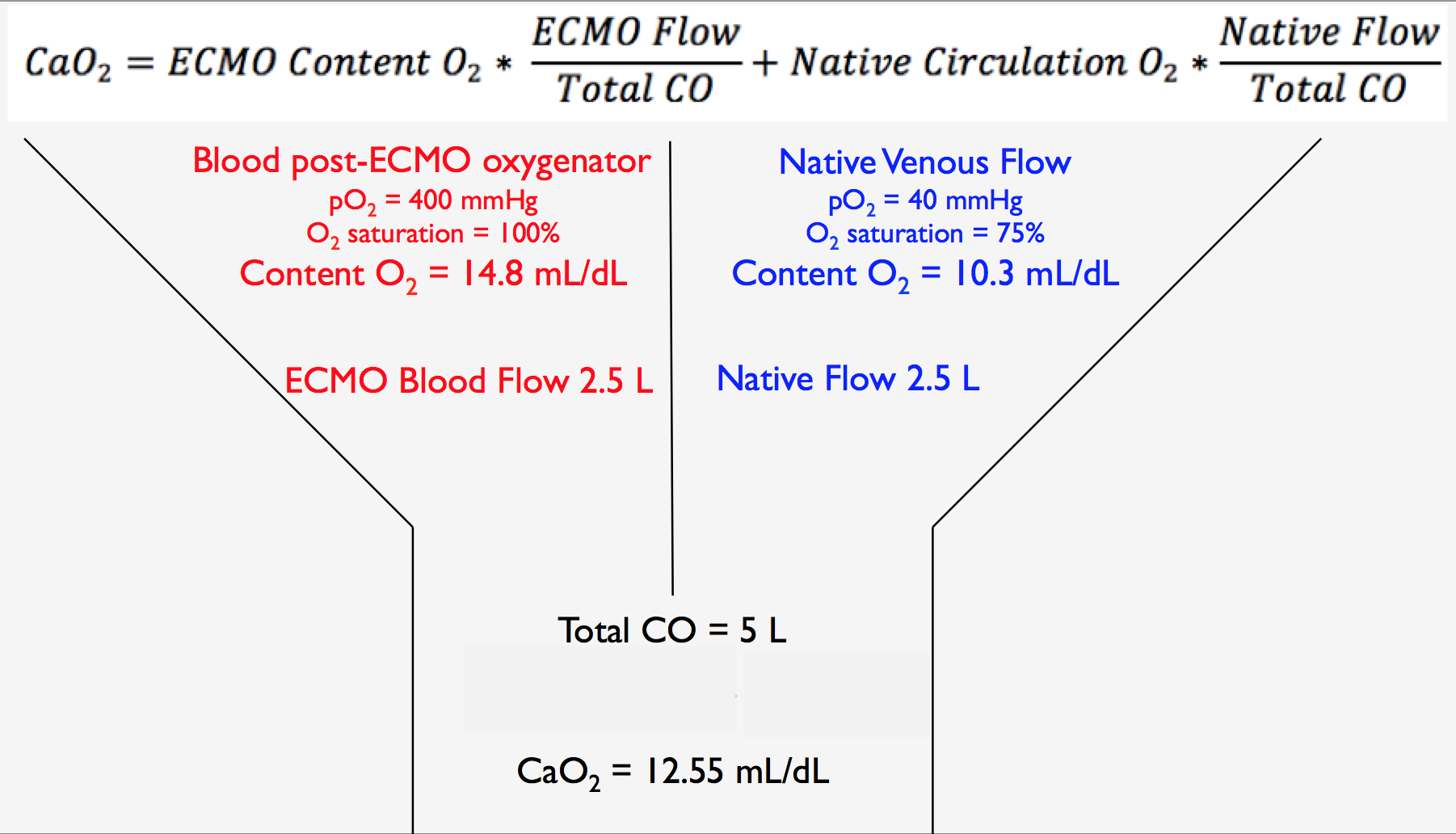
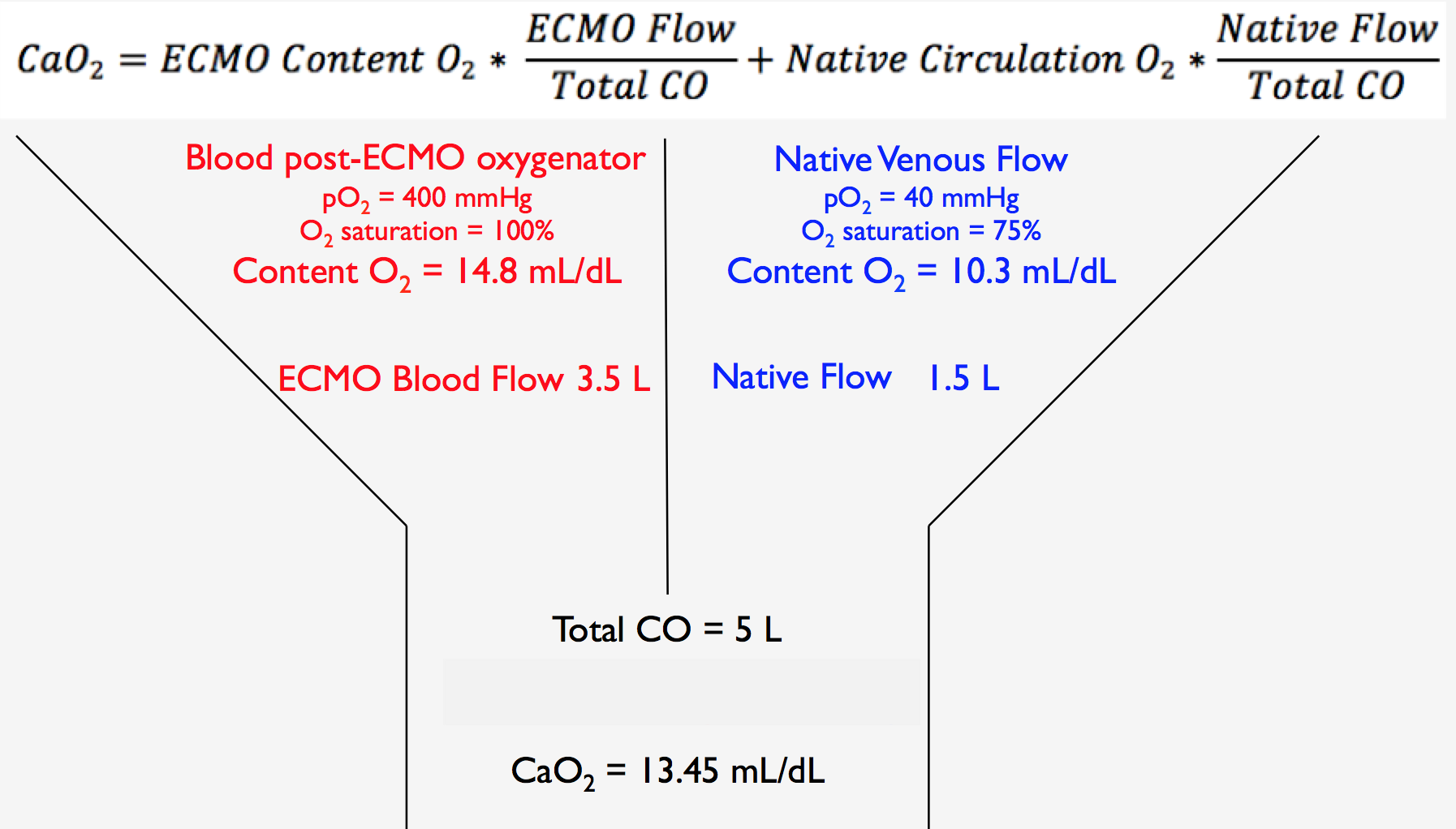
Oxygenation Delivery on VV-ECMO
ECMO Flow / Total CO = 0.5ECMO Flow / Total CO = 0.7
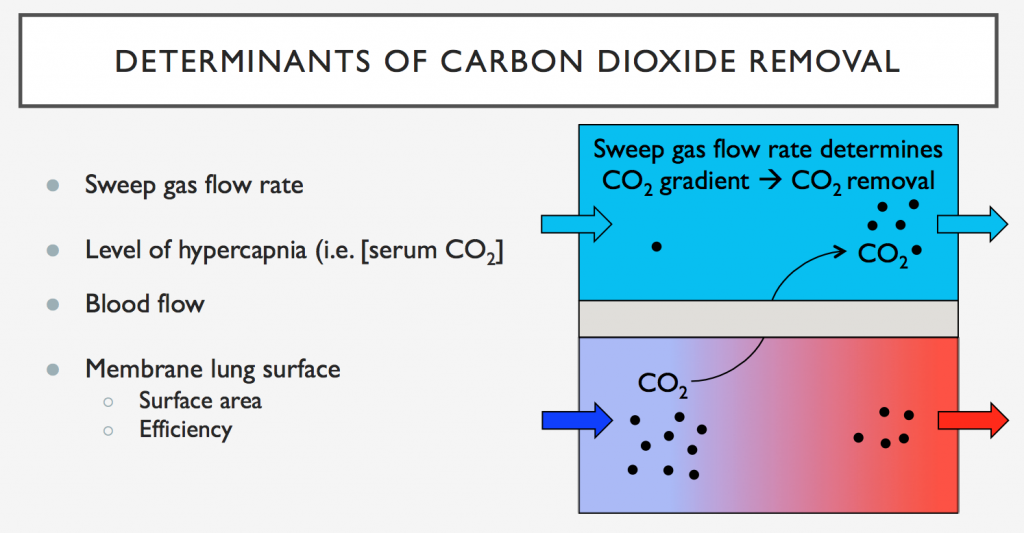
Carbon Dioxide Removal on VV-ECMO
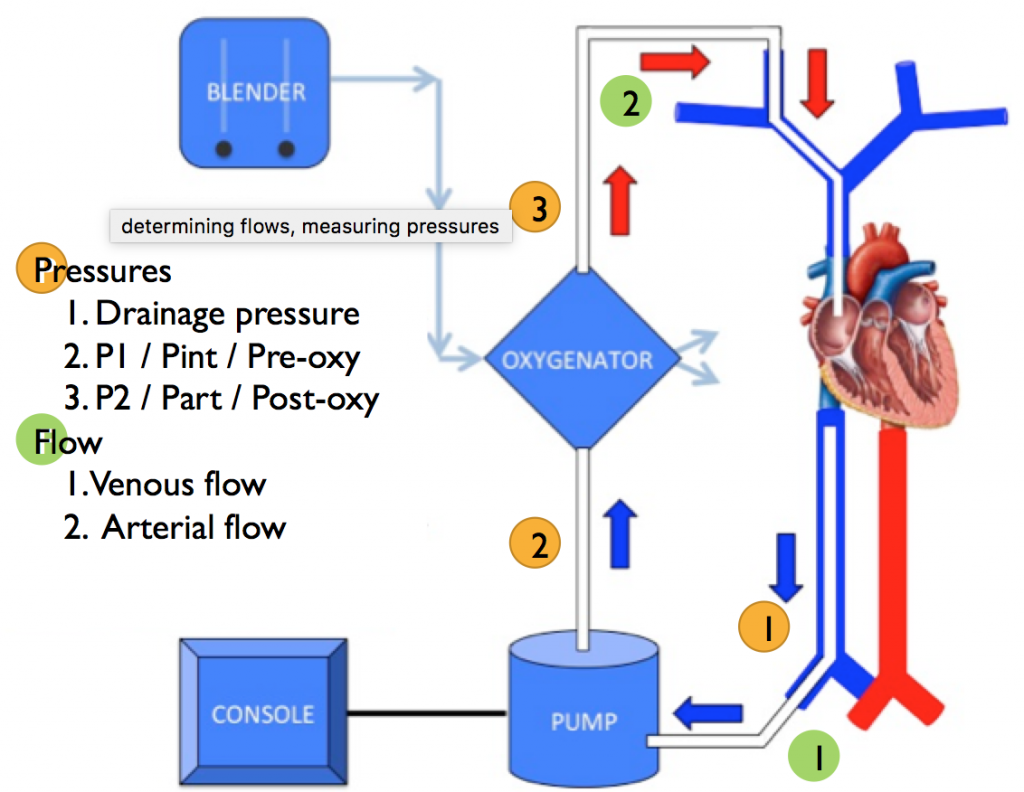
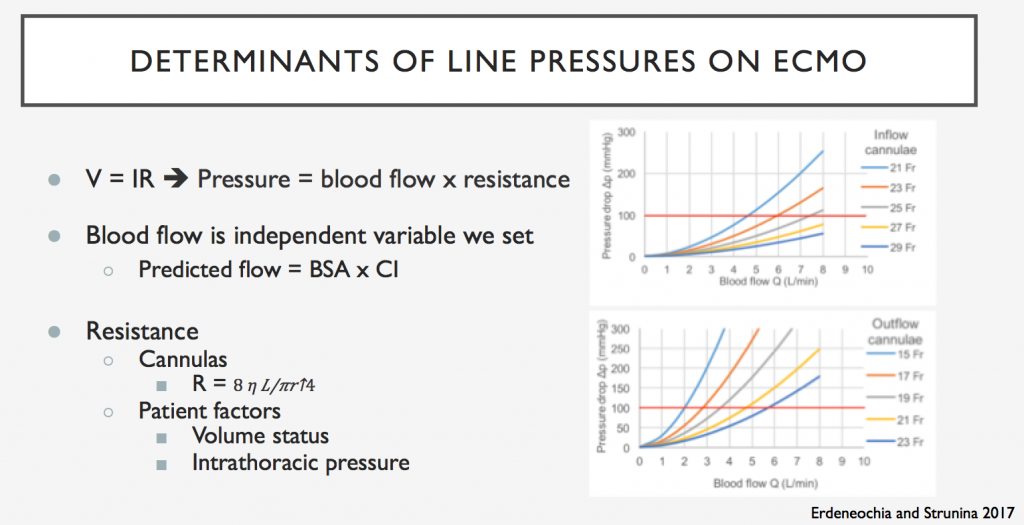
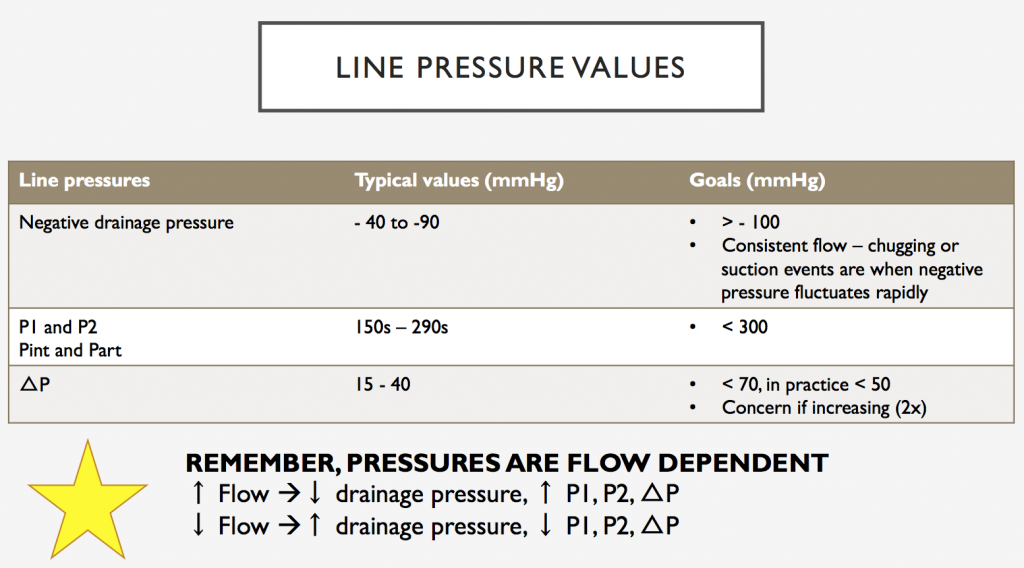
Flows and Line Pressures on VV-ECMO
ECMO for ARDS
Should be considered after conventional therapies have failed (including ventilator optimization and proning)
Allows for ultra-lung protective ventilation
Lung rest means settings that minimize ventilator-induced lung injury
EOLIA Trial (see below) shows that ECMO can be delivered safely, and likely has a benefit in severe ARDS, although the magnitude of that benefit remains uncertain. A Bayesian re-analysis showed a high likelihood of benefit even if skeptical of ECMO
ECMO For Bridge to Lung Transplant
Allows for patients to maintain gas exchange while awaiting transplant
Ideally done with patient extubated
Can allow for patients to maintain nutrition and mobility while awaiting transplant
This week on Pulm PEEPs, Dave Furfaro and Kristina Montemayor are joined by experts in the field of critical care medicine and ARDS to discuss all things PEEP! Drs. Roy Brower, Sarina Sahetya, Todd Rice, and Elias Baedorf-Kassis discuss everything ranging from PEEP basics to their approach to optimizing PEEP in patients with ARDS.
Meet Our Guests
Roy Brower is a Professor of Medicine at Johns Hopkins where he served as the MICU director for over 33 years, and he has been one of the pioneers for lung-protective ventilation for patients with ARDS.
Elias Baedorf-Kassis is an Assistant Professor of Medicine at Beth Israel Deaconess Medical Center and Harvard Medical School. He is the Medical Director of Respiratory Care at BIDMC, and helps lead the VV-ECMO program.
Todd Rice is an Associate Profess of Medicine in the Division of Allergy, Pulmonary, and Critical Care Medicine at Vanderbilt University and Vice President for Clinical Trial Innovation and Operations in the Vanderbilt Institute for Clinical and Translational Research.
Sarina Sahetya is an Assistant Professor of Medicine at Johns Hopkins Hospital and does research in the diagnosis and treatment of ARDS.
Key Learning Points
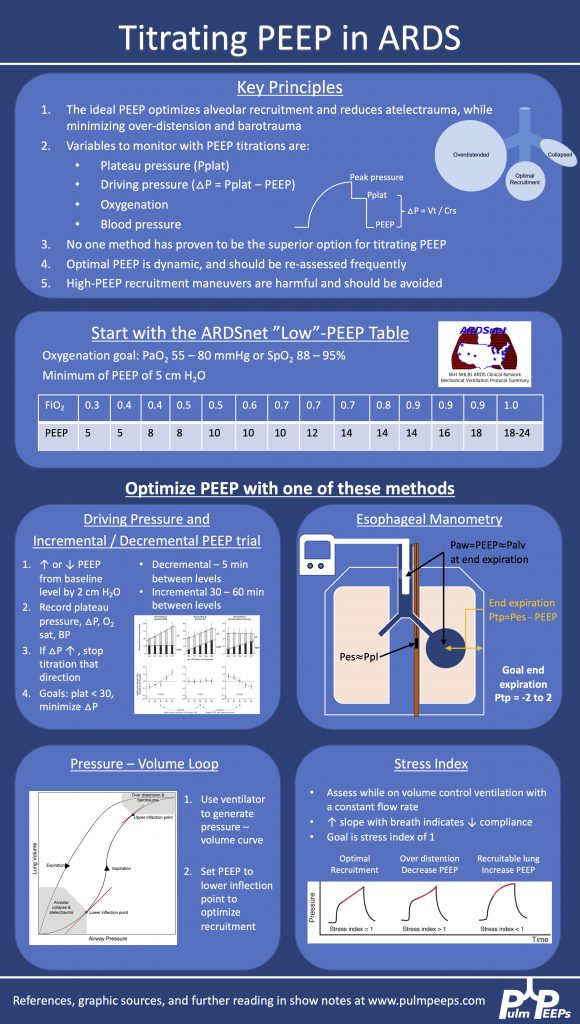
Driving Pressure figure from Amato et al. 2015. Stress index figure from Hess 2014.
The plateau pressure can be measured on the ventilator with an inspiratory hold maneuver
Extrinsic PEEP is applied by the ventiilator, while intrinsic PEEP, or auto-PEEP, occurs when there is incomplete emptying of the lungs due to inadequate time for exhalation. This often happens with obstructive lung disease. Intrinsic PEEP can be measured on the ventilator with an end-expiratory hold maneuver
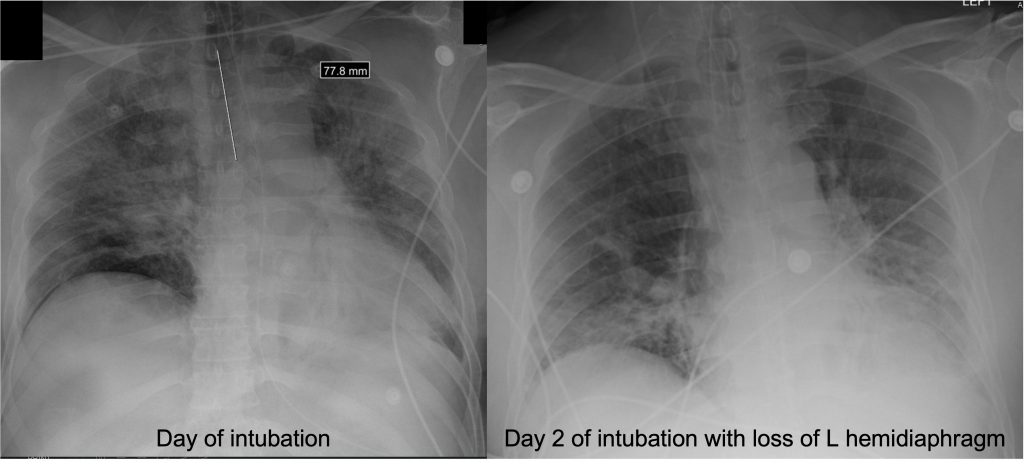
We utilize PEEP in all intubated patients to minimize atelectasis. When patients are supine, the heart moves back 2 cm and the diaphragm raises by 2 cm, so often the left lower lobe of the lung is compressed and there is atelectasis there. This is often seen on CXR: