117. Pulm PEEPs Pearls: Spontaneous Breathing Trials

This week’s Pulm PEEPs Pearls episode is all about spontaneous breathing trials (SBTs). SBTs are a standard part of the daily practice in the intensive care unit, but the exact methods vary across ICUs and institutions. Listen in to hear about the most common methods of SBTs, the physiology of each method, and what the evidence says.

This episode was prepared with research by Pulm PEEPs Associate Editor George Doumat.

Dustin Latimer, another Pulm PEEPs Associate Editor, assisted with audio and video editing.

  1. What an SBT is really testing
  • An SBT is a stress test for post-extubation work of breathing, not just a ventilator check.
  • The goal is to balance sensitivity and specificity:
    • Too hard → unnecessary failures and delayed extubation
    • Too easy → false positives and higher risk of reintubation
  1. Common SBT modalities and how they compare
  • T-piece
    • No inspiratory support and no PEEP
    • Highest work of breathing
    • Most “physiologic” but often too strict
  • Pressure support (PS) + PEEP (e.g., 5/5 or 8/5)
    • Offsets ETT resistance and provides modest assistance
    • Easier to pass than T-piece
  • CPAP (0/5)
    • No inspiratory help, but provides PEEP to counter ETT resistance
    • Sits between PS and T-piece in difficulty
  1. Evidence favors pressure-supported SBTs for most patients
  • Large meta-analysis (~6,000 patients, >40 RCTs):
    • Pressure-supported SBTs increase successful extubation (~7% absolute benefit)
    • No increase in reintubation rates
  • Trials (e.g., FAST trial):
    • Patients pass SBTs earlier
    • Leads to earlier extubation and fewer ventilator-associated risks
  • Bottom line: A 30-minute PS 5/5 SBT is evidence-based and appropriate for most stable ICU patients
  1. When a T-piece still makes sense

T-piece SBTs are useful when:

  • Cost of reintubation is high
    • Difficult airway
    • Prior failed extubation
  • Pretest probability of success is low
    • Prolonged or difficult weaning
    • Tracheostomy vs extubation decisions
  • Need to mimic physiology without positive pressure
    • In LV dysfunction or pulmonary edema even small amounts PEEP may significantly improve physiology
  • Some centers use a hybrid approach: PS SBT → short confirmatory T-piece before extubation
  1. CPAP as a middle ground
  • Rationale:
    • Allows full patient effort while compensating for ETT resistance
  • Evidence:
    • Fewer and smaller trials
    • Possible modest improvement in extubation success
    • No clear mortality or LOS benefit
  • Reasonable option based on patient physiology, institutional protocols, and clinician comfort
  1. No single “perfect” SBT mode
  • Across PS, T-piece, CPAP, and newer methods (e.g., high-flow via ETT) there are no consistent differences in mortality or length of stay
  • What matters most:
    • Daily protocolized screening
    • Thoughtful bedside clinical judgment
    • Matching SBT difficulty to patient-specific risk
  1. Institutional variation is normal—and acceptable
  • Examples:
    • PS 10/5 in postoperative surgical ICU patients
    • PS 5/0 as an intermediate difficulty option
  • Key question clinicians should ask: What does passing or failing this specific SBT tell me about this patient’s likelihood of post-extubation success?
  1. Take-home pearls
  1. SBTs are stress tests of post-extubation physiology.
  2. PS 5/5 for 30 minutes is a strong default for most ICU patients.
  3. T-piece trials are valuable when false positives are costly or physiology demands it.
  4. CPAP is reasonable but supported by less robust data.
  5. Consistency, daily screening, and judgment matter more than the exact mode.

  • Burns KEA, Khan J, Phoophiboon V, Trivedi V, Gomez-Builes JC, Giammarioli B, Lewis K, Chaudhuri D, Desai K, Friedrich JO. Spontaneous Breathing Trial Techniques for Extubating Adults and Children Who Are Critically Ill: A Systematic Review and Meta-Analysis. JAMA Netw Open. 2024 Feb 5;7(2):e2356794. doi: 10.1001/jamanetworkopen.2023.56794. PMID: 38393729; PMCID: PMC10891471.
  • Burns KEA, Sadeghirad B, Ghadimi M, Khan J, Phoophiboon V, Trivedi V, Gomez Builes C, Giammarioli B, Lewis K, Chaudhuri D, Desai K, Friedrich JO. Comparative effectiveness of alternative spontaneous breathing trial techniques: a systematic review and network meta-analysis of randomized trials. Crit Care. 2024 Jun 8;28(1):194. doi: 10.1186/s13054-024-04958-4. PMID: 38849936; PMCID: PMC11162018.
  • Subirà C, Hernández G, Vázquez A, Rodríguez-García R, González-Castro A, García C, Rubio O, Ventura L, López A, de la Torre MC, Keough E, Arauzo V, Hermosa C, Sánchez C, Tizón A, Tenza E, Laborda C, Cabañes S, Lacueva V, Del Mar Fernández M, Arnau A, Fernández R. Effect of Pressure Support vs T-Piece Ventilation Strategies During Spontaneous Breathing Trials on Successful Extubation Among Patients Receiving Mechanical Ventilation: A Randomized Clinical Trial. JAMA. 2019 Jun 11;321(22):2175-2182. doi: 10.1001/jama.2019.7234. Erratum in: JAMA. 2019 Aug 20;322(7):696. doi: 10.1001/jama.2019.11119. PMID: 31184740; PMCID: PMC6563557.
  • Burns KEA, Wong J, Rizvi L, Lafreniere-Roula M, Thorpe K, Devlin JW, Cook DJ, Seely A, Dodek PM, Tanios M, Piraino T, Gouskos A, Kiedrowski KC, Kay P, Mitchell S, Merner GW, Mayette M, D’Aragon F, Lamontagne F, Rochwerg B, Turgeon A, Sia YT, Charbonney E, Aslanian P, Criner GJ, Hyzy RC, Beitler JR, Kassis EB, Kutsogiannis DJ, Meade MO, Liebler J, Iyer-Kumar S, Tsang J, Cirone R, Shanholtz C, Hill NS; Canadian Critical Care Trials Group. Frequency of Screening and Spontaneous Breathing Trial Techniques: A Randomized Clinical Trial. JAMA. 2024 Dec 3;332(21):1808-1821. doi: 10.1001/jama.2024.20631. PMID: 39382222; PMCID: PMC11581551.
  • Mahul M, Jung B, Galia F, Molinari N, de Jong A, Coisel Y, Vaschetto R, Matecki S, Chanques G, Brochard L, Jaber S. Spontaneous breathing trial and post-extubation work of breathing in morbidly obese critically ill patients. Crit Care. 2016 Oct 27;20(1):346. doi: 10.1186/s13054-016-1457-4. PMID: 27784322; PMCID: PMC5081985.
  • Yi LJ, Tian X, Chen M, Lei JM, Xiao N, Jiménez-Herrera MF. Comparative Efficacy and Safety of Four Different Spontaneous Breathing Trials for Weaning From Mechanical Ventilation: A Systematic Review and Network Meta-Analysis. Front Med (Lausanne). 2021 Nov 22;8:731196. doi: 10.3389/fmed.2021.731196. PMID: 34881255; PMCID: PMC8647911.​

106. Pulm PEEPs Pearls: ICI Pneumonitis

We are so excited to be launching a new series here at Pulm PEEPs! We’ll be talking about high yield topics in 15 minutes or less. In this series, Furf and Monty will tackle core points and provide an overview, key points, and further reading. We’re starting with a key point review of Immune Checkpoint Inhibitor Pneumonitis. Let us know if there are other topics you want to hear about!

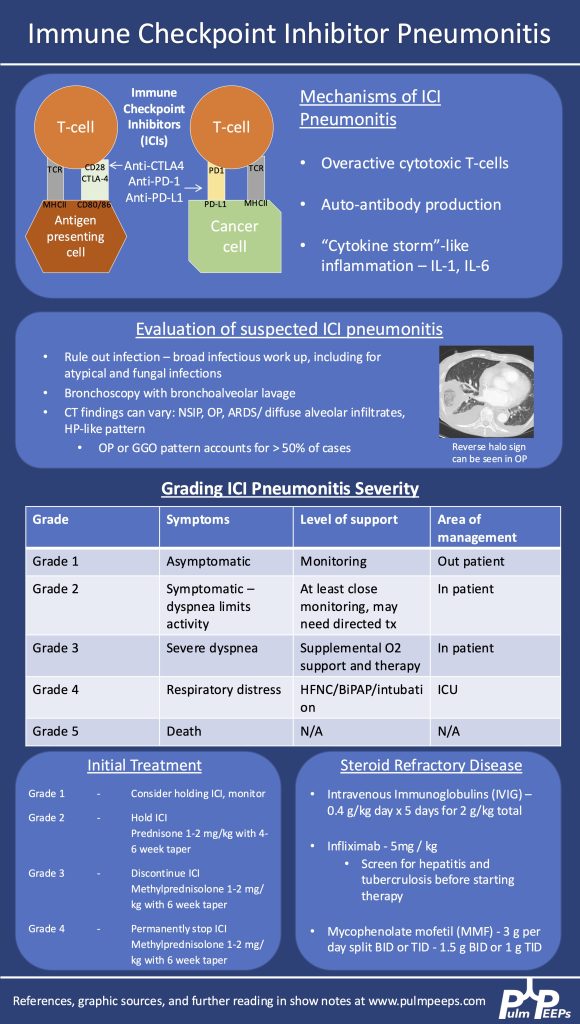
  1. Epidemiology & Pathophysiology
    • Increasingly common as immunotherapy use grows in oncology.
    • Caused by immune activation from PD-1, PD-L1, or CTLA-4 inhibitors.
    • Mechanisms:
      1. Overactive T cells
      2. Autoantibody production
      3. Cytokine-mediated inflammation (e.g., ↑IL-1, ↑IL-6)
  1. Clinical Suspicion & Diagnosis
    • Any new respiratory symptoms in a patient currently or previously on ICI → consider ICI pneumonitis.
    • CT findings are variable: can mimic organizing pneumonia, NSIP, ARDS, or diffuse ground glass opacities. Imaging pattern does not determine severity grade.
    • Diagnosis is of exclusion — infection and malignancy progression must be ruled out first.
    • Workup:
      • Broad infectious evaluation (cultures, viral panel, fungal markers).
      • Early bronchoscopy with BAL if feasible — typically lymphocyte-predominant in ICI pneumonitis.
      • Screen for TB and hepatitis early (in case infliximab is needed).
  1. Severity Grading (Symptom- & O₂-based, not imaging-based)
    • Grade 1: Asymptomatic → monitor, may hold ICI.
    • Grade 2: Symptomatic but not hypoxic → prednisone 1 mg/kg/day PO.
    • Grade 3–4: Hypoxemia or ICU-level care → methylprednisolone 1–2 mg/kg/day IV. Usually hold or permanently stop ICI.
  1. Steroid Management
    • Typical taper: over 6 weeks for grade ≥3.
      • Week 1: 1–2 mg/kg/day
      • Gradual step-down to 0.25 mg/kg/day by week 5, then stop week 6.
    • Chronic/recurrent cases may need slower tapers over months.
    • Add GI prophylaxis and PJP prophylaxis during prolonged steroid use.
  1. If Steroids Fail (no improvement after 48–72 hrs)
    • Consider adding:
      • IVIG (2 g/kg over 5 days)
      • Infliximab (TNF-α inhibitor — requires TB/hepatitis screening)
      • Mycophenolate mofetil (1–1.5 g/day BID or TID, start at effective dose quickly)
    • IVIG may have lower mortality in some series but comes with risks (volume overload, thrombosis, infusion reactions).
  1. Emerging Therapies
    • JAK inhibitors are under investigation as possible future options.
  1. Multidisciplinary Care
    • ICU management is a team sport — coordinate with oncology, critical care, infectious disease, and pharmacy.


  1. Managing Immune Checkpoint Inhibitor Pneumonitis in the ICU. Montemayor, Kristina et al.CHEST Critical Care, Volume 3, Issue 1, 100126
  2. Lavalle S, Masiello E, Valerio MR, Aliprandi A, Scandurra G, Gebbia V, Sambataro D. Immune checkpoint inhibitor therapy‑related pneumonitis: How, when and why to diagnose and manage (Review). Exp Ther Med. 2024 Jul 30;28(4):381. doi: 10.3892/etm.2024.12670. PMID: 39113908; PMCID: PMC11304171.
  3. Delaunay M, Prévot G, Collot S, Guilleminault L, Didier A, Mazières J. Management of pulmonary toxicity associated with immune checkpoint inhibitors. Eur Respir Rev. 2019 Nov 6;28(154):190012. doi: 10.1183/16000617.0012-2019. PMID: 31694838; PMCID: PMC9488507.

84. RFJC 14 – ARDS Series – Driving Pressure

In this podcast episode, we continue our summer series reviewing landmark ARDS studies. Today, Dave and Luke discuss the Driving Pressure trial (published in NEJM in 2015) which evaluated the impact of driving pressure on survival in patients with ARDS.

Article and Reference

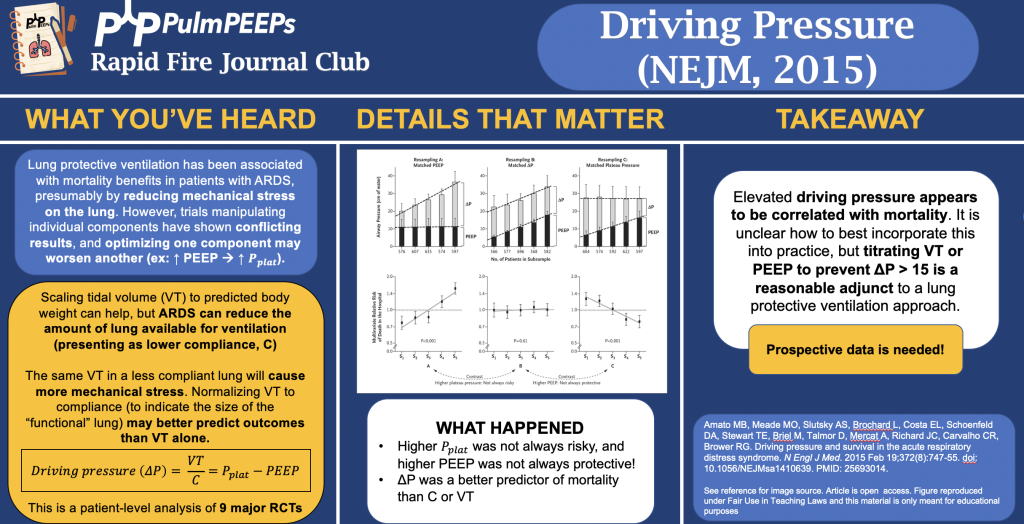
We are talking about the Driving Pressure trial today which evaluated the impact of driving pressure, as an independent variable, on survival in patients with ARDS.

Amato MB, Meade MO, Slutsky AS, Brochard L, Costa EL, Schoenfeld DA, Stewart TE, Briel M, Talmor D, Mercat A, Richard JC, Carvalho CR, Brower RG. Driving pressure and survival in the acute respiratory distress syndrome. N Engl J Med. 2015 Feb 19;372(8):747-55. doi: 10.1056/NEJMsa1410639. PMID: 25693014.

Infographic

83. RFJC 13 – ARDS Series – DEXA-ARDS

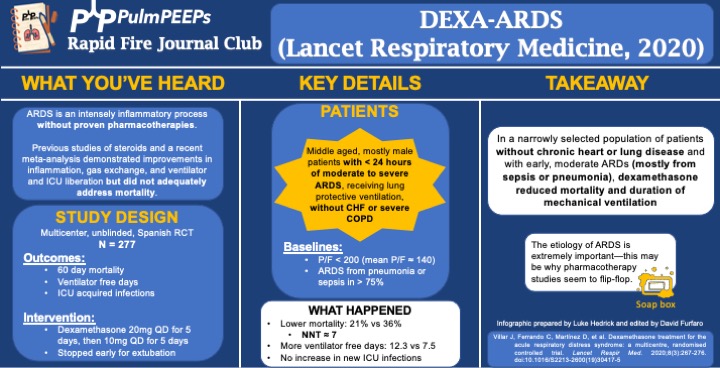
In the penultimate episode in our ARDS Rapid Fire Journal Club Summer Series we are talking about the DEXA-ARDS trial (published in Lancet Respiratory Medicine in 2020). This trial evaluated the impact of dexamethasone in the treatment of ARDS.


Article and Reference

Today we’re discussing the DEXA-ARDS trial published in Lancet Respiratory Medicine in 2020. This trial evaluated the impact of dexamethasone on mortality and duration of mechanical ventilation for patients with ARDS.

Villar J, Ferrando C, Martínez D, Ambrós A, Muñoz T, Soler JA, Aguilar G, Alba F, González-Higueras E, Conesa LA, Martín-Rodríguez C, Díaz-Domínguez FJ, Serna-Grande P, Rivas R, Ferreres J, Belda J, Capilla L, Tallet A, Añón JM, Fernández RL, González-Martín JM; dexamethasone in ARDS network. Dexamethasone treatment for the acute respiratory distress syndrome: a multicentre, randomised controlled trial. Lancet Respir Med. 2020 Mar;8(3):267-276. doi: 10.1016/S2213-2600(19)30417-5. Epub 2020 Feb 7. PMID: 32043986.


Infographic


Article Notes

  • DEXA-ARDS; Lancet Respiratory Medicine, 2020
    • DOI:10.1016/S2213-2600(19)30417-5
    • Link: https://doi.org/10.1016/s2213-2600(19)30417-5
    • Background: ARDS is an intense inflammatory process without proven, specific pharmacotherapies. Previous work and a recent meta-analysis demonstrated improvements in inflammation, gas exchange, and ventilator and ICU liberation but did not adequately address mortality.
    • Study Design (design, primary outcome, participants, etc)
      • Design: investigator-initiated, multicenter, unblinded, randomized controlled trial in 17 academic ICUs in Spain, conducted from 3/2013 to 12/2018
      • Primary Outcome
        • VFD at 28d
        • Secondary:
          • 60d mortality
          • Actual duration of ventilation in ICU survivors
          • ICU acquired infections
      • Participants
        • Inclusion ARDS with P/F < 200 for < 24hr on LTVV
        • Exclusion:
          • Already receiving steroids or immunosuppression
          • CHF
          • Severe COPD
          • DNR
        • Summary: Middle aged, mostly male patients with < 24hr of moderate to severe ARDS receiving LPV without chronic heart or lung disease
          • Like many ARDS trials, just over 3/4 of patients’ ARDS was caused by PNA or sepsis. Mean P/F was ~140
    • Intervention/Limitations
      • N = 277, stratified by center and then randomized
      • Intervention: dexamethasone 20mg qd for 5d followed by 10mg qd for 5d
        • Stopped early for extubation before day 10
        • First dose given no more than 30 hours after P/F < 200
      • Control: no placebo, just SOC
      • All patients received LTVV
    • Outcomes/Safety
      • Power: with N = 314 (actual N = 277), 80% power to detect 2 additional VFD and 15% mortality reduction
        • As an aside, this seems to be a theme in ICU trials: massively ambitious proposed benefits during power calculations and then under-enrolling for that power calculation ultimately resulting with a point estimate that favors the intervention but is not statistically significant.
      • Efficacy:
        • 60d mortality: 21% vs 36%, P = 0.0047
          • NNT of just < 7!
        • VFD at 28d: 12.3 vs 7.5, P < 0.0001
        • Actual duration of ventilation in ICU survivors: 14.2d vs 19.5d (P = 0.0009)
      • Safety:
        • Hyperglycemia: 76% vs 70%, P = 0.33
          • Always interesting in steroid trials when no change in glucose control is seen. This isn’t the most EBM thing I’ll ever say, but frankly I disregard this and assume steroids will cause hyperglycemia regardless of the trial results.
        • ICU acquired infections: 24% vs 25%, P = 0.75
    • Takeaway
      • In a narrowly selected population of patients without chronic heart or severe lung disease and with early, moderate ARDS (mostly from sepsis or pneumonia), dexamethasone reduced mortality and duration of mechanical ventilation.
        • If time, insert soap-box about etiology of ARDS being very important (EG, flu, fungal, parasitic, mycobacterial infections)


82. Fellows’ Case Files: UMass Chan

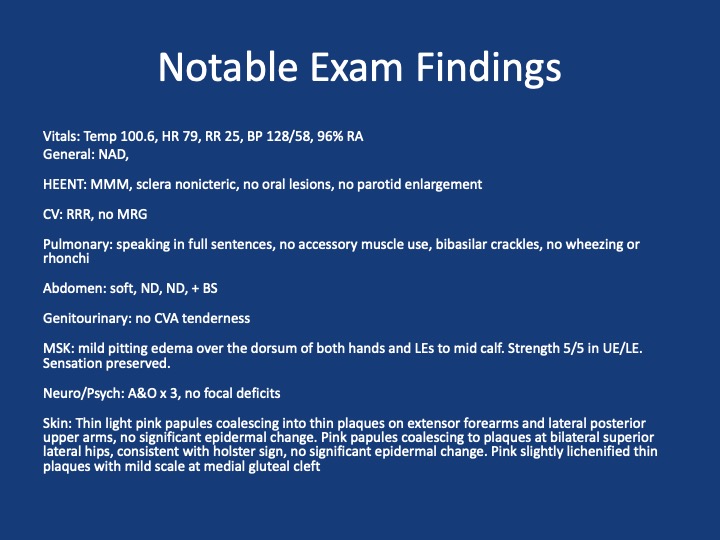
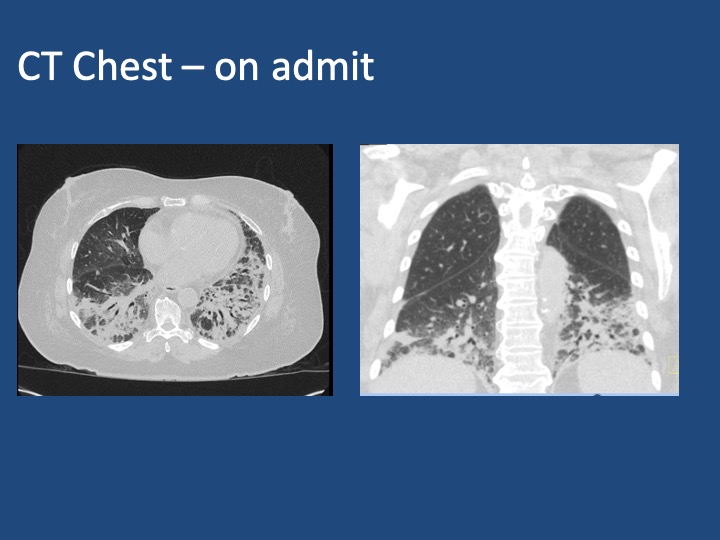
We have another great case in our Fellows’ Case Files coming today from UMass Chan. Listen in for a great discussion about a fascinating case with interesting physical exam and radiographic findings.

Dr. Jen Kodela completed her residency training at UMass Memorial Medical Center and is currently a third year PCCM fellow at UMass Chan.

Dr. Ariel McKenna completed her residency training at Maine Medical Center and is also currently a third year PCCM fellow at UMass Chan.

Dr. Will Wong is an Assistant Professor of Medicine and is the Program Director of the PCCM fellowship at UMass Chan

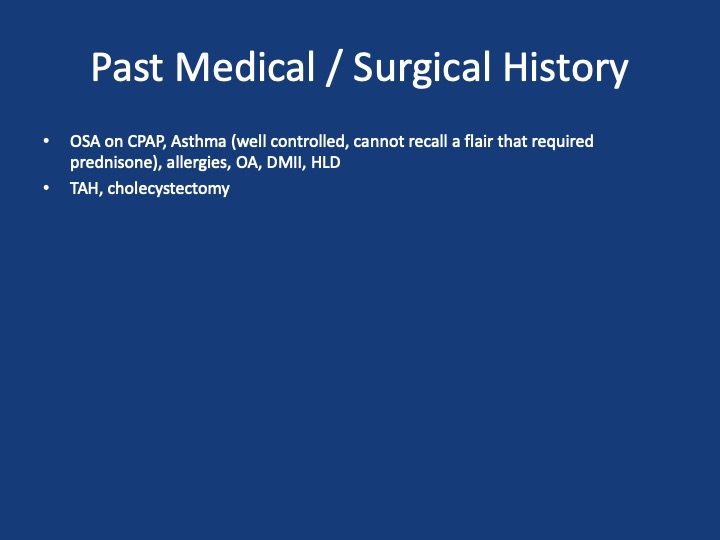
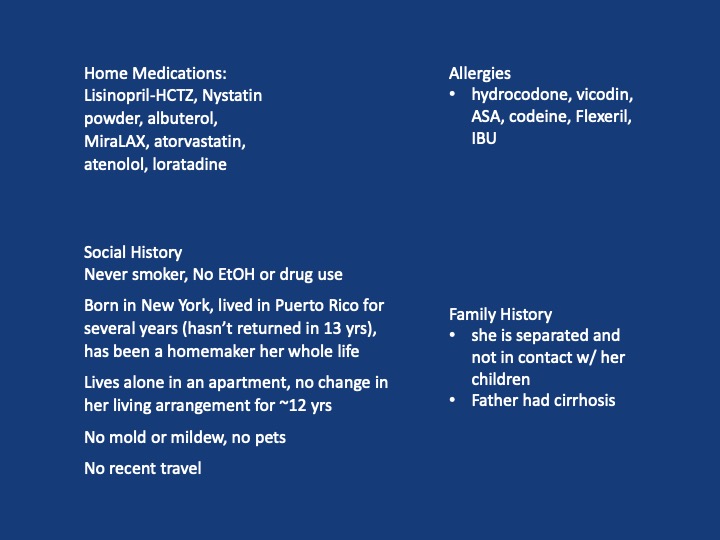
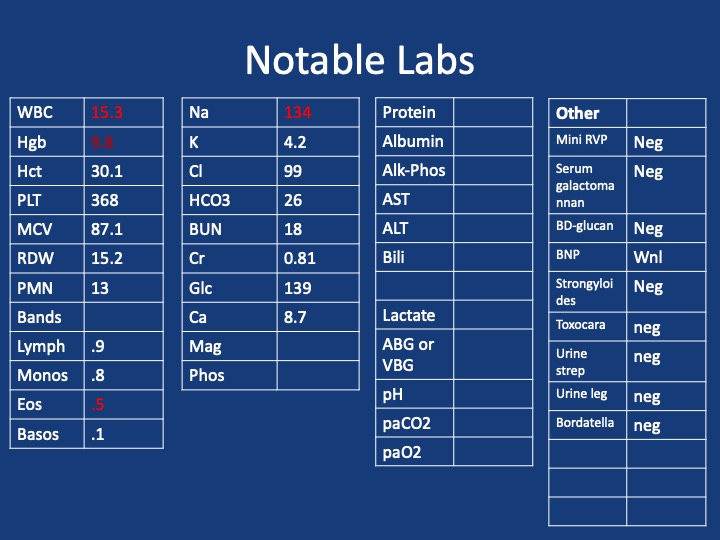
A 75 y/o F presenting with acute on chronic SOB, cough, L sided chest pain and rash. She has had ~7 months of progressive dyspnea, now a/w 2 months of productive cough, and several weeks of L sided chest pain and rash. She has been seen multiple times in the past two months for these sxs. During that time she received multiple antibiotic courses (urgent care, outpatient providers), including augmentin, azithromycin and levaquin, and asthma directed therapy (no steroids). Imaging throughout that time (CXRs, CTPE) show progression from a LLL infiltrate to bibasilar infiltrates. Despite these interventions, sxs continue to worsen. One month prior she was admitted to an OSH w/ continued worsening, vitals stable, exam nonfocal, mild leukocytosis but infectious w/u bland. Received broad spectrum abx. Bronch w/ BAL offers negative cultures, cytology, cell count w/ 66% neutrophils, 14% eosinophils. Discharged w/ dx of PNA on a 10 day course of levaquin and new exertional oxygen requirement of 2L. She then presents to Umass ~1 month later w/ continued progression of sxs

1. Formulate a differential diagnosis for non-resolving pneumonia

2. Evaluate the utility of transbronchial biopsy in the workup of undifferentiated ILD

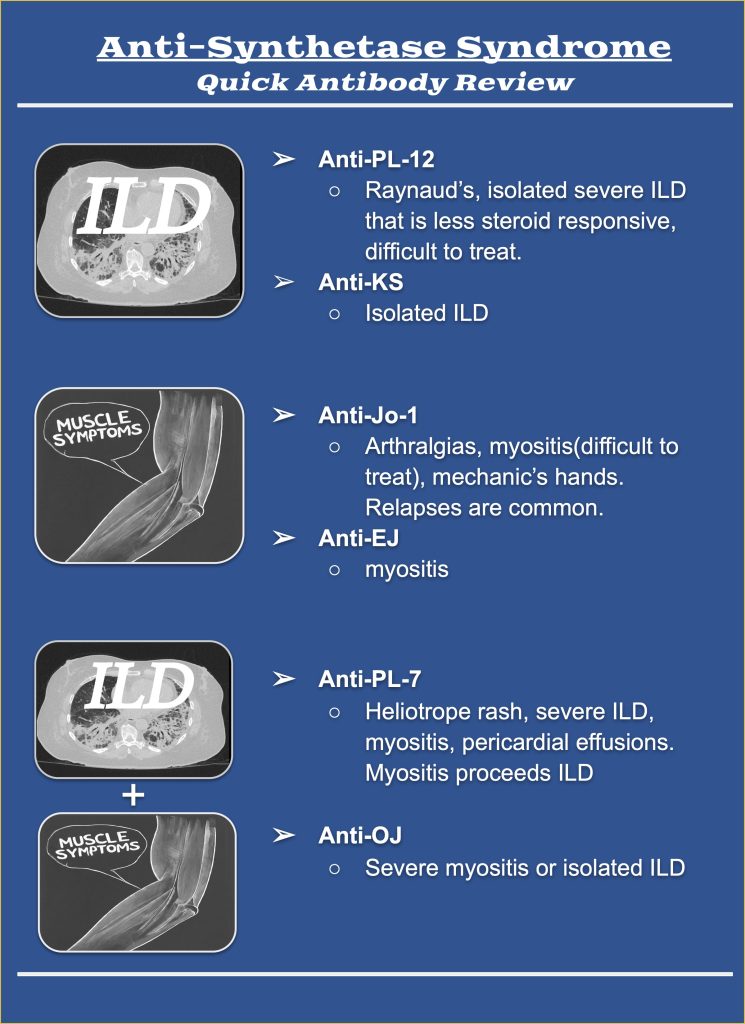
3. Describe the clinical manifestations of antisynthetase syndrome and identify the differences in presentation associated with PL-12 positivity

1. Kuru T, Lynch JP 3rd. Nonresolving or slowly resolving pneumonia. Clin Chest Med. 1999 Sep;20(3):623-51. doi: 10.1016/s0272-5231(05)70241-0. PMID: 10516909.

2. Troy LK, Grainge C, Corte TJ, Williamson JP, Vallely MP, Cooper WA, Mahar A, Myers JL, Lai S, Mulyadi E, Torzillo PJ, Phillips MJ, Jo HE, Webster SE, Lin QT, Rhodes JE, Salamonsen M, Wrobel JP, Harris B, Don G, Wu PJC, Ng BJ, Oldmeadow C, Raghu G, Lau EMT; Cryobiopsy versus Open Lung biopsy in the Diagnosis of Interstitial lung disease alliance (COLDICE) Investigators. Diagnostic accuracy of transbronchial lung cryobiopsy for interstitial lung disease diagnosis (COLDICE): a prospective, comparative study. Lancet Respir Med. 2020 Feb;8(2):171-181. doi: 10.1016/S2213-2600(19)30342-X. Epub 2019 Sep 29. PMID: 31578168.

3. Hallowell RW, Danoff SK. Diagnosis and Management of Myositis-Associated Lung Disease. Chest. 2023 Jun;163(6):1476-1491. doi: 10.1016/j.chest.2023.01.031. Epub 2023 Feb 9. PMID: 36764512.

4. Hallowell RW, Paik JJ. Myositis-associated interstitial lung disease: a comprehensive approach to diagnosis and management. Clin Exp Rheumatol. 2022 Feb;40(2):373-383. doi: 10.55563/clinexprheumatol/brvl1v. Epub 2021 Mar 25. PMID: 33769263; PMCID: PMC8855729.

5. Marie I, Josse S, Decaux O, Dominique S, Diot E, Landron C, Roblot P, Jouneau S, Hatron PY, Tiev KP, Vittecoq O, Noel D, Mouthon L, Menard JF, Jouen F. Comparison of long-term outcome between anti-Jo1- and anti-PL7/PL12 positive patients with antisynthetase syndrome. Autoimmun Rev. 2012 Aug;11(10):739-45. doi: 10.1016/j.autrev.2012.01.006. Epub 2012 Feb 3. PMID: 22326685.

81. RFJC 12 – ARDS Series – PROSEVA

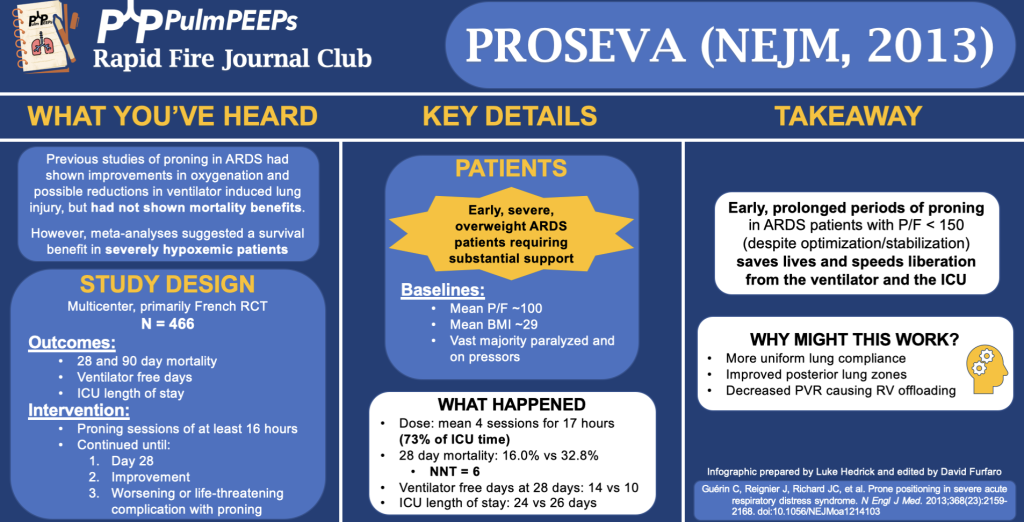
In this podcast episode, we continue our summer series reviewing landmark ARDS studies. Today, Dave and Luke discuss the PROSEVA trial (published in NEJM in 2013) which evaluated the impact of early, prolonged proning in patients with severe ARDS.

Article and Reference

We are talking about the PROSEVA trial today which evaluated the patients with severe ARDS (P/F < 150) to undergo prone-positioning sessions of at least 16 hours or to be left in the supine position.

Guérin C, Reignier J, Richard JC, Beuret P, Gacouin A, Boulain T, Mercier E, Badet M, Mercat A, Baudin O, Clavel M, Chatellier D, Jaber S, Rosselli S, Mancebo J, Sirodot M, Hilbert G, Bengler C, Richecoeur J, Gainnier M, Bayle F, Bourdin G, Leray V, Girard R, Baboi L, Ayzac L; PROSEVA Study Group. Prone positioning in severe acute respiratory distress syndrome. N Engl J Med. 2013 Jun 6;368(23):2159-68. doi: 10.1056/NEJMoa1214103. Epub 2013 May 20. PMID: 23688302.

Infographic

80. RFJC 11 – ARDS Series – ROSE

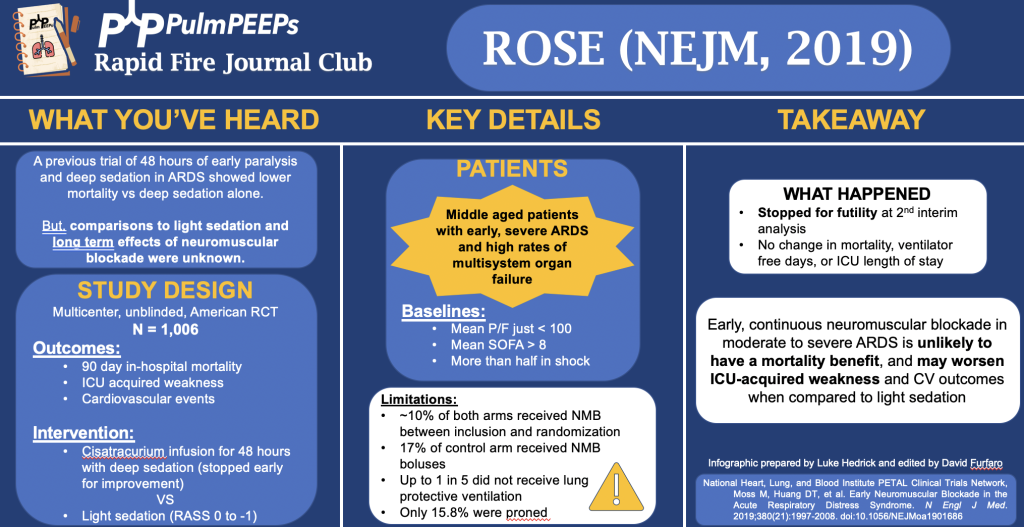
In this podcast episode, we continue our summer series reviewing landmark ARDS studies. Today, Dave and Luke discuss the ROSE trial (published in NEJM in 2019) which investigated use of continuous neuromuscular blockade in moderate to severe ARDS.

Article and Reference

We are talking about the ROSE trial today which was a comparison of early continuous neuromuscular blockade in patients with ARDS who were receiving mechanical ventilation.

Reference: National Heart, Lung, and Blood Institute PETAL Clinical Trials Network; Moss M, Huang DT, Brower RG, Ferguson ND, Ginde AA, Gong MN, Grissom CK, Gundel S, Hayden D, Hite RD, Hou PC, Hough CL, Iwashyna TJ, Khan A, Liu KD, Talmor D, Thompson BT, Ulysse CA, Yealy DM, Angus DC. Early Neuromuscular Blockade in the Acute Respiratory Distress Syndrome. N Engl J Med. 2019 May 23;380(21):1997-2008. doi: 10.1056/NEJMoa1901686. Epub 2019 May 19. PMID: 31112383; PMCID: PMC6741345.

Infographic

79. RFJC 10 – ARDS Series – FACTT

In this podcast episode, we continue our summer series reviewing landmark ARDS studies. Today, Dave and Luke discuss the FACTT trial, which investigated fluid management strategies in ARDS. This was published in the NEJM in 2006.

Article and Reference

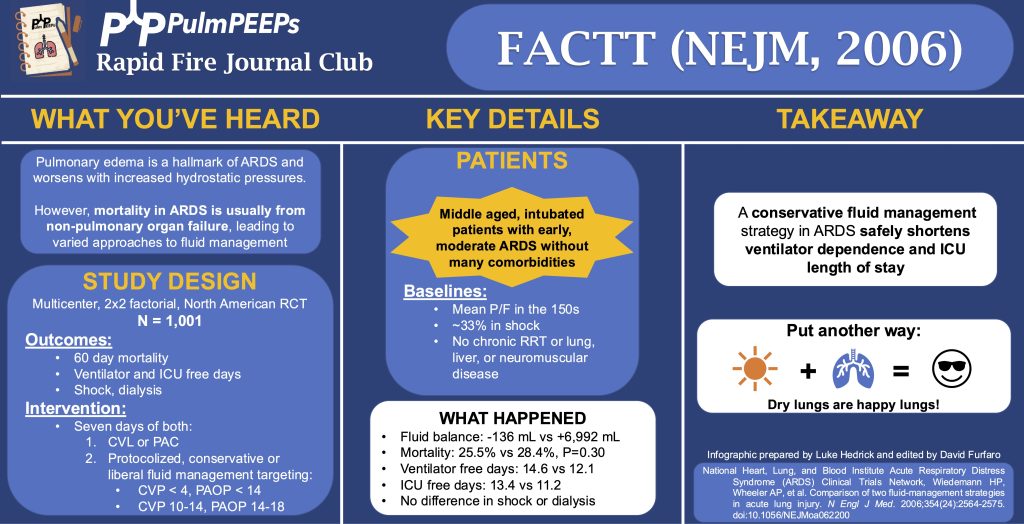
We’re talking about the FACTT trial today which was a “Comparison of Two Fluid-Management Strategies in Acute Lung Injury”

Reference: National Heart, Lung, and Blood Institute Acute Respiratory Distress Syndrome (ARDS) Clinical Trials Network; Wiedemann HP, Wheeler AP, Bernard GR, Thompson BT, Hayden D, deBoisblanc B, Connors AF Jr, Hite RD, Harabin AL. Comparison of two fluid-management strategies in acute lung injury. N Engl J Med. 2006 Jun 15;354(24):2564-75. doi: 10.1056/NEJMoa062200. Epub 2006 May 21. PMID: 16714767.

Infographic

Summary of discussion:

Background: The FACT trial aimed to address fluid balance in ARDS, given the complexity of managing pulmonary edema and systemic organ failure. The challenge has been finding the right balance between managing fluid to optimize cardiac function and avoiding exacerbation of pulmonary edema.

Study Design:

  • Randomized Controlled Trial: Conducted at 20 North American medical centers from 2000 to 2005.
  • Participants: Included intubated ARDS patients who required or were planned to receive a central venous catheter. Excluded patients with chronic diseases, recent MI, or irreversible conditions. Shock was not an exclusion criterion.
  • Interventions: Patients were randomly assigned to either a liberal or conservative fluid management strategy, and also received either a PA catheter or a central line.

Fluid Management Protocol:

  • Liberal Strategy: Aimed for higher filling pressures (CVP of 10-14 or wedge pressure of 14-18).
  • Conservative Strategy: Aimed for lower filling pressures (CVP less than 4 or wedge pressure under 14).
  • Fluid Balance: The liberal group had a net positive fluid balance of around 7 liters, while the conservative group had a net negative balance of about 130 cc.

    Results:

    • Mortality: No statistically significant difference in 60-day mortality between the liberal and conservative groups (25.5% vs. 28.4%, respectively).
    • Ventilator and ICU-Free Days: The conservative strategy resulted in more ventilator-free and ICU-free days.
    • Shock and Dialysis: There was no difference in shock rates, but the conservative group had a trend toward fewer dialysis requirements (10% vs. 14%, p=0.06).

    Conclusion: The trial indicated that a conservative fluid management strategy in ARDS patients can reduce ventilator dependence and ICU length of stay without worsening shock or end-organ function. It underscores the benefit of managing fluid conservatively to protect lung function, even though it didn’t significantly reduce mortality.

      Overall, the FACT trial supports the practice of conservative fluid management in ARDS, advocating that “dry lungs are happy lungs” for improving patient outcomes.

      78. PREOXI Trial

      Today, we’re going to be talking about pre-oxygenation methods for endotracheal intubation and the PREOXI Trial which is hot off the presses in the New England Journal of Medicine in June of 2024. This trial has potentially widespread, practice changing results and we’re lucky enough to be joined by two of the authors to discuss.


      Dr. Kevin Gibbs is an Associate Professor of Medicine at Wake Forest University School of Medicine. He obtained his MD at George Washington University School of Medicine, and completed his residency and fellowship training at Johns Hopkins. He is an active researcher in critical care, ARDS, mechanical ventilation, and pragmatic trial design.

      Dr. Jon Casey is an Assistant Professor of Medicine for the Division of Allergy, Pulmonary, and Critical Care Medicine at Vanderbilt University Medical Center. He obtained his MD from the University of Louisville School of Medicine, and completed his residency training at Brigham and Women’s Hospital before going to Vanderbilt for fellowship training. He is a physician scientist and also has his Masters of Science in Clinical Investigation. His research is focused on comparative effectiveness of ICU treatments and he also has a focus on pragmatic trials. He is supported with NIH funding and is active in the American Thoracic Society Critical Care Assembly.

      Summarized Key Points


      • Significance of the Problem: Tracheal intubation in emergency and ICU settings is common, with significant risks such as hypoxemia (10-20% incidence) and cardiac arrest (2% incidence) associated with the procedure. This makes effective pre-oxygenation crucial.

      • Methods of Pre-oxygenation: Common methods include face mask oxygen (e.g., non-rebreather, bag-mask devices) and more advanced techniques like non-invasive ventilation (used in about 15% of cases globally). Each method has pros (e.g., simplicity, no risk of aspiration for face masks; 100% oxygen delivery, positive pressure for non-invasive ventilation) and cons (e.g., potential for gastric insufflation with non-invasive ventilation).

      • Study Design: The study discussed in the podcast is a pragmatic trial aiming to optimize pre-oxygenation strategies to prevent peri-intubation hypoxemia. Eligibility criteria were broad, encompassing most patients undergoing tracheal intubation in the ED or ICU, with exclusions mainly for safety reasons.

      • Primary Outcome: The primary outcome of the trial was hypoxemia, defined as oxygen saturation < 85%. This threshold was chosen because it signifies a critical point on the oxygen dissociation curve, where patients are at higher risk of further desaturation and adverse outcomes.

      • Secondary Outcomes: Secondary exploratory outcomes included more severe levels of hypoxemia (oxygen saturation < 80% and < 70%), aiming to capture varying degrees of oxygenation failure during intubation. Rates of cardiac arrest during intubation were an additional outcome.

      • Intervention Comparison:

        • The trial compared two methods of pre-oxygenation: non-invasive ventilation (NIV) and oxygen mask (face mask)

        • Both methods aimed to provide at least three minutes of pre-oxygenation before intubation.

        • NIV group specifics: Expiratory pressure of 5 cm H2O, Inspiratory pressure of 10 cm H2O, respiratory rate of 10 breaths per minute, and 100% oxygen delivery

        • Oxygen mask group specifics: Non-rebreather or bag mask device with at least 15 liters per minute oxygen flow.

        • Nasal cannulas and HFNC could be used in both groups.


      • Logistics and Equipment Use:

        • The trial allowed flexibility in using available equipment (invasive ventilator capable of NIPPV vs. dedicated BiPAP machine).

        • Sites were encouraged to use the same ventilator for both pre-oxygenation and subsequent ventilation to streamline workflow and reduce logistical challenges.


      • Primary and Secondary Outcomes:

        • Results showed a significant reduction in hypoxemia incidents in the NIV group compared to the oxygen mask group.

        • There was also a reduction in severe hypoxemia and a notable decrease in cardiac arrest incidents in the NIV group.


      • Aspiration Safety:

        • There was no statistical difference in aspiration-related outcomes between the NIV and oxygen mask groups, indicating that NIV did not increase the risk of aspiration.


      • Conclusions:

        • The trial concluded that NIV for pre-oxygenation significantly reduced the incidence of hypoxemia and possibly cardiac arrest during tracheal intubation.

        • It also dispelled concerns about increased aspiration risk with NIPPV as pre-oxygenation, suggesting it can be safely used in clinical practice.


      Gibbs KW, Semler MW, Driver BE, Seitz KP, Stempek SB, Taylor C, Resnick-Ault D, White HD, Gandotra S, Doerschug KC, Mohamed A, Prekker ME, Khan A, Gaillard JP, Andrea L, Aggarwal NR, Brainard JC, Barnett LH, Halliday SJ, Blinder V, Dagan A, Whitson MR, Schauer SG, Walker JE Jr, Barker AB, Palakshappa JA, Muhs A, Wozniak JM, Kramer PJ, Withers C, Ghamande SA, Russell DW, Schwartz A, Moskowitz A, Hansen SJ, Allada G, Goranson JK, Fein DG, Sottile PD, Kelly N, Alwood SM, Long MT, Malhotra R, Shapiro NI, Page DB, Long BJ, Thomas CB, Trent SA, Janz DR, Rice TW, Self WH, Bebarta VS, Lloyd BD, Rhoads J, Womack K, Imhoff B, Ginde AA, Casey JD; PREOXI Investigators and the Pragmatic Critical Care Research Group. Noninvasive Ventilation for Preoxygenation during Emergency Intubation. N Engl J Med. 2024 Jun 20;390(23):2165-2177. doi: 10.1056/NEJMoa2313680. Epub 2024 Jun 13. PMID: 38869091.

      77. RFJC 9 – ARDS Series – ARMA

      This episode is launching our 2024 Rapid Fire Journal Club summer series on ARDS! This summer we will be talking about landmark ARDS trials that have defined the literature and shaped patient care. Journal clubs often focus on new trials, and so learners may have a less thorough understanding of the baseline literature that defines many of our ICU practices. The goal of this series is to provide a quick, but in-depth look at these papers so that learners understand the modern landscape of ARDS.

      Today, we’re kicking this initiative off by looking at the ARMA or ARDSNet Trial published in the NEJM in 2000. Enjoy!

      Article and Reference

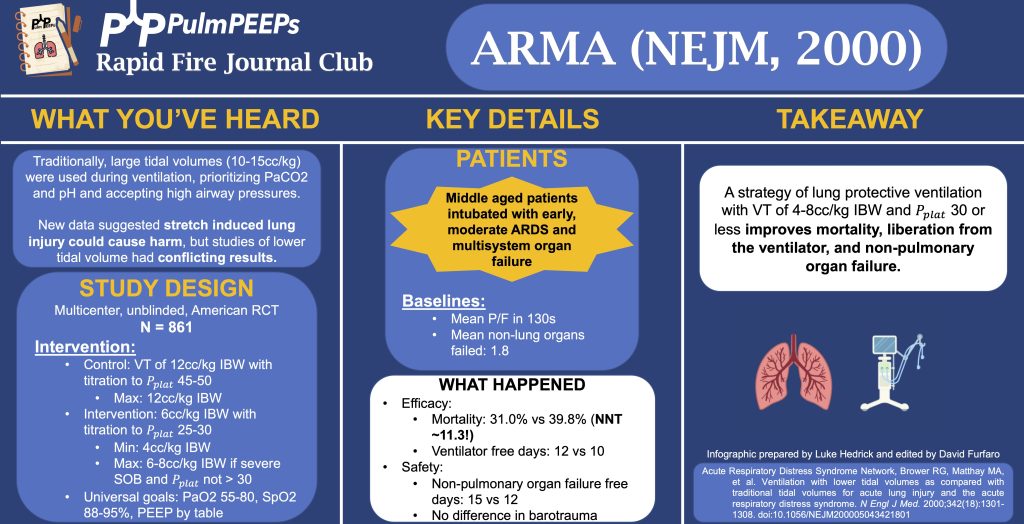
      We’re talking about the ARMA trial today which examined “Ventilation with Lower Tidal Volumes as Compared with Traditional Tidal Volumes for Acute Lung Injury and the Acute Respiratory Distress Syndrome.”

      Reference: Acute Respiratory Distress Syndrome Network; Brower RG, Matthay MA, Morris A, Schoenfeld D, Thompson BT, Wheeler A. Ventilation with lower tidal volumes as compared with traditional tidal volumes for acute lung injury and the acute respiratory distress syndrome. N Engl J Med. 2000 May 4;342(18):1301-8. doi: 10.1056/NEJM200005043421801. PMID: 10793162.

      Infographic

      Correction:

      We mention a step-wise titration of tidal volume in the control group to achieve Pplats of 45-50. To clarify, there was no adjustment of Vt in the traditional Vt group unless Pplat > 50. If Vt had been decreased in the traditional Vt group because Pplat was > 50, it would not be subsequently increased back to 12 unless Pplat < 45 (to avoid a cycle of corrections and re-adjustments). Similarly in the lower Vt group, there was no adjustment (“titration”) of Vt unless Pplat > 30, and there was a similar protocol in place not to increase the Vt again unless the Pplat was < 25.