120. Pulm PEEPs & Irish Thoracic Society: Understanding Refractory Chronic Cough

PPP Cover Images (3)

We’re excited today to launch our first episode in collaboration with the Irish Thoracic Society and their podcast series. The Irish Thoracic Society represents respiratory professionals throughout Ireland and is dedicated to championing excellence in the prevention, diagnosis, and clinical care of respiratory disease through its work in advocacy, education and research.

In today’s episode, we explore the complex and often overlooked world of refractory chronic cough — a condition that can significantly impact patients’ quality of life but is frequently misunderstood or underdiagnosed. With insights from leading respiratory specialists in Ireland and the United States, we discuss the latest thinking on diagnosis, management, and emerging treatments aimed at improving outcomes for patients and helping clinicians navigate this challenging area of respiratory medicine.

Joining us are renowned experts Professor Lorcan McGarvey and Professor Brendan Canning, both internationally recognised leaders in respiratory medicine and cough research. Together, they share their perspectives on the neurobiology of chronic cough, the considerable morbidity experienced by patients, and how clinicians can approach diagnostic investigations more effectively.

We also explore current treatment strategies and promising new therapies on the horizon as chronic cough increasingly gains recognition as a disease in its own right — rather than simply a symptom. Whether you’re a clinician, researcher, or simply interested in advances in respiratory medicine, this episode offers valuable insights into a condition that is finally receiving the attention it deserves.

The definitions and classifications of chronic cough, including unexplained, refractory, and unexplained refractory cough

The importance of a thorough clinical history and focused diagnostics over exhaustive testing

Common causes of chronic cough

The role of personalized, multidisciplinary management—combining pharmacologic, speech therapy, and psychological support—to improve quality of life for even the most challenging patients.

The concept of cough hypersensitivity syndrome and its role in refractory cases

Evidence-based approach to treatment, including pharmacologic and non-pharmacologic options

Emerging therapies on the horizon, including novel receptor modulators and neuromodulatory agents and ongoing clinical trials in this rapidly evolving field

The impact of chronic cough on mental health, social life, and overall quality of life

The importance of reframing chronic cough as a disease entity in its own right

Chung KF, Pavord ID. Prevalence, pathogenesis, and causes of chronic cough. Lancet. 2008;371(9621):1364-1374.

Gibson PG, Vertigan AE. Management of chronic refractory cough. BMJ. 2015;351:h5590.

Matsumoto H, Kanemitsu Y, Ohe M, Tanaka H, Terada K, Nishi K, et al. Real-world usage and response to gefapixant in refractory chronic cough. ERJ Open Res. 2025;11(4):01037-2024. doi:10.1183/23120541.01037-2024.

McGarvey LP, Birring SS. Cough hypersensitivity syndrome: a novel paradigm for understanding cough. Lancet Respir Med. 2014;2(8):647-656.

Morice AH, Millqvist E, Bieksiene K, Birring SS, Dicpinigaitis P, Ribas CD, et al. ERS guidelines on the diagnosis and treatment of chronic cough in adults and children. Eur Respir J. 2020;55(1):1901136.

Parker SM, Smith JA, Birring SS, Chamberlain-Mitchell S, Gruffydd-Jones K, Haines J, et al. British Thoracic Society clinical statement on chronic cough in adults. Thorax. 2023;78(Suppl 1):S3-S19.

Smith JA, Woodcock A. Chronic cough. N Engl J Med. 2006;354(2):136-144.

Song WJ, Dupont L, Birring SS, Chung KF, Dąbrowska M, Dicpinigaitis P, et al. Consensus goals and standards for specialist cough clinics: the NEUROCOUGH international Delphi study. ERJ Open Res. 2023;9(6):00618-2023. doi:10.1183/23120541.00618-2023.

Song WJ, McGarvey L, Cho PSP, Mazzone SB, Chung KF, editors. Chronic cough. Sheffield: European Respiratory Society; 2025.

118. Pulm PEEPs Pearls: Methacholine Challenge

PPP Cover Images

Furf and Monty are back with another Pulm PEEPs Pearls episode. The topic of today’s discussion is an often discussed, but often misunderstood, test; the methacholine challenge. They’ll review when to utilize this test, how it should be performed, and the appropriate interpretation.

This episode was prepared with research by Pulm PEEPs Associate Editor George Doumat.

Dustin Latimer, another Pulm PEEPs Associate Editor, assisted with audio and video editing.

What the Test Measures

  • Methacholine challenge is a direct bronchial provocation test of airway hyperresponsiveness (AHR), a core physiologic feature of asthma.
  • Anyone will bronchoconstrict at high enough concentrations — the test looks for an abnormal threshold.
  • The key endpoint is the PC20: the methacholine concentration causing a 20% fall in FEV1.
    • Abnormal in adults: PC20 ≤ 8–16 mg/mL

Test Performance

  • Meta-analyses: pooled sensitivity ~60%, specificity ~90%.
  • Real-world cohorts: sensitivity 55–62%, specificity 56–100% (varies by population, protocol, and threshold used).
  • Not a standalone yes/no test — best used as part of a broader diagnostic pathway.

Where It Fits in the Asthma Workup

The test belongs in a stepwise approach:

  1. Step 1: Spirometry + bronchodilator response
  2. Step 2: Add FeNO and/or peak flow variability (if available)
  3. Step 3: If the picture is still unclear → methacholine challenge

It is most useful for symptomatic patients with normal spirometry and no bronchodilator reversibility. Given its cost, mild risk, and discomfort, it should not be a first-line test — most asthma diagnoses do not require it.

Technique and Medication Prep

Technique

  • ERS guidelines favor tidal breathing over deep inspiratory maneuvers.
  • Deep breaths can be bronchoprotective and blunt the response, reducing sensitivity — especially in mild or well-controlled asthma.

Medication Washout (to Avoid False Negatives)

Medication ClassWashout Period
Short-acting beta-agonists (SABA)≥ 6 hours
Long-acting beta-agonists (LABA)~24 hours
Ultra-long-acting beta-agonists~48 hours
Short-acting anticholinergics (e.g., ipratropium)~12 hours
Long-acting muscarinic antagonists (LAMA, e.g., tiotropium)7 days
  • Inhaled corticosteroids, leukotriene blockers, and antihistamines do not significantly affect the test acutely — continue these. Withdrawing ICS also carries its own risk for asthma patients.
  • Practical tip: Spell out exactly what to hold and when — for both the patient and the PFT lab — at the time the test is ordered.

Interpreting Results

Negative Test (PC20 > 16 mg/mL)

  • Very high negative predictive value in symptomatic adults.
  • Makes current asthma quite unlikely (assuming proper test conduct).
  • This is the test’s greatest strength: it is an excellent rule-out test.

Positive Test (PC20 ≤ 8–16 mg/mL)

  • More nuanced — airway hyperresponsiveness is not unique to asthma.
  • Can be positive in: chronic cough, allergic rhinitis, COPD, and even some healthy asymptomatic individuals.
  • A positive result raises probability but must be interpreted alongside the clinical story, variable respiratory symptoms, peak flow variability, FeNO, and ICS response.

Safety and Risks

  • Overall, the test is quite safe; significant adverse effects are rare.
  • Temporary breathing discomfort is expected (bronchoconstriction is being induced).
  • Severe bronchospasm is possible:
    • A trained clinician should be available; SABA inhaler/nebulizer must be immediately on hand; a physician should be reachable in the facility.
  • Contraindications / cautions:
    • Avoid if FEV1 < 70% predicted or < 1–1.5 L (baseline obstruction greatly increases risk).
    • Avoid within 3 months of an acute cardiac event (rare risk of cardiac events with unstable cardiac disease).

Five Pearls — Quick Recap

  1. What it tests: Methacholine challenge is a direct test of AHR with high specificity but variable sensitivity — it belongs inside a diagnostic pathway, not as a standalone asthma test.
  2. When to use it: Most useful for symptomatic patients with normal spirometry and no bronchodilator response, after FeNO and peak flow variability have been considered.
  3. Technique and meds matter: Use tidal breathing protocol; respect washout intervals — especially the 7-day LAMA washout and 24–48 hour LABA window — to avoid false negatives.
  4. Safety: Generally safe, but can induce significant bronchoconstriction. Have a SABA available and avoid the test in patients with FEV1 < 70% predicted.
  5. Interpretation: A negative test (PC20 > 16 mg/mL) strongly argues against current asthma. A positive test raises probability but is not specific — interpret alongside the full clinical picture.
  1. Coates AL, Wanger J, Cockcroft DW, Culver BH; Bronchoprovocation Testing Task Force: Kai-Håkon Carlsen; Diamant Z, Gauvreau G, Hall GL, Hallstrand TS, Horvath I, de Jongh FHC, Joos G, Kaminsky DA, Laube BL, Leuppi JD, Sterk PJ. ERS technical standard on bronchial challenge testing: general considerations and performance of methacholine challenge tests. Eur Respir J. 2017 May 1;49(5):1601526. doi: 10.1183/13993003.01526-2016. PMID: 28461290.
  2. Lee, J., & Song, J. U. (2021). Diagnostic comparison of methacholine and mannitol bronchial challenge tests for identifying bronchial hyperresponsiveness in asthma: a systematic review and meta-analysis. Journal of Asthma, 58(7), 883–891. https://doi.org/10.1080/02770903.2020.1739704
  3. Davis BE, Blais CM, Cockcroft DW. Methacholine challenge testing: comparative pharmacology. J Asthma Allergy. 2018 May 14;11:89-99. doi: 10.2147/JAA.S160607. PMID: 29785128; PMCID: PMC5957064.

114. Pulm PEEPs Pearls: Airway Clearance Techniques in Non-CF Bronchiectasis

PPP Cover Images

This week’s Pulm PEEPs Pearls episode is a focused discussion between Furf and Monty about non-pharmacologic techniques for airway clearance in the non-Cystic Fibrosis bronchiectasis population. This is a focused, high-yield discussion of the key points about airway clearance, including practical tips and a discussion of the evidence.

This episode was prepared in conjunction with George Doumat MD. Goerge is an internal medicine resident at UT Southwestern and joined us for a Pulm PEEPs – BMJ Thorax journal club episode. He is now acting as a Pulm PEEPs Editor for the Pulm PEEPs Pearls series.

1) Why airway clearance matters in non-CF bronchiectasis

  • Non-CF bronchiectasis is defined by irreversible bronchial dilation with impaired mucociliary clearance, leading to mucus retention.
  • Retained sputum drives the classic vicious cycle: mucus → infection → neutrophilic inflammation → airway damage → worse clearance.
  • Airway clearance techniques (ACTs) are meant to interrupt this cycle, primarily by improving mucus mobilization and symptom control.

2) What ACTs are trying to achieve clinically

  • Main benefits are:
    • More effective sputum clearance
    • Reduced cough/dyspnea burden
    • Improved activity tolerance and quality of life
  • Effects on spirometry are usually small.
  • Exacerbation reduction is possible, but evidence is mixed—some longer-term data suggest benefit for specific techniques.

3) The main ACT “families” and when to use them

Breathing-based techniques (device-free, flexible)

  • ACBT (Active Cycle of Breathing Technique): breath control → deep breaths with holds → huffing.
    • Pros: portable, adaptable, good first-line option.
    • Key requirement: teaching/coaching to get technique right.
  • Autogenic drainage: controlled breathing at different lung volumes to move mucus from peripheral → central airways.
    • Pros: no device, can work well once learned.
    • Cons: more technically demanding, needs training and practice.

PEP / Oscillatory PEP (stents airways + “vibrates” mucus loose)

  • PEP: back-pressure helps prevent small airway collapse during exhalation; often paired with huff/cough.
  • Oscillatory PEP (Flutter/Acapella/Aerobika): adds oscillation that many patients find easy and satisfying to use.
    • Good fit for: people who benefit from airway stenting, want something portable, and prefer a device.

Mechanical/manual techniques (help when patient can’t self-clear well)

  • HFCWO (“the vest”): external chest wall oscillation; helpful for high sputum volumes, dexterity limits, or difficulty coordinating breathing maneuvers.
  • Postural drainage/percussion/vibration: caregiver/therapist-assisted options; still useful but consider:
    • GERD/reflux risk with certain positions
    • Hemoptysis risk with vigorous techniques

4) How to choose the “right” technique (the practical framework)

There is no one-size-fits-all. Match the tool to the patient:

  • Sputum burden (volume/viscosity)
  • Strength, coordination, cognition, dexterity
  • Comorbidities (GERD, hemoptysis history, severe obstruction/airway collapse)
  • Lifestyle + portability (what they’ll actually do)
  • Cost/access and availability of respiratory therapy/physio support

A key mindset from the script: this is not a lifetime contract—reassess and adjust over time with shared decision-making.

5) Evidence takeaways (what improves, what doesn’t)

  • ACTs reliably improve sputum expectoration and often symptoms/QoL.
  • QoL/cough scores (e.g., SGRQ, LCQ) tend to improve modestly, particularly with oscillatory PEP and some vest studies.
  • Lung function: typically minimal change; occasional short-term FEV₁ benefit is reported in some vest trials.
  • Exacerbations: mixed overall; the script highlights a longer-term RCT of ELTGOL showing fewer exacerbations at 12 months vs placebo exercises.
  • Safety: generally excellent; main cautions are hemoptysis and reflux (depending on technique/positioning).

6) Special population pearls

  • Hemoptysis / fragile airways: start with gentle breathing-based ACTs (ACBT, controlled huffing); avoid overly vigorous oscillatory/manual methods if concerned.
  • Severe obstruction or early airway collapse: PEP/oscillatory PEP can help by keeping small airways open on exhalation.
  • Mobility/coordination barriers: consider HFCWO vest or simple oscillatory PEP devices to enable daily adherence.
  • During exacerbations: keep it simple—1–2 reliable techniques, prioritize daily consistency, and re-check technique.

7) The “real” bottom line

  • Start with simple, self-manageable options (often ACBT ± PEP).
  • The “best” ACT is the one the patient will do consistently.
  • Reassess technique and fit over time; education and demonstration are part of the therapy.

 Lee AL et al., “Airway clearance techniques for bronchiectasis,” Cochrane Database Syst Rev. 2015; PMC7175838. PMID: 26591003.

Athanazio RA et al., “Airway Clearance Techniques in Bronchiectasis,” Front Med (Lausanne). 2020; PMC7674976. PMID: 33251032.

Iacono R et al., “Mucociliary clearance techniques for treating non-cystic fibrosis bronchiectasis,” Eur Rev Med Pharmacol Sci. 2015; PMID: 26078380.

Polverino E et al., “European Respiratory Society statement on airway clearance techniques in bronchiectasis,” Eur Respir J. 2023; PMID: 37142337.

Doumat G, Aksamit TR, Kanj AN. Bronchiectasis: A clinical review of inflammation. Respir Med. 2025 Aug;244:108179. doi: 10.1016/j.rmed.2025.108179. Epub 2025 May 25. PMID: 40425105.

113. RFJC – PREDMETH

Case Files

Today, Dave Furfaro, Luke Hedrick, and Robert Wharton discuss the PREDMETH trial published in The New England Journal of Medicine in 2025. This was a non-inferiority trial comparing prednisone to methotrexate for upfront therapy in treatment-naive sarcoidosis patients. Listen in for a break down of the trial, analysis, and clinically applicable pearls.

Todays’ episode discusses the PREDMETH trial published in NEJM in 2025.

Kahlmann V, Janssen Bonás M, Moor CC, Grutters JC, Mostard RLM, van Rijswijk HNAJ, van der Maten J, Marges ER, Moonen LAA, Overbeek MJ, Koopman B, Loth DW, Nossent EJ, Wagenaar M, Kramer H, Wielders PLML, Bonta PI, Walen S, Bogaarts BAHA, Kerstens R, Overgaauw M, Veltkamp M, Wijsenbeek MS; PREDMETH Collaborators. First-Line Treatment of Pulmonary Sarcoidosis with Prednisone or Methotrexate. N Engl J Med. 2025 Jul 17;393(3):231-242. doi: 10.1056/NEJMoa2501443. Epub 2025 May 18. PMID: 40387020.

https://www.nejm.org/doi/full/10.1056/NEJMoa2501443

Luke Hedrick is an Associate Editor at Pulm PEEPs and runs the Rapid Fire Journal Club Series. He is a senior PCCM fellow at Emory, and will be starting as a pulmonary attending at Duke University next year.

Robert Wharton is a recurring guest on Pulm PEEPs as a part of our Rapid Fire Journal Club Series. He completed his internal medicine residency at Mt. Sinai in New York City, and is currently a first year pulmonary and critical care fellow at Johns Hopkins.

Clinical context

  • Prednisone remains the traditional first-line treatment for pulmonary sarcoidosis when treatment is indicated, with evidence for short-term improvements in symptoms, radiographic findings, and pulmonary function—but with substantial, familiar steroid toxicities (weight gain, insomnia, HTN/DM, infection risk, etc.).
  • Despite widespread use, glucocorticoids haven’t been robustly tested head-to-head against many alternatives as initial therapy, and evidence for preventing long-term decline (especially in severe disease) is limited.
  • Immunosuppressants (like methotrexate) are often used as steroid-sparing agents, but guideline recommendations are generally conditional/low-quality evidence, and practice varies.

Why PREDMETH matters

  • It addresses a real-world question: Can methotrexate be an initial alternative to prednisone in pulmonary sarcoidosis, rather than being reserved only for steroid-sparing later?
  • It also probes a common clinical belief: MTX has slower onset than prednisone (often assumed, not well-proven).

Trial design (what to know)

  • Open-label, randomized, noninferiority trial across 17 hospitals in the Netherlands.
  • Included patients with pulmonary sarcoidosis who had a clear pulmonary indication to start systemic therapy (moderate/severe symptoms plus objective risk features like reduced FVC/DLCO or documented decline, plus parenchymal abnormalities).
  • Excluded: non–treatment-naïve patients and those whose primary indication was extrapulmonary disease.
  • Treat-to-tolerability with escalation: both drugs started low and were slowly increased; switch/add-on allowed for inadequate efficacy or unacceptable side effects.
  • Primary endpoint: change in FVC (with the usual caveat that FVC is “objective-ish,” but effort-dependent and not always patient-centered).
  • Noninferiority margin: 5% FVC, justified as within biologic/measurement variation and “not clinically relevant.”
  • Outcomes assessed at weeks 4, 16, 24; powered for ~110 patients to detect the NI margin.

Patient population (who this applies to)

  • Mostly middle-aged (~40s) with mild-to-moderate physiologic impairment on average (FVC ~77% predicted; DLCO ~70% predicted).
  • Netherlands-based cohort with limited Black representation (~7%), which matters for generalizability.
  • Would have been helpful to know more about comorbidities (e.g., diabetes), which can strongly influence prednisone risk.

Main findings (what happened)

  • Methotrexate was noninferior to prednisone at week 24 for FVC:
    • Between-group difference in least-squares mean change at week 24: −1.17 percentage points (favoring prednisone) with CI −4.27 to +1.93, staying within the 5% NI margin.
  • Timing mattered:
    • Prednisone showed earlier benefit (notably by week 4) in FVC and across quality-of-life measures.
    • By week 24, those early differences largely washed out—possibly because MTX “catches up,” and/or because crossover increased over time.
    • In their reporting, MTX didn’t meet noninferiority for FVC until week 24, supporting the practical message that prednisone works faster.

Crossover and analysis nuance (important for interpretation)

  • Crossover was fairly high, which complicates noninferiority interpretation:
    • MTX arm: some switched to prednisone for adverse events and others had prednisone added for disease progression/persistent symptoms.
    • Prednisone arm: some had MTX added.
  • In noninferiority trials, heavy crossover can bias intention-to-treat analyses toward finding “no difference” (making noninferiority easier to claim). Per-protocol analyses avoid some of that but introduce other biases. They reported both.

Safety signals (what to remember clinically)

  • Adverse events were very common in both arms (almost everyone), mostly mild.
  • Side-effect patterns fit expectations:
    • Prednisone: more insomnia (and classic steroid issues).
    • MTX: more headache/cough/rash, and notably liver enzyme elevations (about 1 in 4), with a small number discontinuing.
  • Serious adverse events were rare; numbers were too small to confidently separate “signal vs noise,” but overall known risk profiles apply.

Limitations (why you shouldn’t over-read it)

  • Open-label design, and FVC—while objective-ish—is still effort-dependent and can be influenced by expectation/behavior.
  • Small trial, limiting subgroup conclusions (e.g., severity strata, different phenotypes).
  • Generalizability issues (Netherlands demographics; US populations have higher rates of obesity/metabolic syndrome, which may tilt the steroid risk-benefit equation).
  • Crossover reduces precision and interpretability of between-group differences over time.

Practice implications (the “so what”)

  • For many patients with pulmonary sarcoidosis needing systemic therapy, MTX is a reasonable initial alternative to prednisone when thinking long-term tolerability and steroid avoidance.
  • Prednisone likely provides faster symptom/QoL relief in the first weeks—so it may be preferable when rapid improvement is important.
  • The trial strengthens the case for a patient-centered discussion: short-term relief vs side-effect tradeoffs, and the possibility of early combination therapy in more severe cases (suggested, not proven).

110. Pulm PEEPs at CHEST 2025 – Widened Airways and Narrowed Differentials

PPP Cover Images (2)

For today’s podcast we have a special episode. We were extremely grateful to be invited to present live at CHEST 2025 this year. Kristina Montemayor, and Pulm PEEPs Associate Editors Luke Hedrick, Tom Di Vitantonio, and Rupali Sood hosted a session entitled “Widened Airways and Narrowed Differentials”. It is a great session around bronchiectasis. Enjoy!


Dr. Doreen Addrizzo-Harris is  a Professor of Medicine at NYU where she is also Associate Director of Clinical and Academic Affairs for the pulmonary and critical care division. In addition to that, she’s the director of the bronchiectasis and NTM program and also serves as a program director for the pulmonary and critical care fellowship.

60-year-old with CLL (in remission) → recurrent “pneumonias,” diffuse (not single-lobe), later dx’d with CVID; serial CTs: upper-lobe–predominant bronchiectasis, tree-in-bud, mucus impaction; multiple AFB+ cultures (MAC, later M. abscessus); recurrent bacterial flares (MSSA/MRSA).


Imaging pearls

  • Tree-in-bud = small airways (bronchiolar) impaction/inflammation, not a diagnosis. Differential guided by distribution + chronicity:
    • Acute/diffuse → bacterial/viral/NTM infection
    • Dependent/basal → aspiration
    • Persistent + nodular + bronchiectasis → NTM common
  • Bronchiectasis CT signs (think: “ring, taper, edge”):
  1. Broncho-arterial ratio >1 (signet-ring)
  2. Lack of normal tapering
  3. Visible bronchi within 1 cm of pleura
  • Location matters:
    • Upper lobes → CF, sarcoid, prior TB/radiation
    • Middle lobe/lingula → NTM classic; consider ABPA if central
    • Lower lobes → aspiration, PCD, CTD, immunodeficiency

NTM: diagnosis & when to treat

  • Use all three (2020 guideline frame): clinical symptoms, compatible CT, microbiology (≥2 sputum cultures or 1 bronch +, etc.).
  • Not every positive culture = disease needing drugs. If you defer pharmacologic therapy, follow closely (symptoms, sputum, PFTs, interval CT if change).
  • Bug matters: MAC, M. abscessus, kansasii etc. “Low-virulence” species (e.g., M. gordonae) can still flag underlying airway disease.
  • Regimens (MAC, macrolide-susceptible): azithro + ethambutol + rifampin (intermittent for nodular-bronchiectatic; daily ± IV amikacin for fibro-cavitary/advanced).
    • Macrolide is the backbone; the others protect against resistance.
    • M. abscessus: check for inducible macrolide resistance (prolonged in-vitro testing).
  • Monitoring: sputum q1–3 mo; labs (CBC/CMP), vision (ethambutol), hearing (aminoglycosides). Treat ~12 months beyond culture conversion.
  • Anti-inflammatory macrolide for bronchiectasis is contraindicated if macrolide-susceptible NTM is present—risk of resistance.

Bronchiectasis management essentials

  • It’s a syndrome: symptoms/exacerbations plus CT changes.
  • Airway clearance is foundational (exercise + devices ± hypertonic saline/DNase when indicated). Expect CT and symptom gains with adherence.
  • Exacerbations often need ~14 days of pathogen-directed antibiotics (short courses may fail). Take the “easy win” when a conventional pathogen explains the flare.

Workup framework (start with a core bundle, then target)

Core “every patient” bundle

  • CBC with diff (look for eosinophilia/hematologic clues)
  • Quantitative IgG/IgA/IgM (primary/secondary immunodeficiency)
  • ABPA screen: total IgE + Aspergillus-specific IgE/IgG
  • Sputum cultures: routine bacteria + AFB + fungal (if producing)
  • Baseline PFTs

Targeted tests (guided by history, distribution, microbes)

  • CF evaluation: sweat chloride and/or CFTR genotyping (especially with upper-lobe disease, chronic sinusitis/nasal polyps, pancreatitis/malabsorption, infertility/CAVD).
  • PCD: nasal NO, genetics, specialized ciliary studies (adult cases may be mild and missed by genetics alone).
  • Alpha-1 antitrypsin (never-smoker emphysema, liver hx)
  • CTD serologies (RA, Sjögren’s, etc.), if suggestive
  • Aspiration/upper-GI assessment when basal-predominant or reflux symptoms
  • For suspected/known CVID: vaccine response assessment if not on replacement (this patient was already on IVIG).

Practical diagnostic habits

  • Re-read the CT yourself—radiology may under-call mild bronchiectasis in ED/PE-protocol scans.
  • Use a diagnostic time-out when the course isn’t fitting: name your working dx, list fits/mismatches, consider common diseases with atypical presentations, multi-morbidity, and can’t-miss alternatives; ask for help early; communicate uncertainty.

Teach-to-remember pearls from the case

  • Recurrent, geographically scattered pneumonias → think systemic causes (immunodeficiency, CF/PCD), not just focal anatomic problems.
  • Upper-lobe bronchiectasis + CAVD is a CF red flag—even in the 60s. Adult-onset CF is real and actionable.
  • In CF today, MSSA can be more common than Pseudomonas on culture; don’t let absence of Pseudomonas dissuade you.
  • Airway clearance adherence can change CTs; instruct patients to ramp up before surveillance scans for a fair assessment.
  • If symptoms abate with targeted therapy to a conventional pathogen, you may avoid immediate NTM re-treatment—but keep a tight follow-up loop.


109. Guidelines Series: GINA Guidelines – Special Considerations in Asthma Care

PPP Cover Images

In this episode, we’re concluding our review of the Global Initiative for Asthma (GINA) guidelines on asthma today with a cased based episode on special considerations in asthma care. We’ve covered asthma diagnosis and phenotyping, the approach to therapy inhaler and oral medical therapy, and biologic therapy. On today’s episode we’re talking about complex cases that are at the edges of the guidelines, or may be in future guidelines. To help us with this exciting topic we’re joined by an expert in the field. Enjoy! 

Dr. Meredith McCormack is a Professor of Medicine at Johns Hopkins, where she leads multiple NIH funded endeavors at understanding lung health and disease. She is the Division Director for Pulmonary and Critical Care Medicine, while also directing the Asthma Precision Medicine Center of Excellence, and the BREATHE Center, which focuses on understanding the effects of the environment on lung health and disease through research and community engagement.  She is an internationally recognized expert in asthma management and is a dedicated member of the faculty who is committed to the trainees.

Rupali Sood  grew up in Las Vegas, Nevada and made her way over to Baltimore for medical school at Johns Hopkins. She then completed her internal medicine residency training at Massachusetts General Hospital before returning back to Johns Hopkins, where she is currently a second year pulmonary and critical care medicine fellow alongside Tom. Rupali’s interests include interstitial lung disease, particularly as related to oncologic drugs. And she also loves bedside medical education.

Tom Di Vitantonio  is originally from New Jersey and attended medical school at Rutgers, New Jersey Medical School in Newark. He then completed his internal medicine residency at Weill Cornell, where he also served as a chief resident. He currently is a second year pulmonary and critical care medicine fellow at Johns Hopkins, and he’s passionate about caring for critically ill patients, how we approach the management of pulmonary embolism, and also about medical education of trainees to help them be more confident and patient centered in the care they have going forward.

Episode themes

  • Built on GINA 2024: final capstone focusing on evolving topics + case-based application.

  • Three focal areas: (1) obesity/metabolic health (GLP-1s, metformin), (2) dual biologics vs switching, (3) de-escalating inhalers while on biologics.

  • Emphasis throughout on personalized care, shared decision-making, and multidisciplinary collaboration.
  • Obesity & metabolic health in asthma
  • Obesity affects mechanics, inflammation, and treatment response; tackling metabolic dysfunction can improve asthma control.

  • GLP-1 receptor agonists may provide additive benefit beyond weight loss for some patients (early clinical signals; trials ongoing).

  • Metformin is being studied as a potential adjunct targeting metabolic-inflammatory pathways.

  • Practical approach: screen/counsel on weight, activity, and metabolic disease; partner with primary care/endocrine/sleep clinics; consider GLP-1/other agents when indicated for comorbidities, with potential asthma “bonus.”

  • Biologics: switching vs dual therapy
  • Consider switching/adding when control is not achieved or sustained on a biologic despite adherence.

  • Upstream vs downstream targets:

    • Upstream: anti-TSLP (e.g., tezepelumab) may help when multiple pathways/biomarkers (e.g., high IgE + eos) suggest broader blockade.Downstream: IL-5/IL-4/13/IgE agents selected to match phenotype/endotypes.

  • Comorbidities can drive choice:

    • Nasal polyps or upper airway syndromes: there are biologic options that improve upper airway symptoms in addition to asthmaAtopic dermatitis: agents with dual indications can be life-changing.

  • Logistics matter: injection burden/needle phobia and dosing cadence (e.g., every 2 vs 4–8 weeks) can determine real-world success.
  • De-escalating inhalers on biologics
  • Don’t step down immediately. Ask patients to maintain their full regimen for ~3 months after starting a biologic to gauge true benefit.Set expectations early and share a step-down plan to prevent unsupervised discontinuation.Typical order (individualize):
    1. Remove non-essential add-ons first (e.g., antihistamines, leukotriene modifiers).Reduce ICS dose gradually (high → medium → low).Keep ICS/LABA combination among the last therapies to taper

  • Targets while stepping down: “normal” lung function when feasible, minimal/no day or night symptoms, full activity, no exacerbations.

  • When patients don’t respond to biologics
  • Re-check the fundamentals:
    • Adherence/technique for inhalers and biologic.Biomarkers behaving as expected (e.g., eosinophils falling on anti-IL-5).Revisit the diagnosis and contributors/mimics (e.g., vocal cord dysfunction, upper-airway disease).
    • Consider moving upstream (e.g., to TSLP) if a downstream agent underperforms.

    Communication & practical pearls

    • Use visual aids to verify what patients actually take and how (e.g., Asthma & Allergy Network inhaler pictogram).
    • Needle issues are common; home vs clinic administration and family support can make or break adherence.
    • Biologics are transformative for the right patient—consider them early in steroid-dependent or poorly controlled severe asthma.
    • Think longitudinally: plan for monitoring, comorbidity management, and timely adjustments.


    108. Journal Club with BMJ Thorax – Bronchiectasis

    BMJ Thorax Bronchiectasis

    We’re back with our 4th episode in our collaborative series with BMJ Thorax. This week’s episode covers four articles related to bronchiectasis and covers a range of topics in this domain including novel therapeutics, registry data to understand risk, and health related quality of life.

    Our mission at Pulm PEEPs is to disseminate and promote pulmonary and critical care education, and we highly value the importance of peer reviewed journals in this endeavor. Each month in BMJ Thorax, a journal club is published looking at high yield and impactful publications in pulmonary medicine. We will be putting out quarterly episodes in association with Thorax to discuss a journal club publication and synthesize four valuable papers.

    Chris Turnbull is an Associate Editor for Education at Thorax. He is an Honorary Researcher and Respiratory Medicine Consultant at Oxford University Hospitals. In addition to his role as Associate Editor for Education at BMJ Thorax, he is also a prominent researcher in sleep-related breathing disorders.

    Dr. George Doumat completed his medical school at the American University of Beirut and now is an internal medicine resident at UT south western in his second year of training. Prior to starting residency he was a research fellow at MGH studying chronic lung disease.

    To submit a journal club article of your own to Thorax, you can contact Chris directly – christopher.turnbull@ouh.nhs.uk


    To engage with Thorax, please use the social media channels (Twitter – @ThoraxBMJ; Facebook – Thorax.BMJ) and subscribe on your preferred platform, to get the latest episodes directly on your device each month.

    • Four recent papers (2 RCTs, 2 large cohorts) chosen to show both new therapeutics and real-world comorbidities/outcomes, pushing toward precision medicine.

    1) ASPEN trial – brensocatib (DPP-1 inhibitor)

    • Design: Phase 3, ~1,700 pts, 35 countries, 52 weeks; stratified randomization by region.
    • Results: ↓ annualized exacerbation rate (~1.0 vs 1.3/yr; RR≈0.8), longer time to first exacerbation, ~10% absolute ↑ in “exacerbation-free” patients at 1 year, QoL improved, modest FEV1 decline difference (~40 mL/yr).
    • Take: First targeted therapy with consistent benefit; effect on lung function small but directionally supportive.
    • Gaps: Need long-term durability, adolescent data, and comparisons/positioning in pts with asthma/COPD overlap.

    2) AIRLEAF (BI 1291583) – reversible cathepsin C inhibitor

    • Design: Phase 2, 4 arms (3 doses + placebo), model-based dose–response analysis to optimize dose selection.
    • Results: Overall dose–response signal; individual low-dose arms trended to fewer exacerbations but not statistically significant; skin events more common at higher doses.
    • Take: Promising class targeting neutrophil pathway, but needs Phase 3 before clinical use.

    3) U.S. Bronchiectasis & NTM Registry – 5-year outcomes

    • Cohort: >2,600 CT-confirmed; ~59% with baseline NTM identified.
    • Results: 5-yr mortality ~12%; no mortality difference with vs without NTM; predictors = lower baseline FEV1, older age, male sex, prior hospitalization. FEV1 decline ~38 mL/yr. Baseline NTM group had fewer exacerbations (counterintuitive).
    • Interpretation cautions: Likely mix of colonization vs active disease; referral/management effects in specialized centers; registry strengths (size, real-world, longitudinal) vs pitfalls (confounding, data quality, causality).

    4) Bronch-UK cohort – anxiety & depression

    • Cohort: 1,340 adults; HADS screening.
    • Prevalence: Anxiety ~33%, depression ~20%; many undiagnosed (≈26%/16%).
    • Impact: Worse QoL, more severe disease; depression ~1.8× higher hospitalization risk and shorter time to severe exacerbation.
    • Caveat: Association ≠ causation; sicker patients may have more mental health burden.

    Practical takeaways for clinic

    • Consider brensocatib for appropriate non-CF bronchiectasis patients once accessible; frame benefits around fewer exacerbations and QoL, not big lung function gains.
    • Do not introduce cathepsin C inhibitors outside trials yet; discuss as pipeline only.
    • Risk stratify using FEV1, age, sex, and prior hospitalizations; expect ~40 mL/yr average FEV1 decline.
    • Screen mental health routinely (HADS, PHQ-9, GAD-7). Build multidisciplinary pathways; consider brief CBT-style supports embedded in bronchiectasis clinics, with targeted referrals.
    • Registry data ≠ RCTs: Use for counseling and service design, but avoid causal claims.

    Research/implementation gaps highlighted

    • Long-term safety/efficacy and subgroup effects for brensocatib (adolescents, asthma/COPD overlap).
    • Phase 3 confirmation for cathepsin C inhibition and dose selection.
    • Granular NTM phenotyping (colonization vs disease) to reconcile paradoxical exacerbation signals.
    • Scalable mental-health interventions integrated into respiratory clinics; trials to test impact on exacerbations/hospitalizations.

    Pro tip from the episode

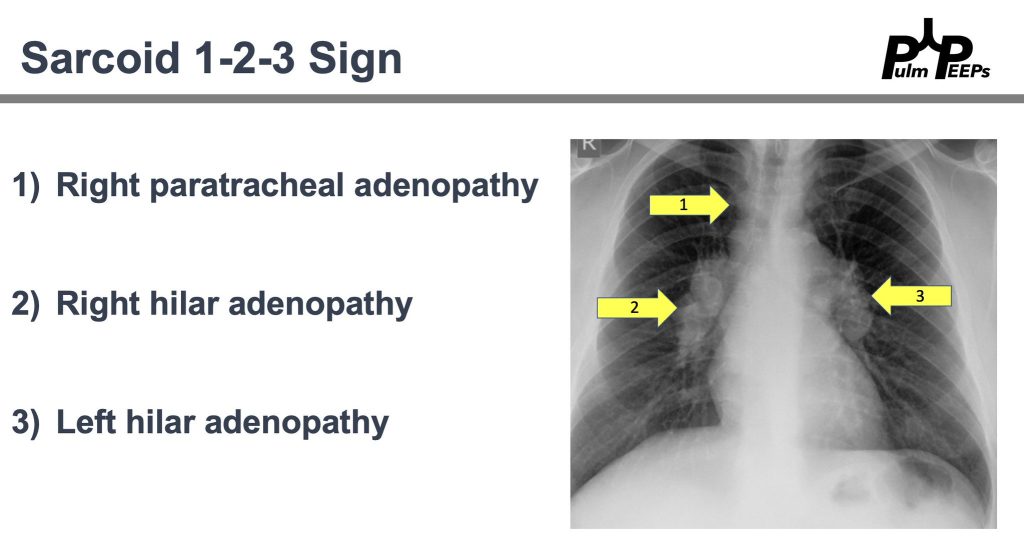
    Radiology Rounds 52: Sarcoid 1-2-3 Sign

    Screen Shot 2026 08 26 at 10.51.19 AM

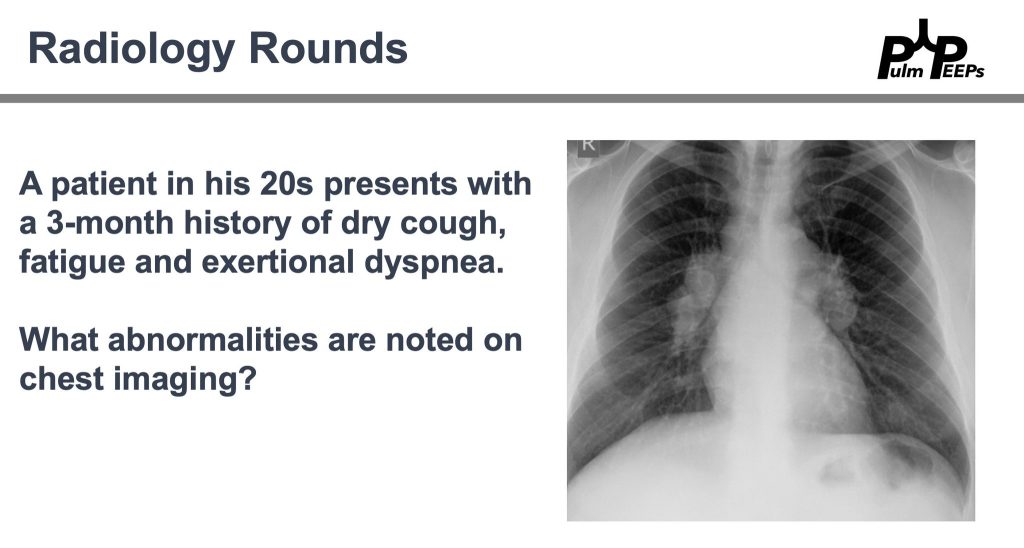
    We’re back with another Pulm PEEPs Radiology Rounds!

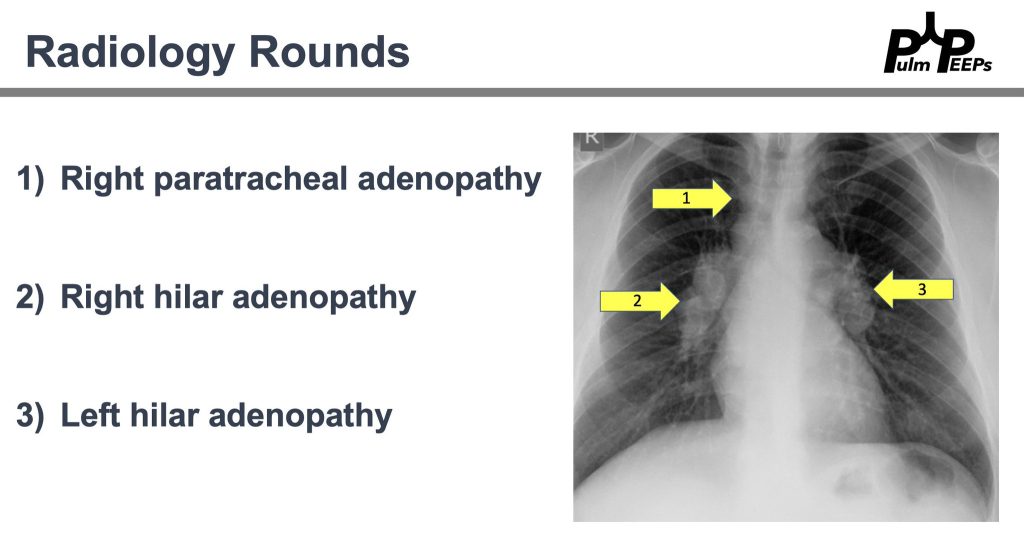
    That’s right! All of the findings are present

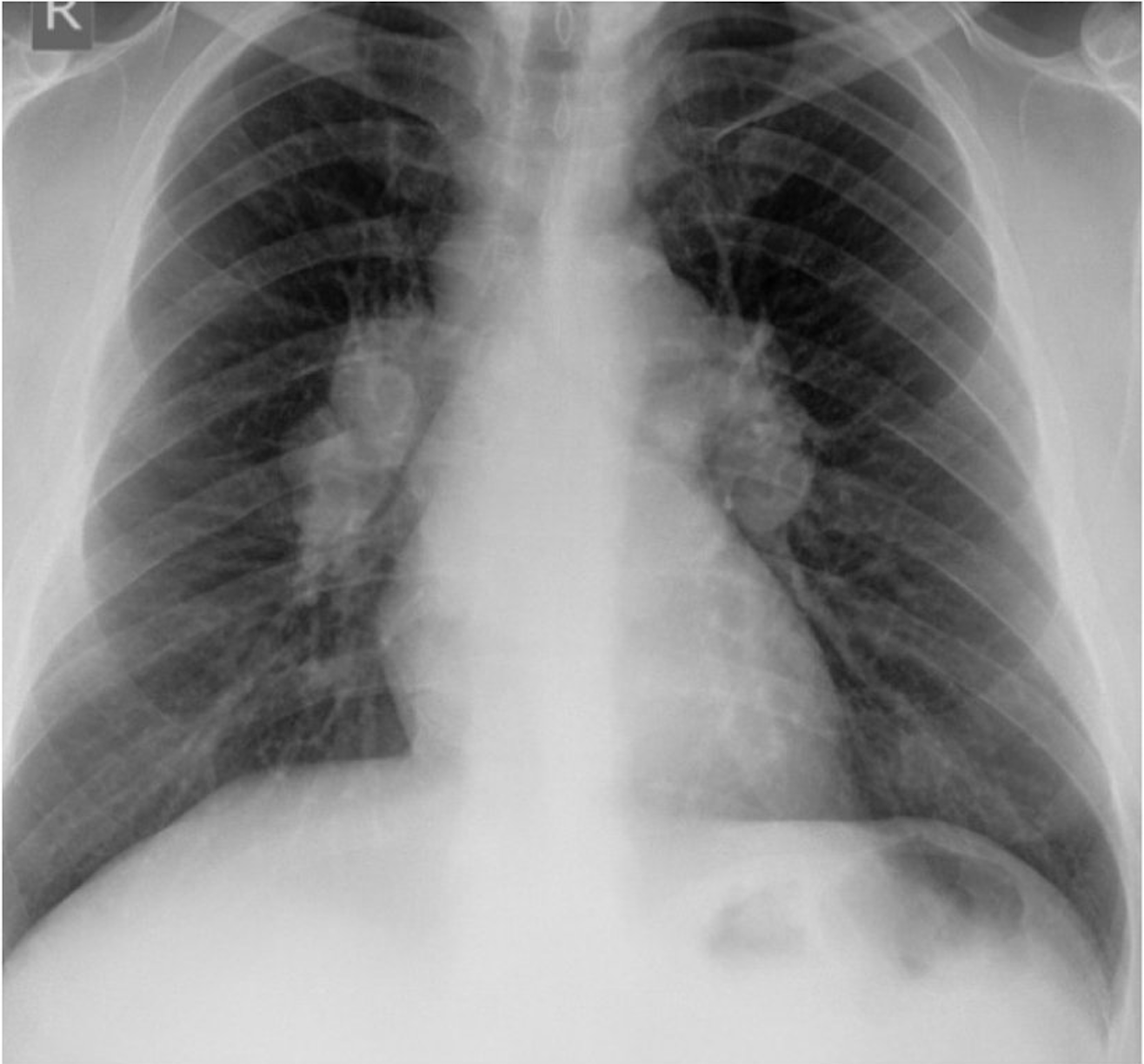
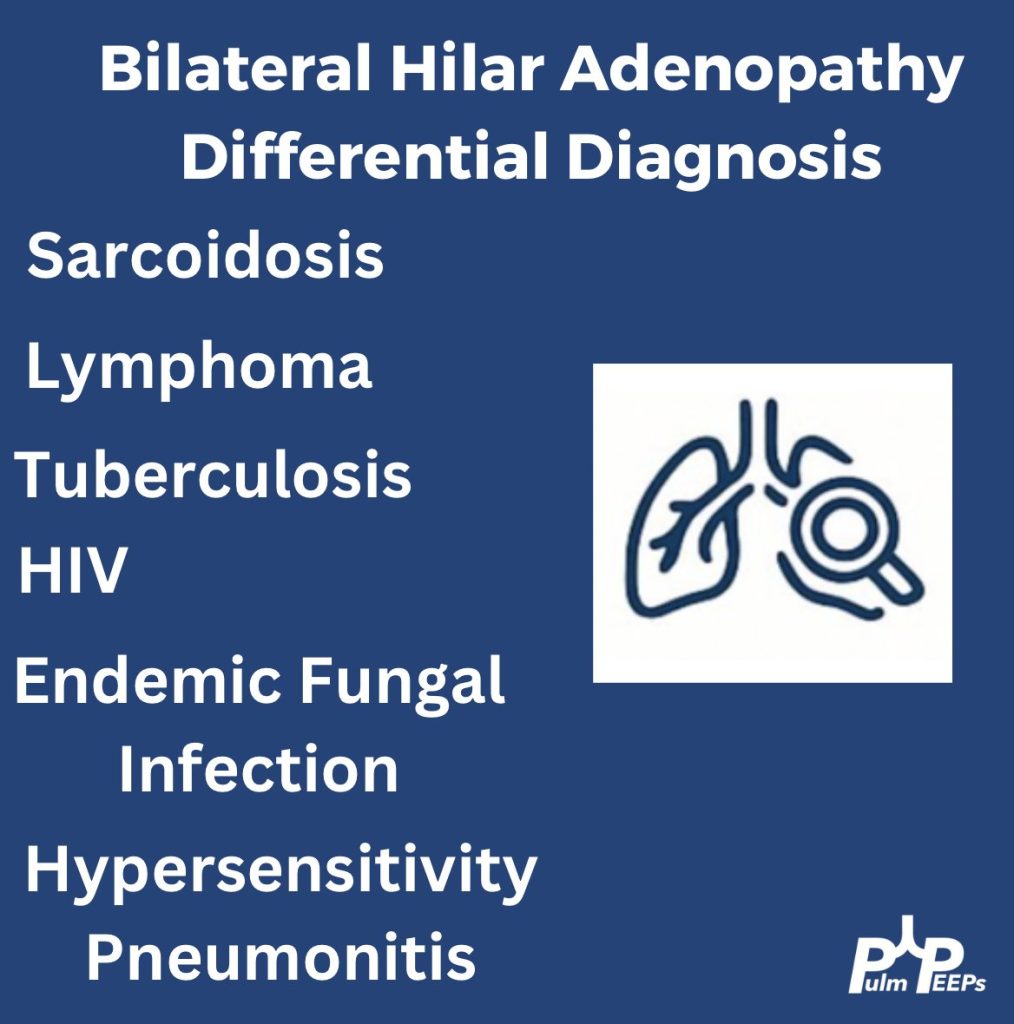
    History and physical exam are essential. Here are a few can’t miss diagnoses when working up a young adult with bilateral hilar adenopathy.

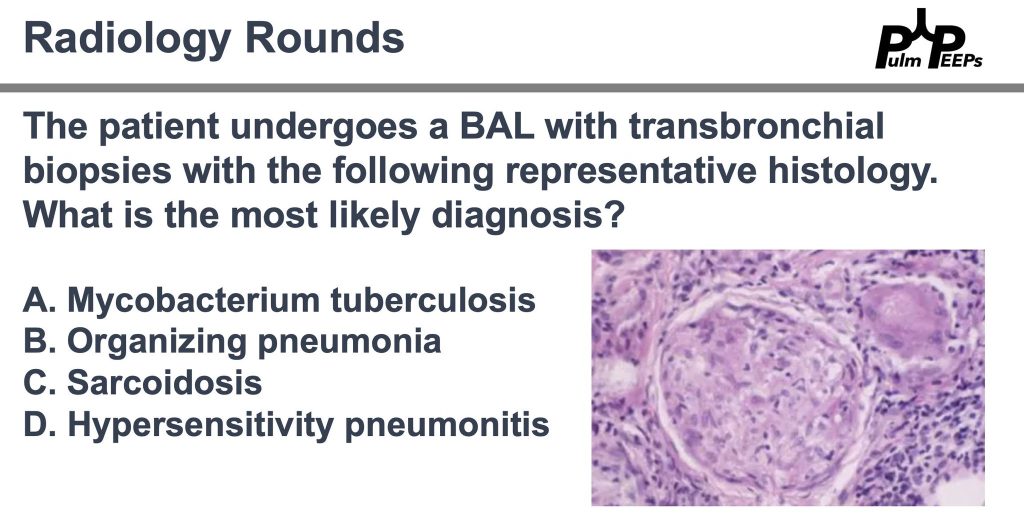
    Pathology is consistent with a non-caseating granuloma. What is the most likely diagnosis?

    Imaging and pathology were consistent with sarcoidosis and after negative work-up for alternative causes. The patient will follow-up with outpatient pulmonary for sarcoidosis management. Don’t forget about the Sarcoid 1-2-3 sign!

    98. Guidelines Series: GINA Guidelines – Biologics for Treatment of Asthma

    Asthma Biologics FacePage

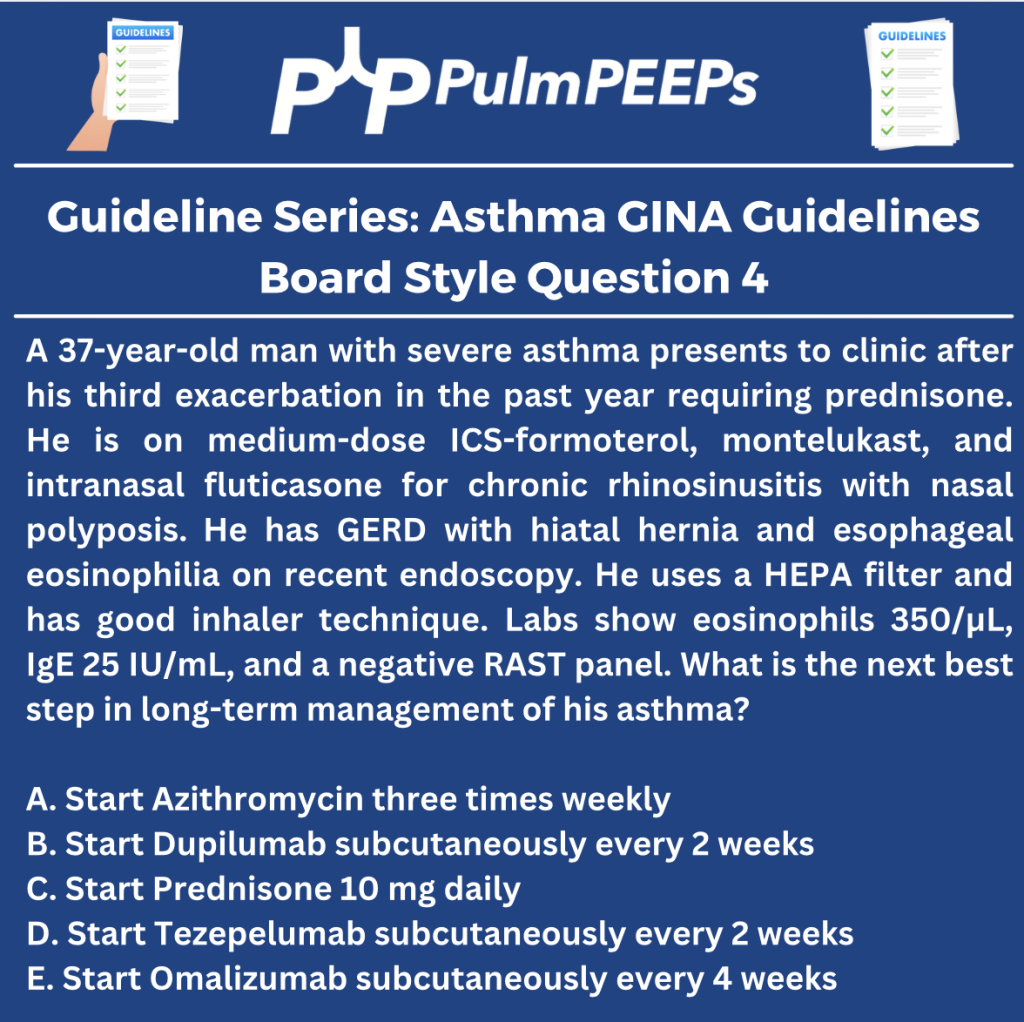
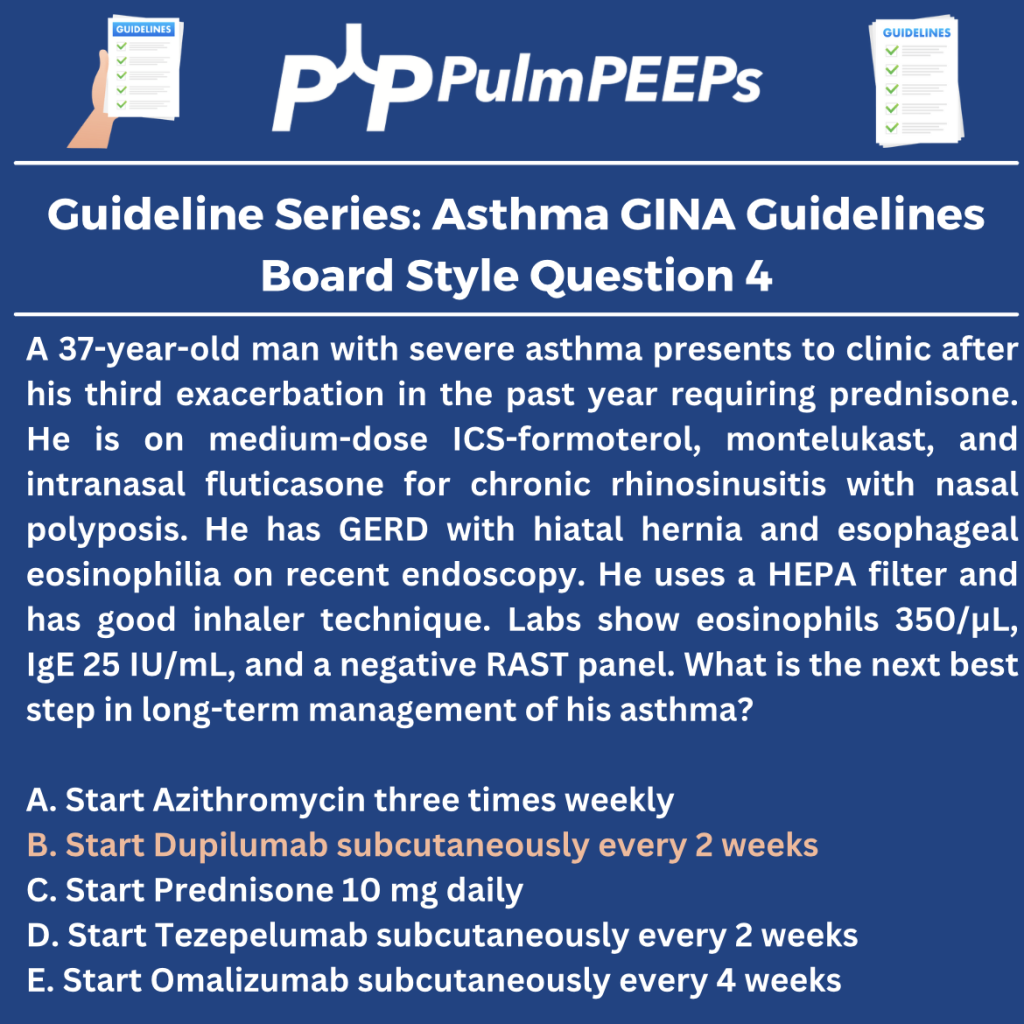
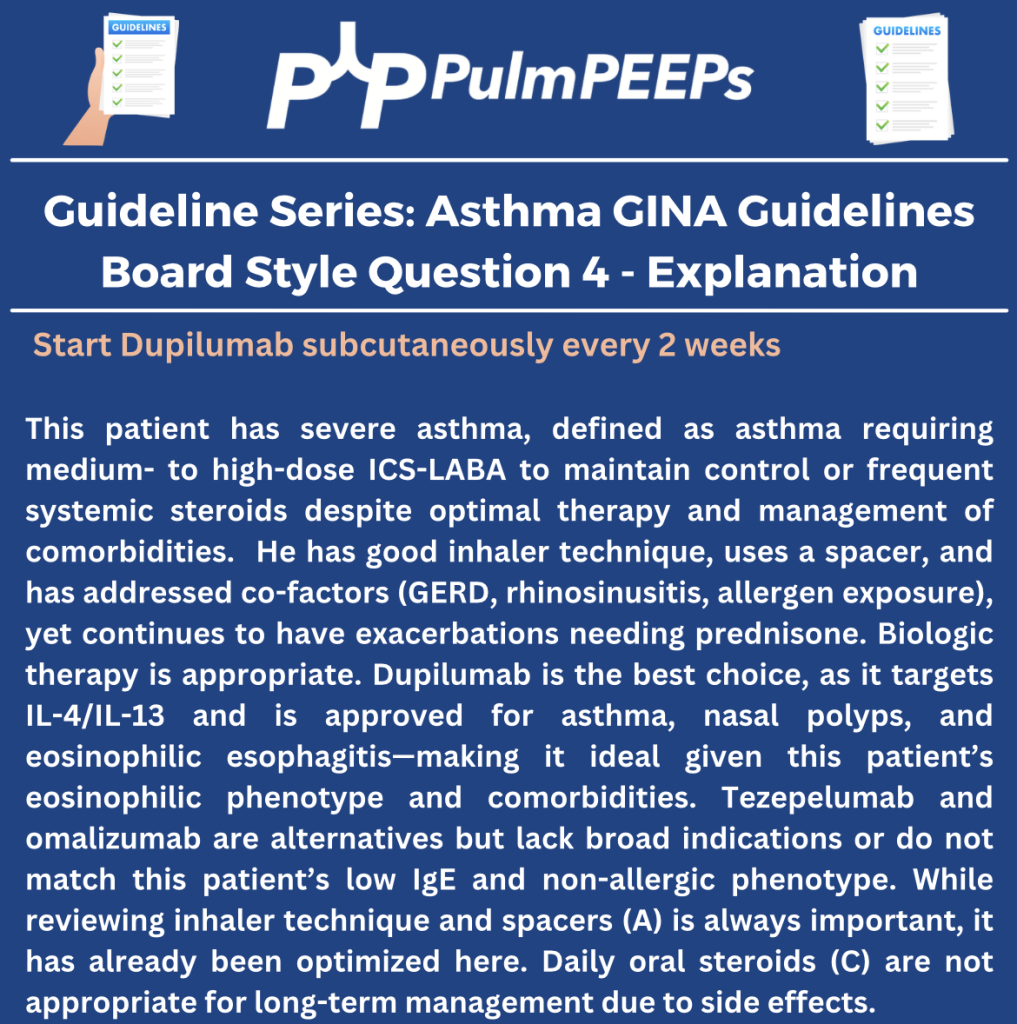
    Today, we continue our review of the Global Initiative for Asthma (GINA) guidelines on asthma. We’ve covered asthma diagnosis and phenotyping, and the initial approach to therapy. On today’s episode we’re talking about biologic therapies for asthma and will cover everything from when to consider starting them, which to choose, and what to monitor for after a patient is started. To help us with this exciting topic we’re joined by an expert in the field. We again have a great infographic prepared along with the episode, and a boards-style question for your review.


    Megan Conroy is an Assistant Professor of Medicine at The Ohio State University, and is also the associate program director for curriculum and quality in the Pulmonary and Critical Care Medicine Fellowship. Megan’s clinical area of expertise involves asthma and biologic therapies and she was recently recognized for her work in this area as the 2024 CHEST Airway Disorders Network Rising Star Award. 

    Rupali Sood  grew up in Las Vegas, Nevada and made her way over to Baltimore for medical school at Johns Hopkins. She then completed her internal medicine residency training at Massachusetts General Hospital before returning back to Johns Hopkins, where she is currently a second year pulmonary and critical care medicine fellow alongside Tom. Rupali’s interests include interstitial lung disease, particularly as related to oncologic drugs. And she also loves bedside medical education.

    Tom Di Vitantonio  is originally from New Jersey and attended medical school at Rutgers, New Jersey Medical School in Newark. He then completed his internal medicine residency at Weill Cornell, where he also served as a chief resident. He currently is a second year pulmonary and critical care medicine fellow at Johns Hopkins, and he’s passionate about caring for critically ill patients, how we approach the management of pulmonary embolism, and also about medical education of trainees to help them be more confident and patient centered in the care they have going forward.


    Mauer Y, Taliercio RM. Managing adult asthma: The 2019 GINA guidelines. Cleve Clin J Med. 2020 Aug 31;87(9):569-575. doi: 10.3949/ccjm.87a.19136. PMID: 32868307.

    Viswanathan RK, Busse WW. Biologic Therapy and Asthma. Semin Respir Crit Care Med. 2018 Feb;39(1):100-114. doi: 10.1055/s-0037-1606218. Epub 2018 Feb 10. PMID: 29427990.

    Brusselle GG, Koppelman GH. Biologic Therapies for Severe Asthma. N Engl J Med. 2022 Jan 13;386(2):157-171. doi: 10.1056/NEJMra2032506. PMID: 35020986.

    96. Guidelines Series: GINA Guidelines – Asthma Treatment and Management

    Episode Title Page

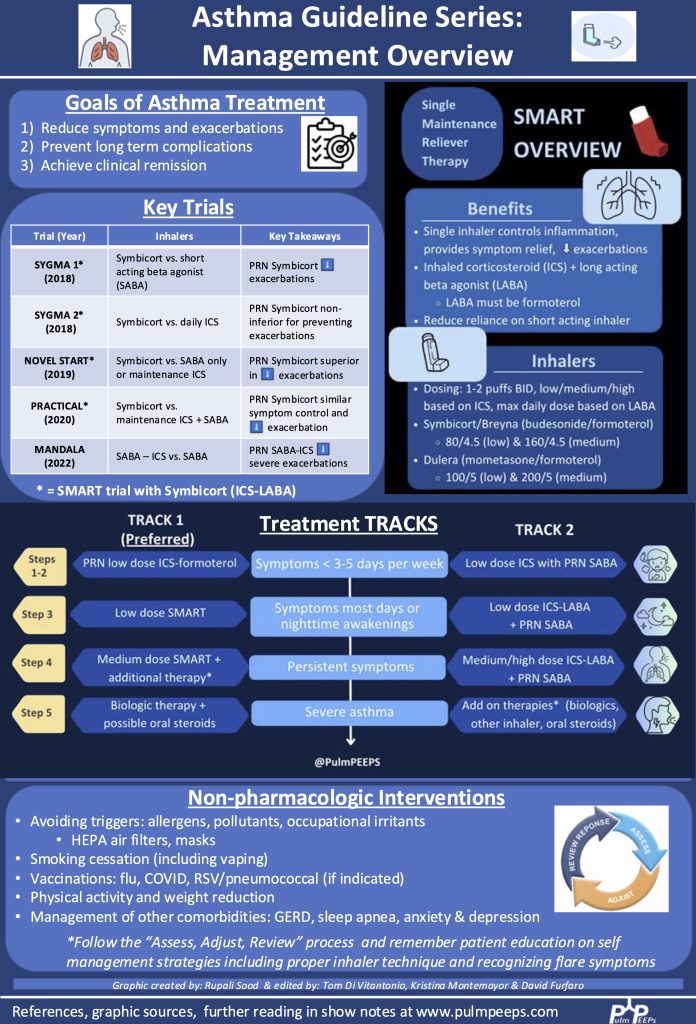
    We’re back with our second episode in our guideline initiative, and continuing our review of the Global Initiative for Asthma (GINA) guidelines on asthma. In our first episode of this series, we talked about making the diagnosis of asthma, the importance of appropriate phenotyping, and doing an initial assessment of asthma severity. Today, we’re discussing the initial management of asthma and discussing but pharmacologic and non-pharmacologic treatments. We have a great infographic prepared along with the episode, and a boards-style question for your review.

    Rupali Sood  grew up in Las Vegas, Nevada and made her way over to Baltimore for medical school at Johns Hopkins. She then completed her internal medicine residency training at Massachusetts General Hospital before returning back to Johns Hopkins, where she is currently a second year pulmonary and critical care medicine fellow alongside Tom. Rupali’s interests include interstitial lung disease, particularly as related to oncologic drugs. And she also loves bedside medical education.

    Tom Di Vitantonio  is originally from New Jersey and attended medical school at Rutgers, New Jersey Medical School in Newark. He then completed his internal medicine residency at Weill Cornell, where he also served as a chief resident. He currently is a second year pulmonary and critical care medicine fellow at Johns Hopkins, and he’s passionate about caring for critically ill patients, how we approach the management of pulmonary embolism, and also about medical education of trainees to help them be more confident and patient centered in the care they have going forward.

    1. Introduction to Asthma Guidelines
    • The podcast continues a guideline series on asthma, focusing on the Global Initiative for Asthma (GINA) 2024 guidelines.
    • Emphasizes practical applications for clinicians managing asthma in different settings.
    1. Importance of Evidence-Based Asthma Management
    • Asthma treatment must be systematic and personalized, considering recent clinical evidence.
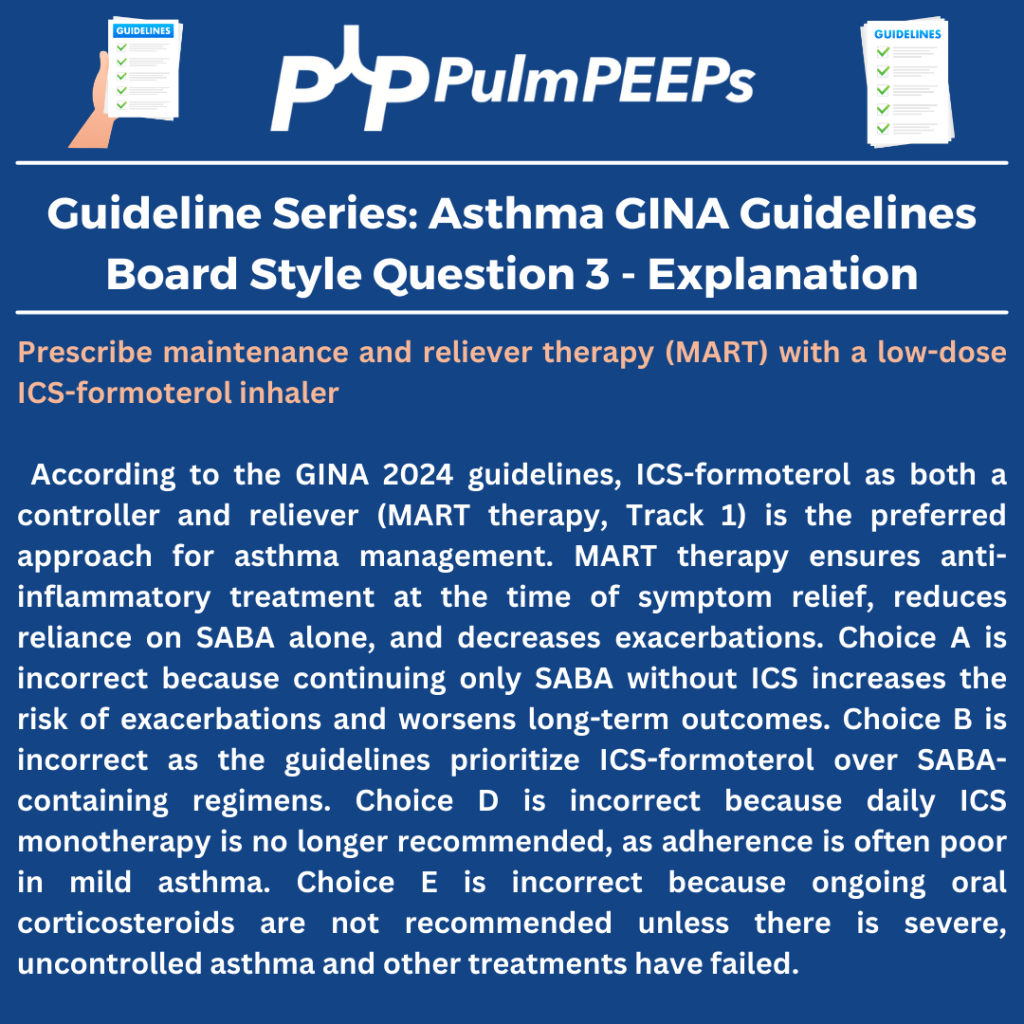
    • Previous reliance on short-acting beta agonists (SABAs) as rescue inhalers has shifted towards inhaled corticosteroid (ICS)-containing therapies.
    • Over-reliance on SABAs is linked to increased exacerbations, airway inflammation, and poor long-term outcomes.
    1. Stepwise Approach to Asthma Management (GINA 2024)
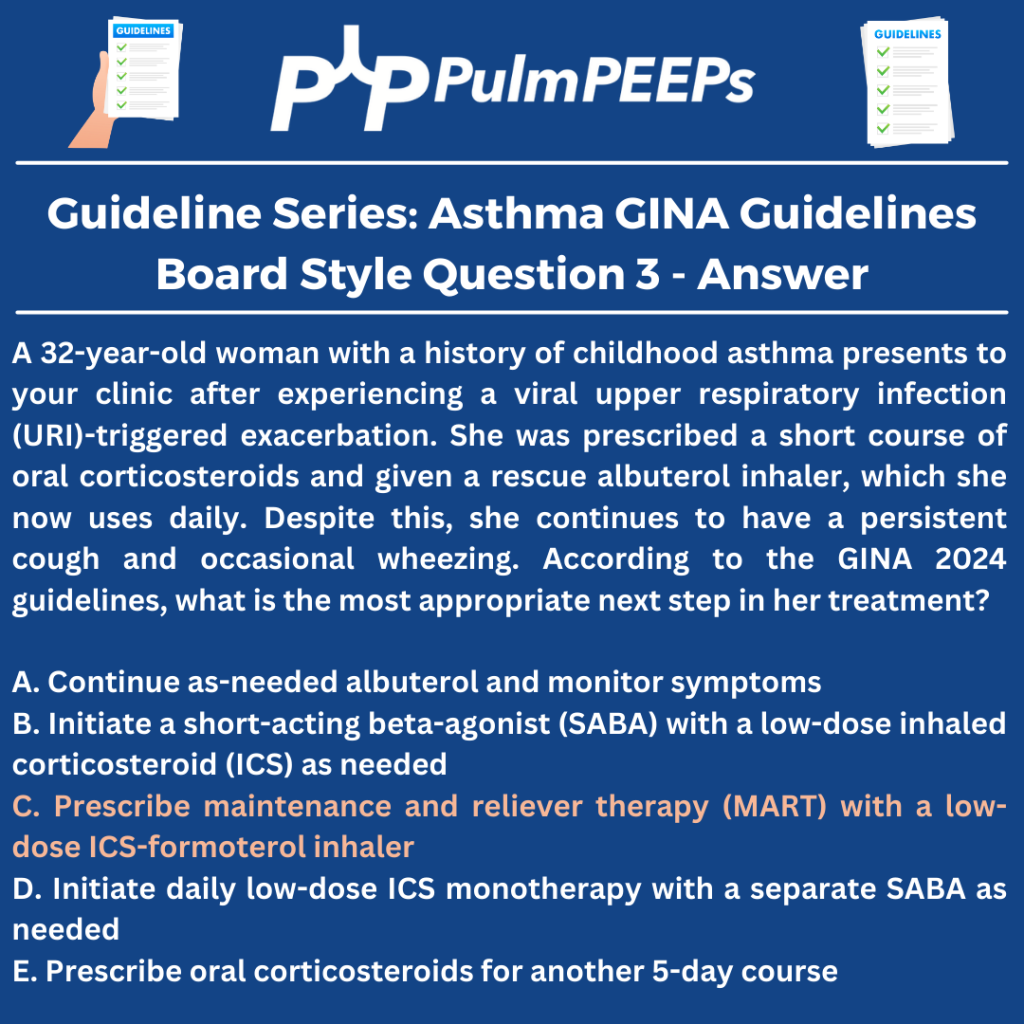
    • The Track 1 approach (preferred) centers around ICS-formoterol as both maintenance and reliever therapy (MART).
    • Track 2 (alternative approach) includes daily ICS or ICS-LABA with a separate SABA as a reliever.

    Stepwise Therapy

    • Step 1-2 (Mild asthma): Low-dose ICS-formoterol as needed for symptom relief.
    • Step 3 (Moderate asthma): Low-dose maintenance ICS-formoterol (MART therapy).
    • Step 4 (Persistent symptoms): Medium-dose ICS-formoterol (MART) with additional inhaler adjustments.
    • Step 5 (Severe asthma): Consider biologic therapies, phenotyping, and additional controllers.
    1. MART Therapy as a Game-Changer
    • Maintenance and Reliever Therapy (MART):
      • Uses a single inhaler for both daily maintenance and symptom relief.
      • Reduces overuse of SABAs.
      • Provides real-time up-titration of ICS during exacerbations.
      • Leads to better adherence and control.
    • Supporting Evidence from Trials:
      • SIGMA 1 & 2, Novel Start, Practical (2018-2019): Showed ICS-formoterol reduces exacerbations and steroid exposure compared to SABAs.
      • MANDALA (2022): Showed ICS-SABA improves outcomes over SABA alone, though not a true MART study.
    1. Practical Considerations in Asthma Management
    • Patient adherence is critical—educate on proper inhaler use and symptom monitoring.
    • Insurance and cost barriers may require prescribing alternative inhalers.
    • Review and adjust treatment regularly using the “Assess, Adjust, Review” framework.
    • Avoid high-dose ICS without exploring additional controller therapies like LAMAs, leukotriene receptor antagonists (Montelukast), and azithromycin.
    1. Non-Pharmacologic Interventions
    • Smoking cessation (including vaping/marijuana).
    • Weight management and physical activity.
    • Avoiding triggers (allergens, occupational exposures, pollution).
    • Air purifiers and HEPA filters.
    • Vaccinations (flu, COVID-19) to prevent viral exacerbations.
    • Managing comorbidities (GERD, sleep apnea, anxiety/depression).
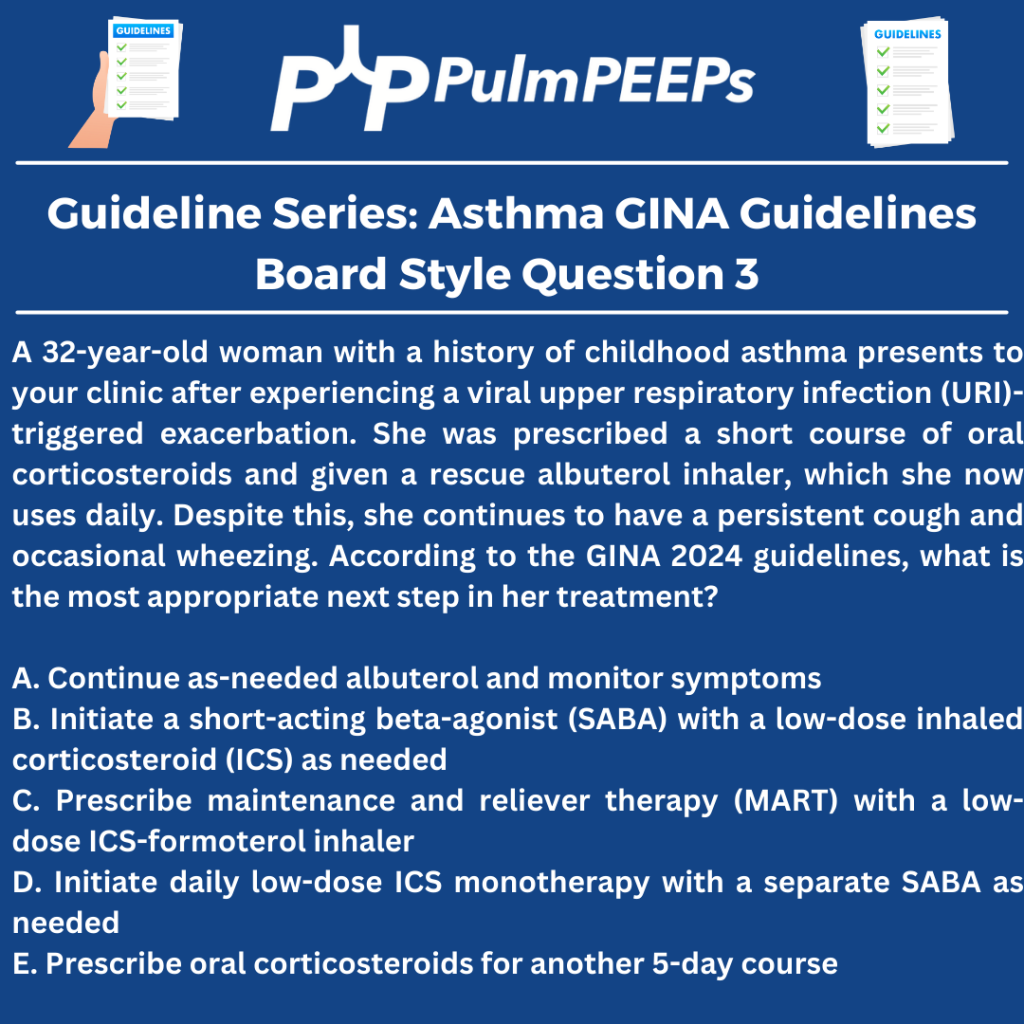
    1. Case Discussion & Real-World Application
    • Patient with recurrent asthma symptoms post-viral illness.
    • Started on low-dose ICS-formoterol as needed.
    • Symptoms persisted, leading to maintenance ICS-formoterol (MART therapy).
    • Regular follow-up to monitor and adjust therapy.
    1. Looking Ahead
    • Next episode will focus on biologic therapies for severe asthma.
    • Emphasis on ongoing education, practical application, and patient-centered care.


    Mauer Y, Taliercio RM. Managing adult asthma: The 2019 GINA guidelines. Cleve Clin J Med. 2020 Aug 31;87(9):569-575. doi: 10.3949/ccjm.87a.19136. PMID: 32868307.

    Matera MG, Rinaldi B, Annibale R, De Novellis V, Cazzola M. The pharmacological management of asthma in adults: 2023 update. Expert Opin Pharmacother. 2024 Mar;25(4):383-393. doi: 10.1080/14656566.2024.2332627. Epub 2024 Mar 20. PMID: 38497368.

    Arismendi E, Ribo P, García A, Torrego A, Bobolea I, Casas-Saucedo R, Palomino R, Picado C, Muñoz-Cano R, Valero A. Asthma Control According to GINA 2023: Does Changing the Criteria Improve Asthma Control? J Clin Med. 2024 Nov 6;13(22):6646. doi: 10.3390/jcm13226646. PMID: 39597790; PMCID: PMC11594371.

    http://ginasthma.org/2023-gina-main-report/

    https://www.uptodate.com/contents/an-overview-of-asthma-management-in-children-and-adults

    https://onlinelibrary.wiley.com/doi/full/10.1111%2Fresp.14782

    Dubin S, Patak P, Jung D. Update on Asthma Management Guidelines. Mo Med. 2024 Sep-Oct;121(5):364-367. PMID: 39421468; PMCID: PMC11482852.